
Seasonal vs AC Mushroom Farming
Many growers in north India start with a winter hut and ask the same question after a season or two: is a climate-controlled room worth the money? This page compares the two fairly. A hut is a sound way to begin; an AC room is what turns one winter crop into a twelve-month business.
What is the difference between seasonal and AC mushroom farming?
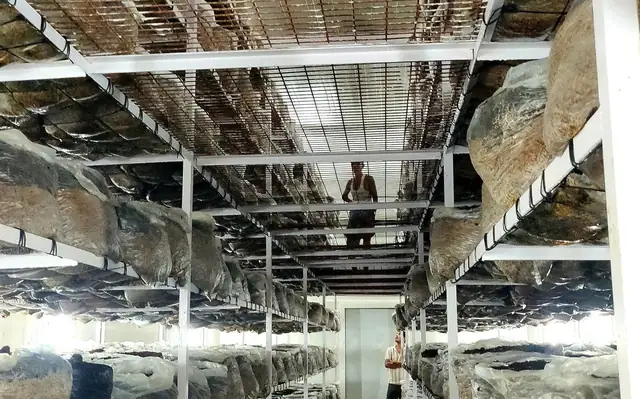
Seasonal mushroom farming grows button mushroom in low-cost huts during winter only, usually one crop a year in the north Indian plains, with yield that depends on the weather. AC (climate-controlled) farming grows it in insulated rooms with refrigeration all year: 6 crops a year, about 19,200 kg a year from one 18 × 40 ft room on MushroomWale's planning figures. A hut costs little but sells into the winter glut; an AC room costs ₹8.5–11.6 lakh ex-GST and sells in summer too, when seasonal supply stops.
Side by side
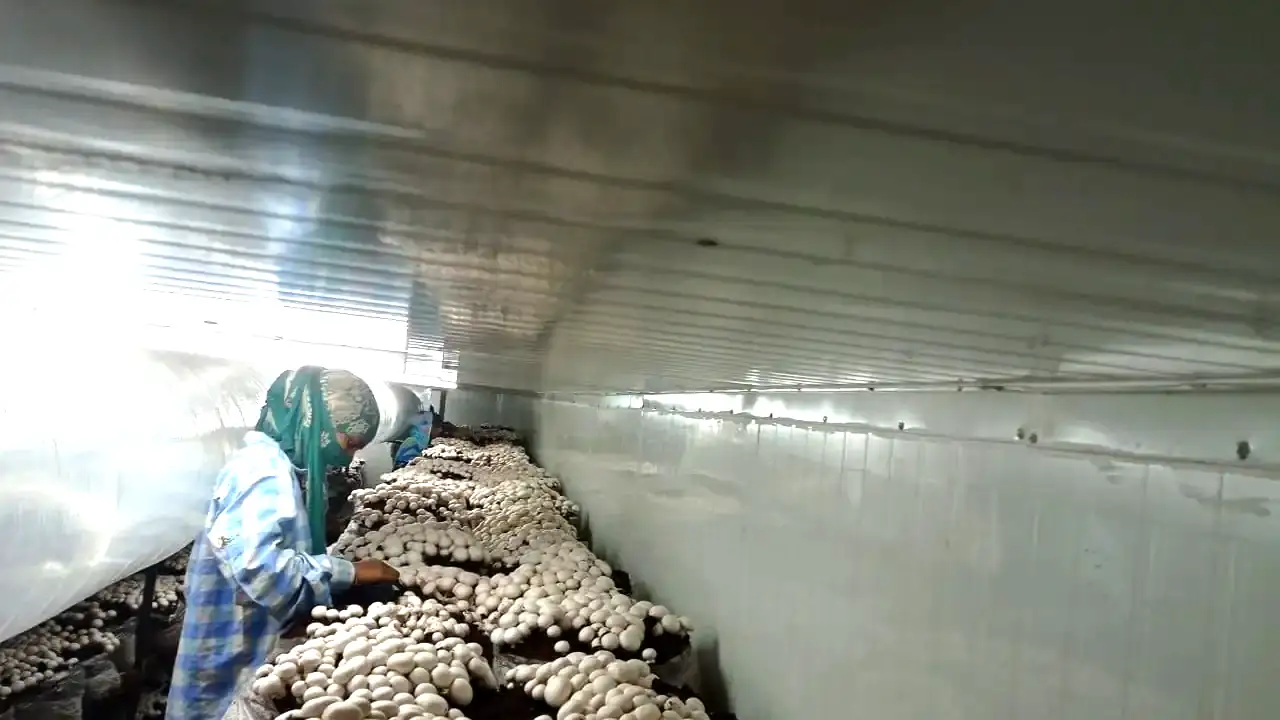
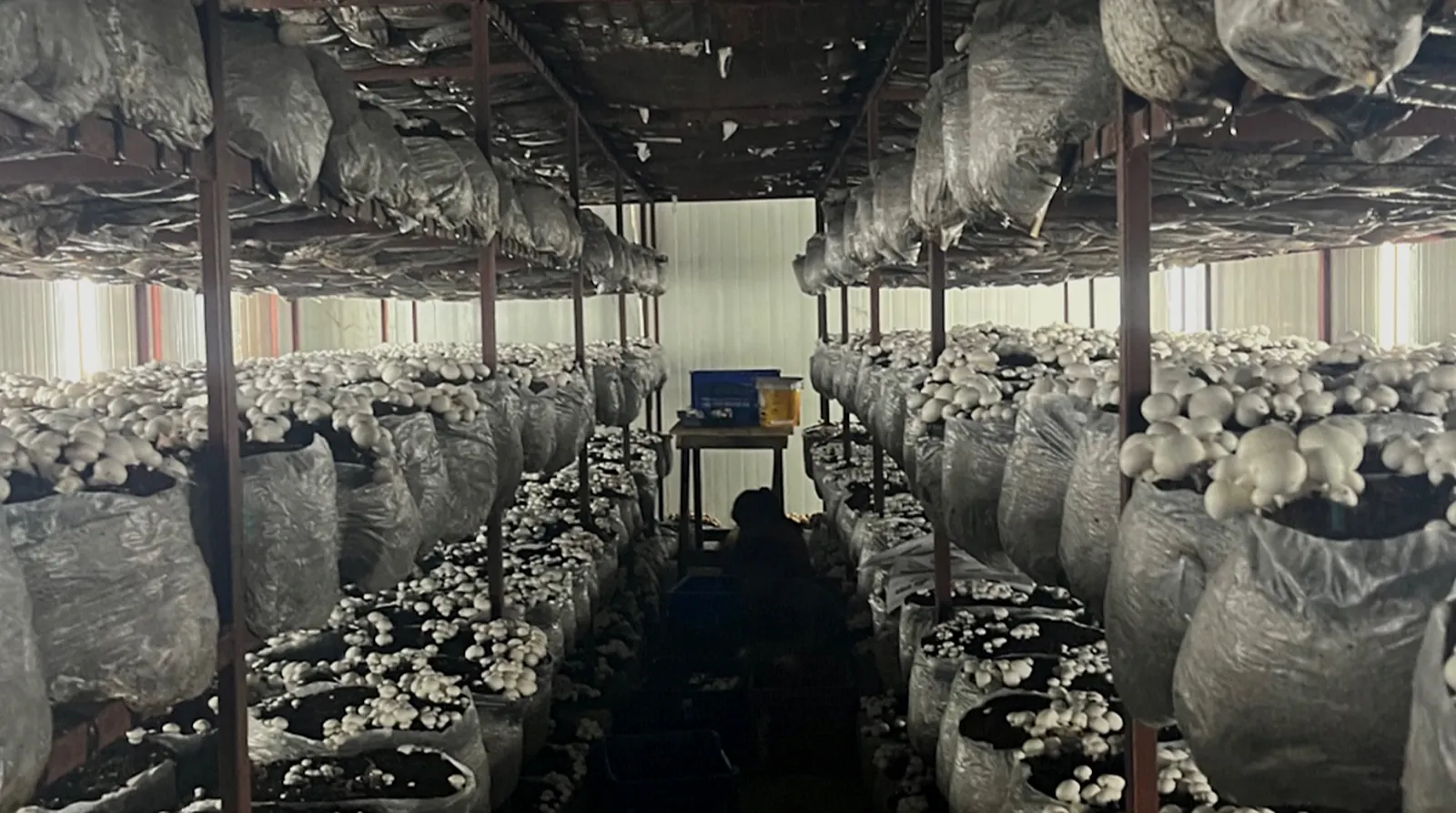
Button mushroom, the crop both systems grow most in India.
| Seasonal hut | AC room | |
|---|---|---|
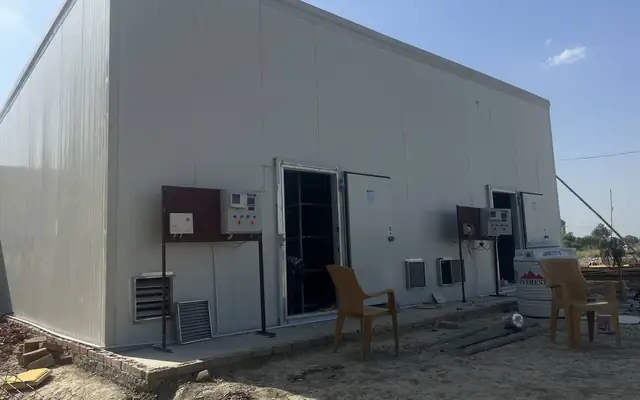
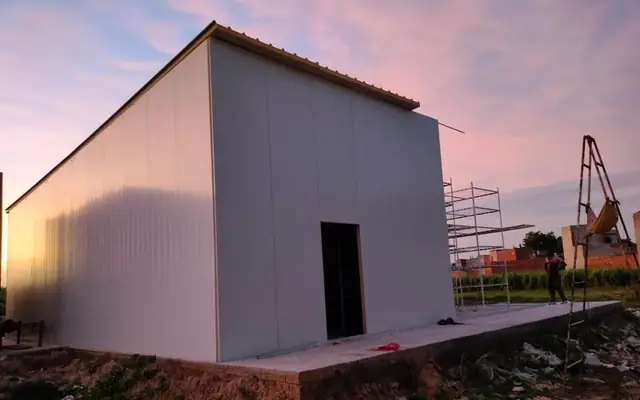
| Structure | Bamboo, straw and polythene hut (jhopdi), rebuilt or repaired each season | Insulated PUF-panel room with refrigeration and air handling |
| When it grows button mushroom | Winter only in the plains, roughly November to March | All twelve months, in any state |
| Crops a year | One, sometimes two in a long winter | 6 crops of about 60 days each |
| Compost | Usually long-method compost made outdoors | Pasteurised short-method compost, made on site or bought in |
| Yield | Lower and uneven; depends on the weather that year | Planned: 3,200 kg a crop from 1,600 bags in an 18 × 40 ft room |
| Selling season | Harvest lands in winter, when every seasonal grower is selling | Sells through summer and monsoon, when seasonal supply stops |
| Main risks | A warm spell, fog, pests and disease with no way to correct the climate | Power cuts and machine breakdown; needs a trained operator |
| Investment | Low; mostly local material and labour | ₹8.5–11.6 lakh for one 18 × 40 ft room, ex-GST |
| Bank loan and subsidy | Hard to finance; a temporary hut is not a bankable asset | Bankable with a project report; eligible for NHB / MIDH schemes where rules are met |
AC-room figures are MushroomWale’s standard 18 × 40 ft model (core to full EPC scope, ex-GST; civil work, land and GST extra). Hut practice follows ICAR-DMR’s guidance on seasonal cultivation; hut cost and yield vary too much by district and year to print one number.
Which one suits you
A seasonal hut suits you if
- You are in the north Indian plains or hills with a real winter.
- You want to learn the crop with little money at risk.
- You can sell locally in winter and do something else in summer.
- You accept one crop a year and a yield that changes with the weather.
An AC room suits you if
- You want mushroom as a year-round business with steady weekly supply.
- Your buyers (hotels, retail chains, wholesalers) want supply in summer too.
- You plan to use a bank loan or a subsidy scheme.
- You are in a state with no long winter, where a hut cannot grow button mushroom.
Why the selling season matters more than the yield
Every seasonal grower in a region harvests in the same winter weeks, so the mandi is full exactly when the hut crop arrives. When the heat returns, the huts close, supply falls and prices firm up. An AC room earns its cost in those months: it is selling when most growers cannot.
That is also why hotels, retail chains and quick-commerce buyers contract with climate-controlled farms. They need mushrooms every week of the year, and a buyer who can rely on you pays better than the open market.
Moving from a hut to AC rooms
You do not have to choose once and for all. A common path is to keep the winter huts and add one or two AC rooms, so the business has summer income and the staff have year-round work. What you learned in the hut (compost quality, casing, picking) carries over; what changes is that the climate is now a setting, not the weather.
Plan the first rooms so more can be added on the same slab and power line. Two rooms on a staggered fill give a harvest every week, which is the supply pattern buyers contract against.
Planning a small first farmFrequently asked questions
Why Choose MushroomWale
- 01
Engineering Expertise
Agrimotion Engineering Private Limited is a registered EPC company (CIN U43900UP2023PTC185328, GSTIN 09AAZCA0158R1ZP) based in Firozabad, Uttar Pradesh.
- 02
Proven Track Record
Turnkey mushroom projects from a 2-room starter to a 20-room commercial farm.
- 03
Bank-Recognized DPRs
Bank-format DPRs prepared to NABARD, NHB and MIDH norms for loan and subsidy applications.
Ready to Build Your Mushroom Farm?
Get a free site survey and a custom quote within 24 hours.
- Turnkey farms built
- Pan-India delivery
- Bank-ready DPR