
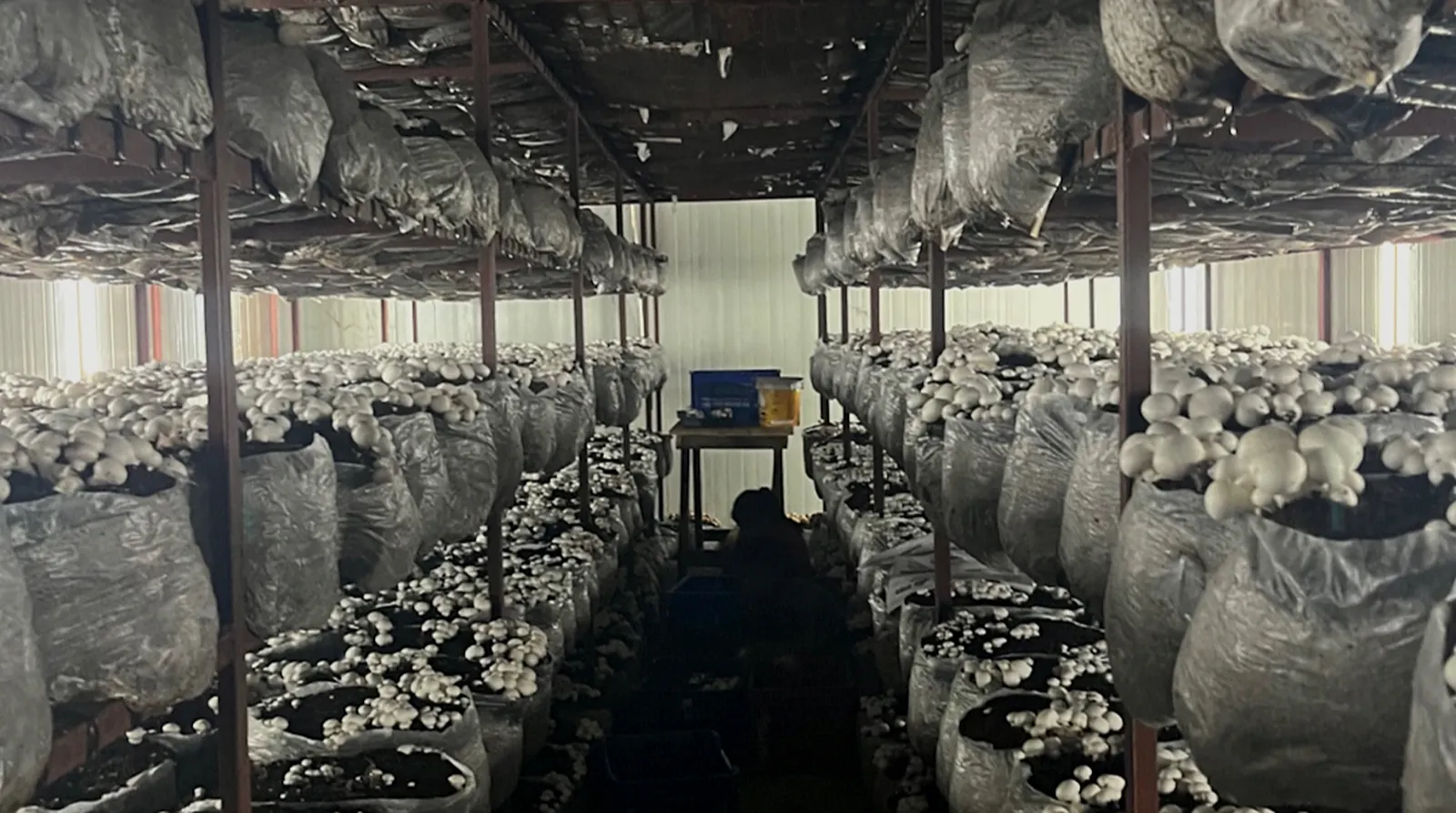
Button Mushroom Production Ecosystem
From Design to Daily Harvest
How Button Mushroom Production Works
Button mushroom production is not traditional farming. It is a controlled indoor production system where temperature, humidity, air circulation, compost quality, and hygiene determine yield and profitability.
The entire system works as a connected chain. Failure or compromise at any stage directly impacts production results.
One weak stage can reduce or destroy the entire crop. Every component must work together.
Production Unit Design – The Mushroom Growing Factory
Growing rooms are climate-controlled chambers where mushrooms are cultivated. The design determines air distribution, temperature uniformity, and ultimately yield.
- Room width, height, and clear internal airflow
- Air distribution design more important than room size
- Series vs parallel layout of rooms
- Wrong design leads to uneven growth and yield loss
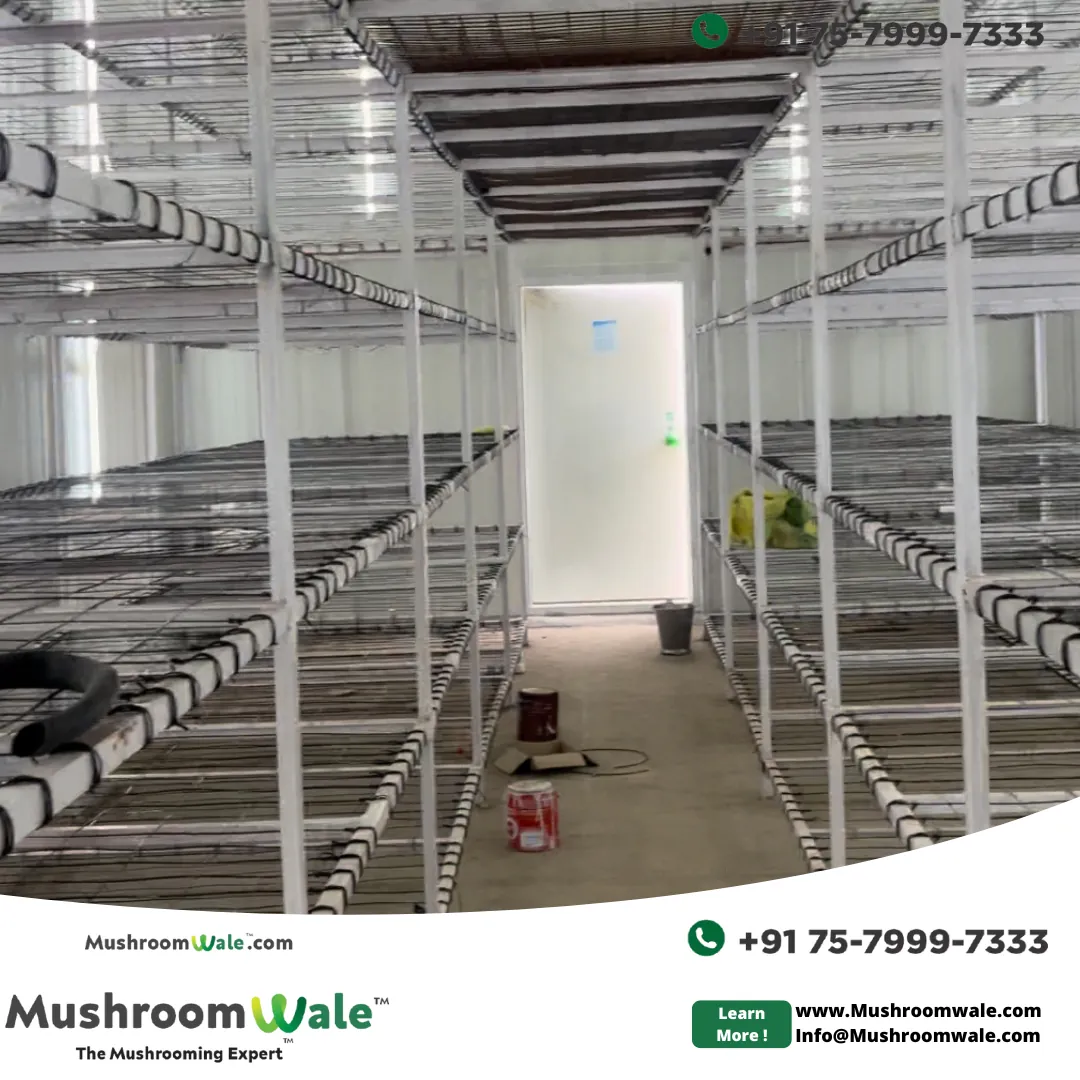
Grow Room Interior
Multi-tier rack system with controlled environment
Larger rooms do not guarantee higher production. Correct airflow, insulation, and environmental control matter more than size.
Construction & Insulation – Foundation of Climate Control
Proper insulation is the foundation of climate control. PUF (Polyurethane Foam) panels maintain stable temperature and humidity while minimizing energy consumption.
Maintain stable temperature and humidity throughout the room
External walls thicker than common walls for better insulation
Critical for condensation control and heat management
Proper slope, drainage, and washable surfaces for hygiene
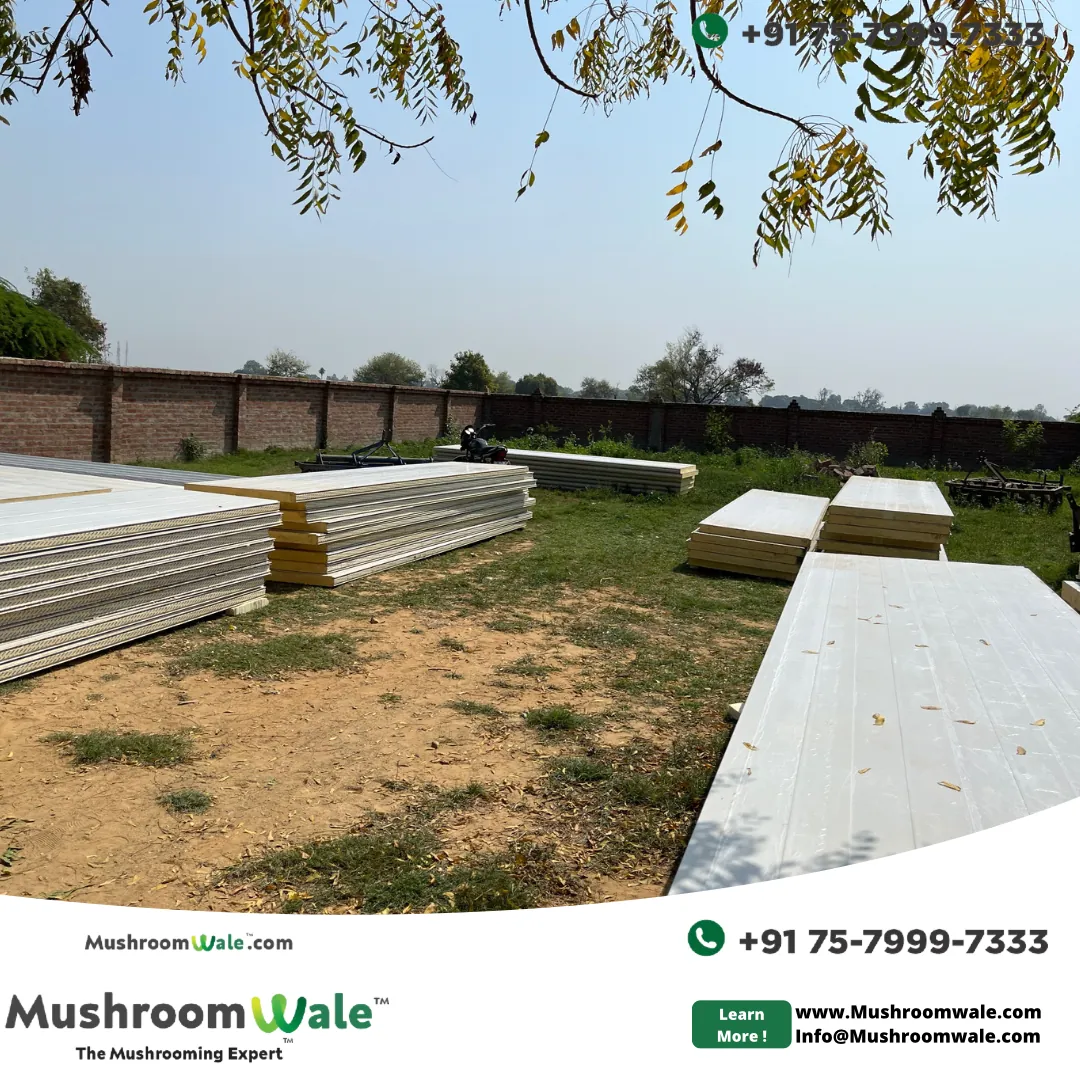
Poor insulation increases power cost and reduces production consistency throughout the project life.
Compost Unit – The Core Raw Material System
Compost is the primary raw material for button mushrooms and must be prepared under controlled conditions. Quality compost is the single most important factor for successful production.
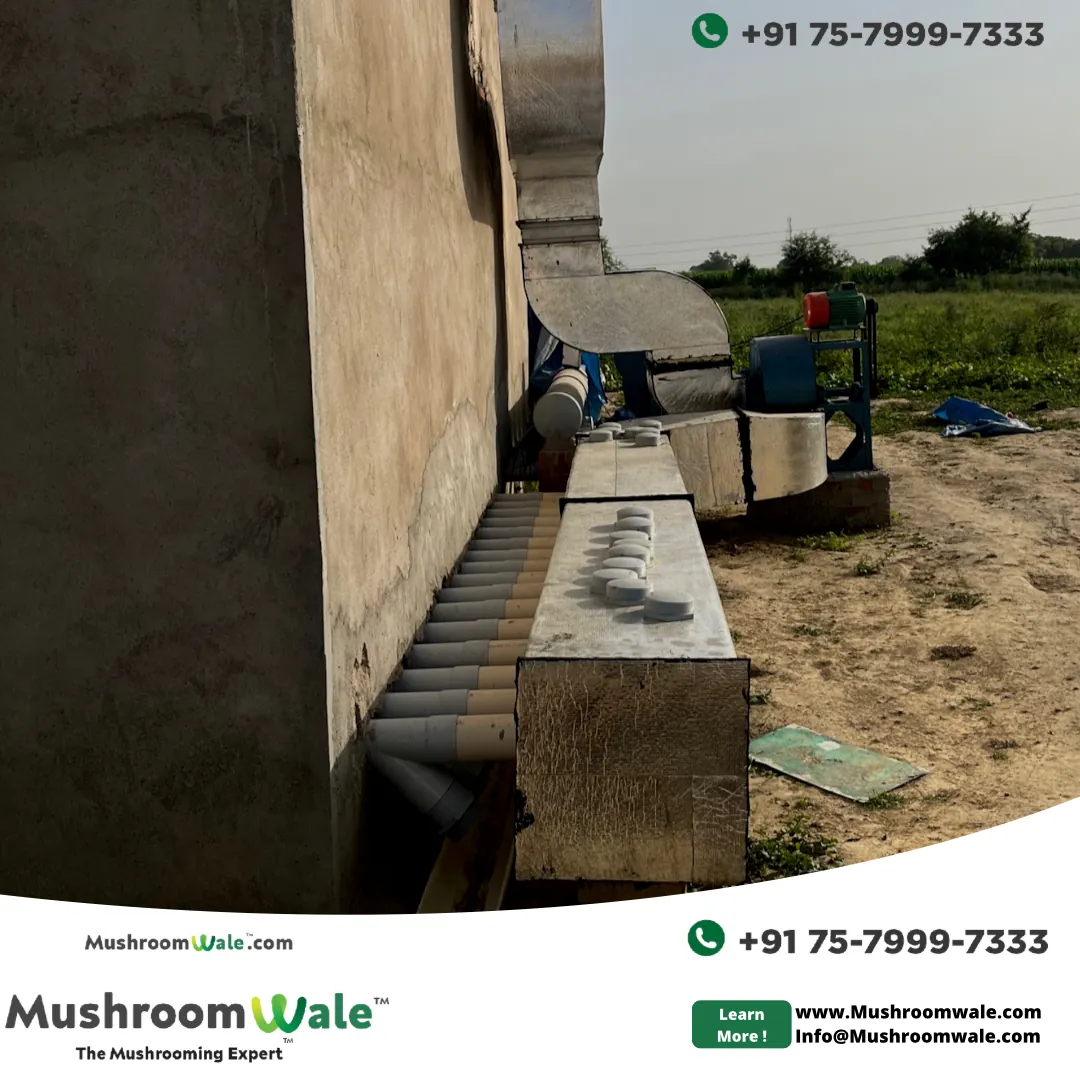
Compost Equipment
Phase-I Preparation
Outdoor composting in bunkers
Phase-II Pasteurization
Tunnel pasteurization
Quality Control
Temperature & moisture control
Based on growing rooms and cycle
Good compost is mandatory. No compost quality means no production, regardless of room quality.
Internal Works – Where Yield Is Decided
Internal infrastructure determines how efficiently you can utilize the growing space and maintain production quality.
Multi-tier system for maximum space utilization
Proper gaps between shelves for airflow
Compost loading and alignment logic
Proper plumbing for humidification
Efficient water and waste removal
Work lighting and sanitation flow
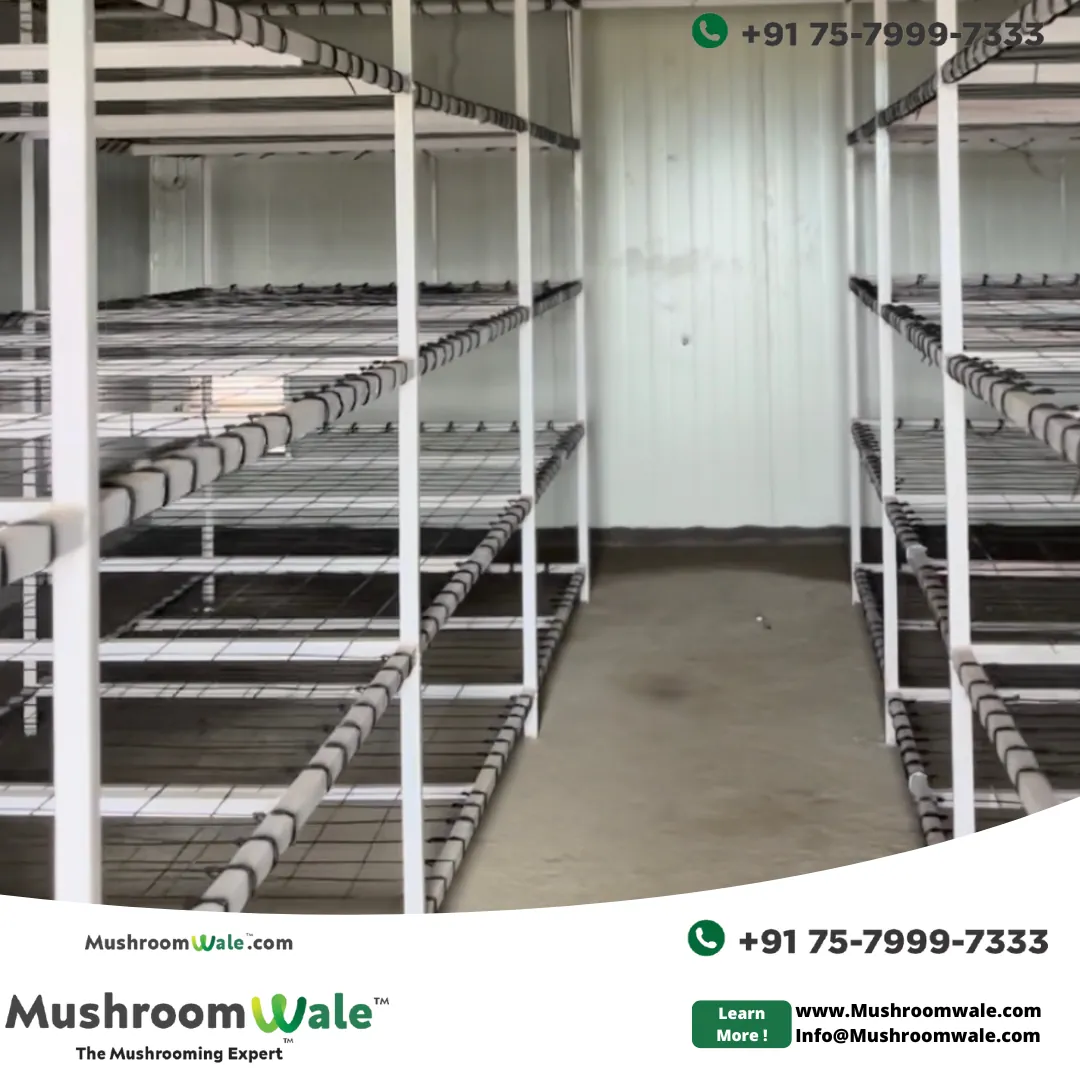
MS racks and internal works are optional components but are strongly recommended for commercial-scale production stability.
Raw Materials Used in Button Mushroom Production
Base carbon source for compost
Nitrogen source for composting
pH balance and nutrition
Certified mycelium inoculum
Peat-loam mix for pinning
Pure water for all processes
Most crop failures occur due to poor raw materials, not climate conditions.
Typical Button Mushroom Production Cycle
Temperature Control
Critical at every stage
Humidity 85-95%
Consistent moisture levels
CO₂ Management
Fresh air for pinning
Harvesting and Post-Harvest Handling
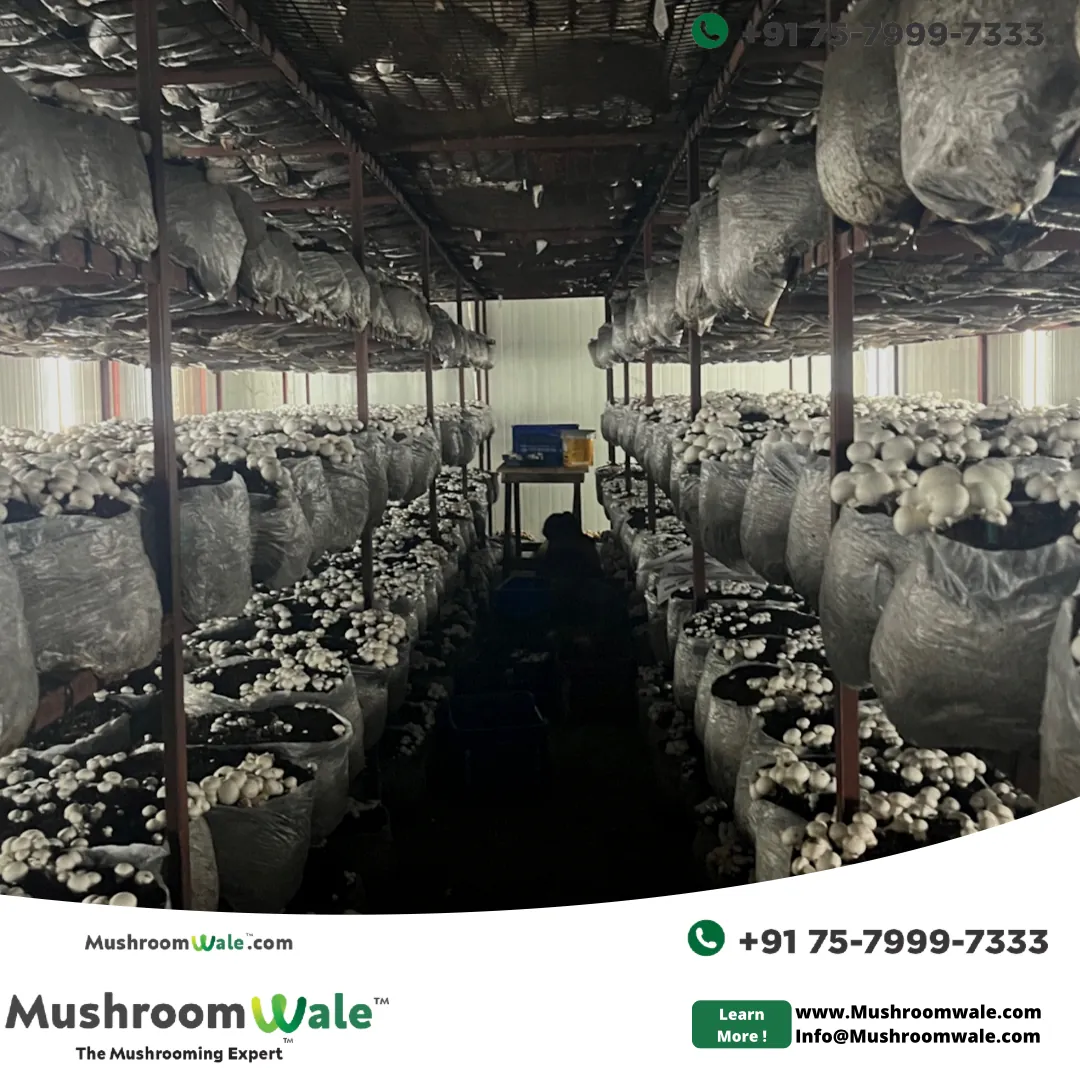
Fresh Mushroom Harvest
- Harvest at correct stage (closed cap)
- Gentle twisting to avoid damage
- Multiple flushes over 25-30 days
- First flush yields highest quality
- Sorting and grading by size
- Proper packaging formats
- Short shelf life (3-5 days fresh)
- Cold storage extends quality
How Button Mushrooms Are Sold in India
Daily wholesale markets
Bulk purchase contracts
Premium B2B channels
Canning and drying units
Daily price fluctuations are common. Cold storage improves bargaining power by allowing strategic selling.
Production is technical. Marketing requires planning and access.
Complete Button Mushroom Project – Responsibility Overview
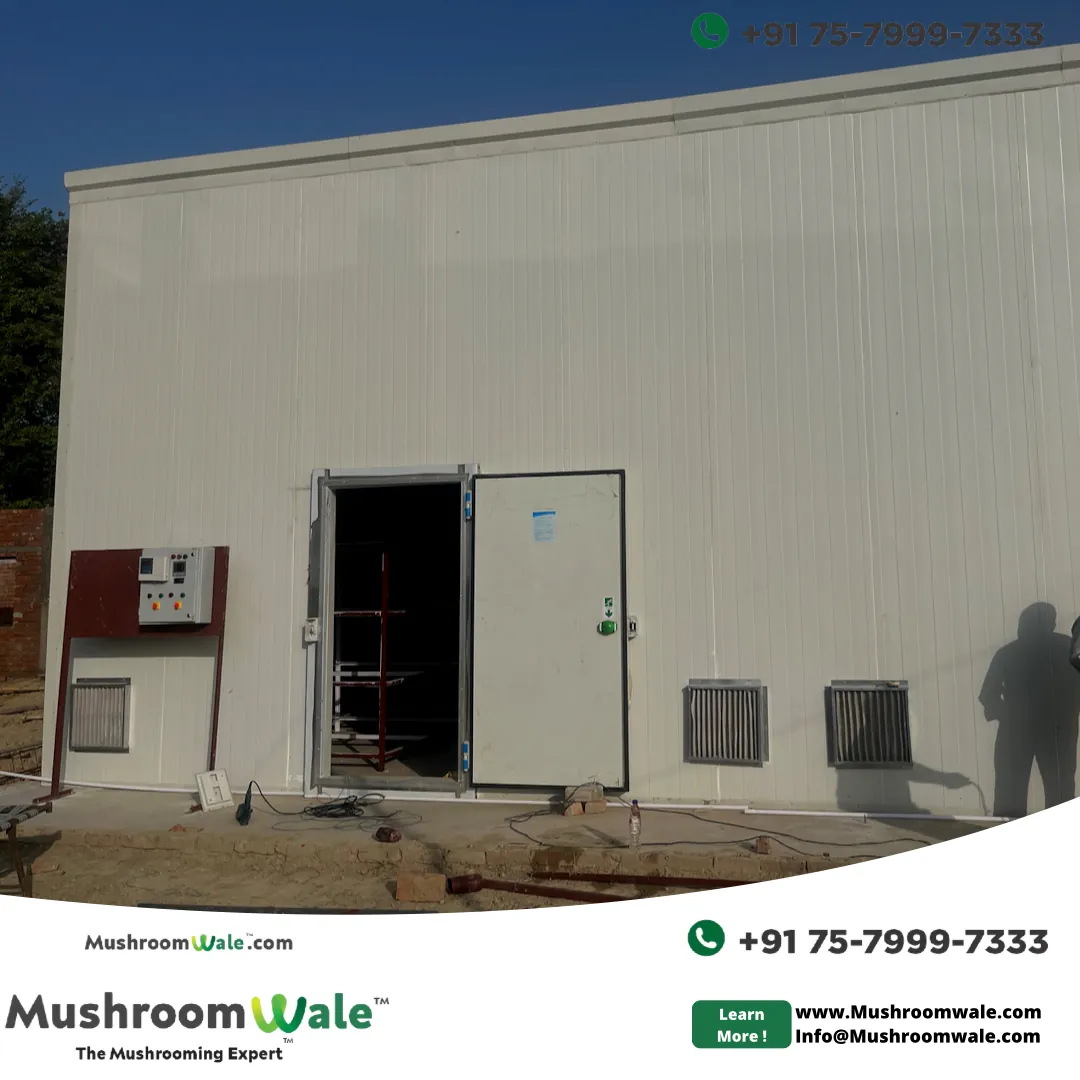
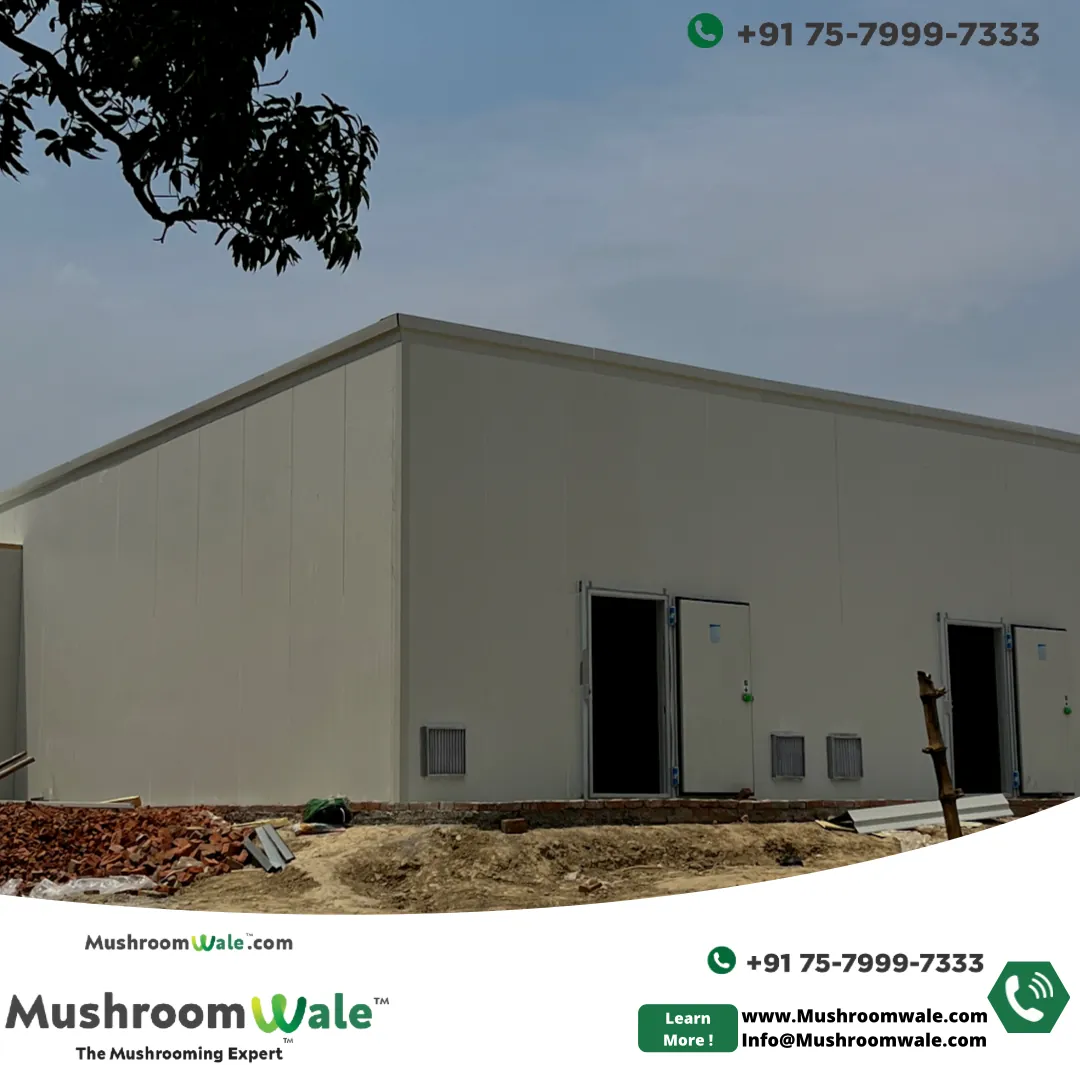
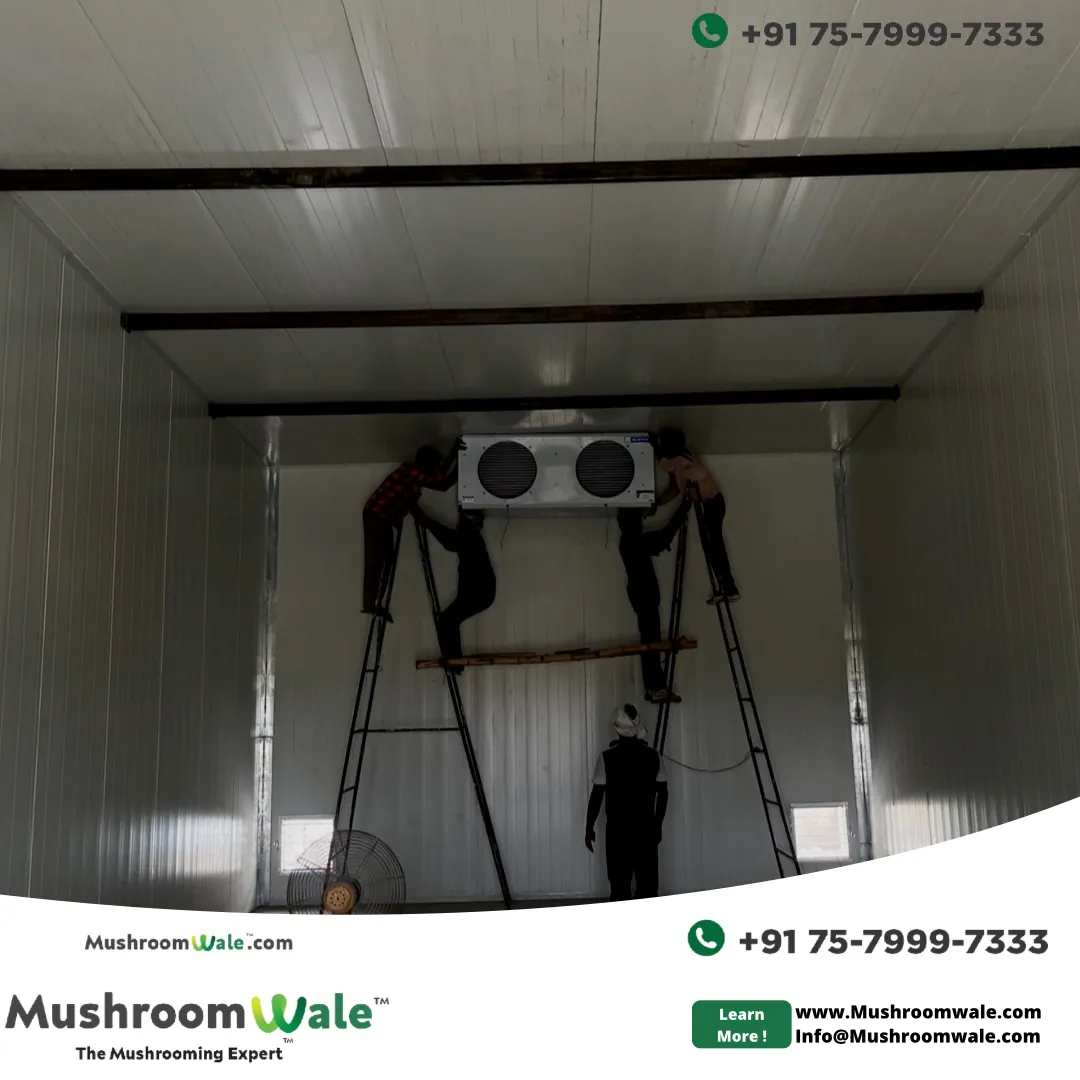
- Project planning and layout design
- Production unit and compost unit setup
- HVAC and refrigeration system support
- Technical guidance and SOPs
- Training and after-setup support
- Land and building space
- Electrical power and water supply
- Labour and daily operations
- Working capital for raw materials
Understanding the system before investing is essential. Let our experts guide you through every step.