
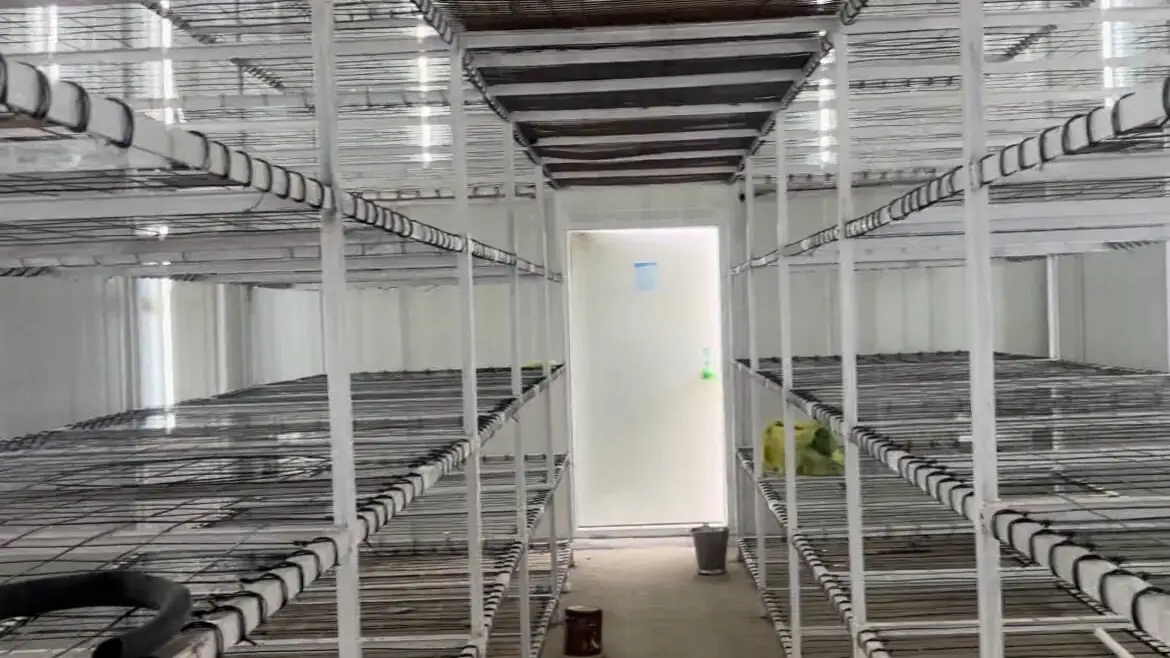
Disease & Hygiene Control
How contamination, green mould, bacterial issues, poor hygiene, casing mistakes, and wrong airflow damage production.
Most crop losses in commercial mushroom farms are hygiene failures, not equipment failures. Contamination usually enters with people, tools, water, casing soil or unfiltered air — and once it establishes inside a room, it recycles from crop to crop until the routine is fixed.
Green mould (Trichoderma) is the classic warning sign of poor pasteurisation, contaminated casing or careless handling; it competes directly with the mycelium and hollows out your yield. Bacterial blotch appears as brown, sticky patches when the cap surface stays wet too long — it is a watering and air-movement problem more than a disease problem. Wet bubble and dry bubble spread through casing soil, flies and worker movement, and can spoil large sections of a room quickly.
Casing discipline matters. Casing soil must be properly pasteurised, handled with clean tools and applied at even depth. Uneven or contaminated casing gives uneven pinning and creates pockets where disease starts.
Airflow and hygiene work together. Filtered fresh air, positive room pressure where possible, and even distribution across every rack tier reduce spore load and prevent damp, stagnant zones. Dead air pockets are disease incubators.
Control worker movement as strictly as you control temperature. Fixed entry sequence from the youngest crop to the oldest, footbaths, dedicated footwear and clothing, hand sanitising, tools that never move between rooms, and immediate removal of infected patches into sealed bags. Flies must be managed with screens, traps and drain hygiene.
Finally, run a written cleaning schedule: post-crop cook-out or thorough disinfection, wash-down of racks and floors, drain and duct cleaning, and a documented turnaround before refilling. A room that is refilled in a hurry pays for it in the next cycle.
Continue Learning
 Engineering
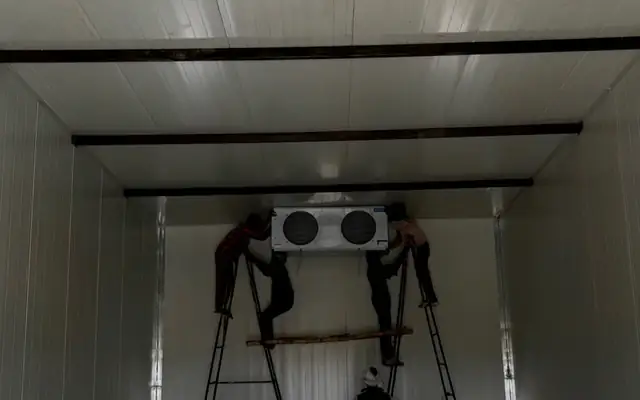
Climate Control & Cooling
Temperature, humidity, CO₂, fresh air, exhaust, air distribution, DX cooling, chiller-based cooling, and Daikin HMT systems.Start Learning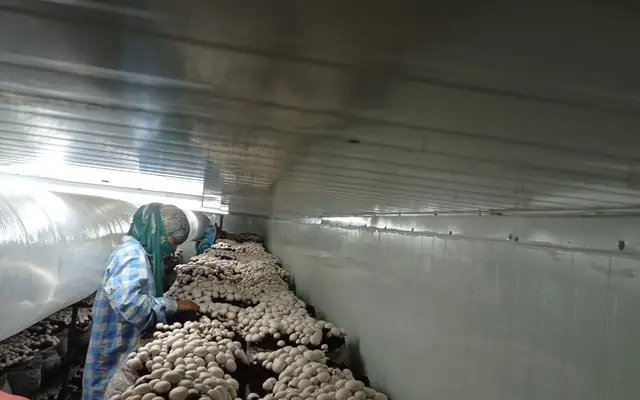 Beginner
Beginner Mushroom Farming
Understand whether mushroom farming is right for you, required land, budget, labour, power, water, crop options, risk factors, and first-step planning.Start Learning Commercial