
Beginner Mushroom Farming
Understand whether mushroom farming is right for you, required land, budget, labour, power, water, crop options, risk factors, and first-step planning.
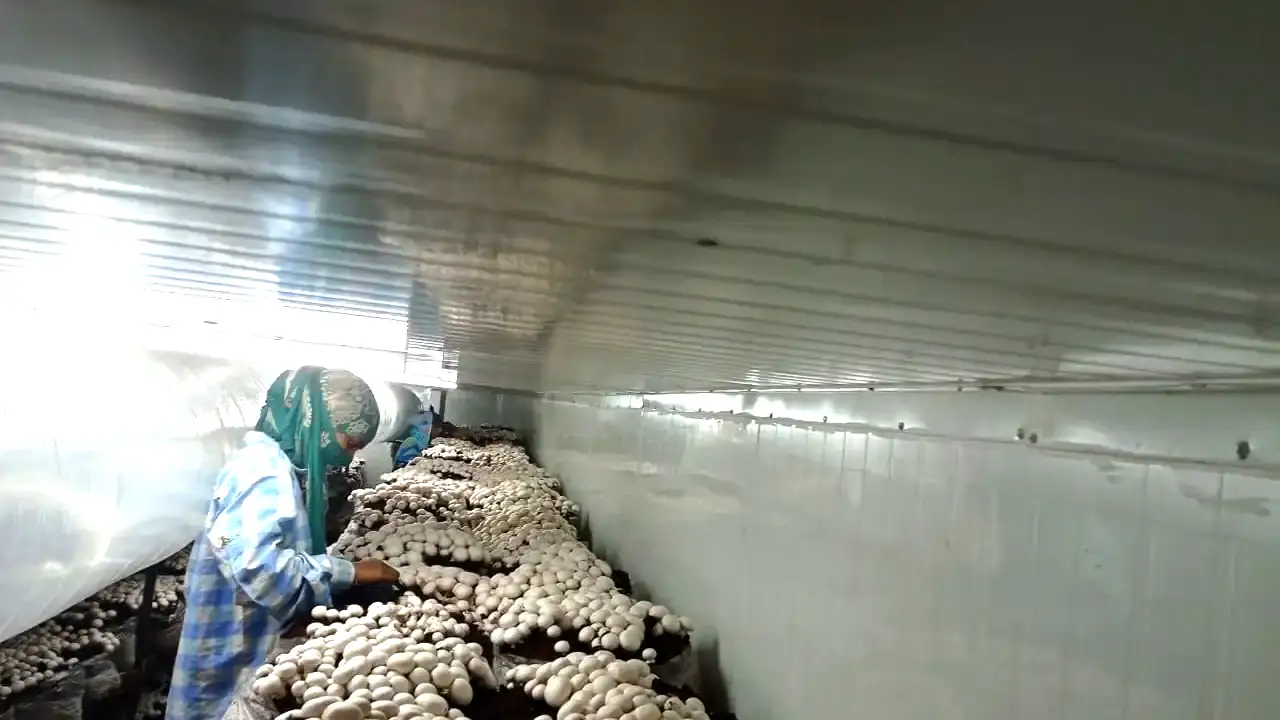
Mushroom farming in India is an indoor, controlled-environment crop. Unlike field farming, your yield depends on compost quality, room engineering and hygiene discipline rather than on soil or rainfall. That is why the planning stage decides most of your result.
Three crops dominate Indian projects. Button mushroom (Agaricus bisporus) is the largest commercial market and needs a climate-controlled PUF room. Oyster mushroom is the easiest entry crop and can be grown in low-cost sheds in many regions for part of the year. Milky mushroom suits hot climates because it fruits naturally at 30–35°C. MushroomWale's turnkey scope is built around commercial button mushroom production.
Land requirement is modest compared to open farming. A single standard MushroomWale production room is 18×30, 18×40, 18×60 or 18×70 ft, and a practical first project including gallery, working space and movement area usually fits within a few thousand square feet. Layout planning adds a 15 ft covered gallery for mirror layouts and a clearance allowance, so always plan area from the layout, not from room size alone.
Budget must be planned in three separate parts. First, MushroomWale's EPC scope: PUF room, racks, cooling machine, ducting, electrical panel and installation. Second, client scope: civil work, flooring, drainage, boundary, electrical connection and labour room. Third, working capital: compost, spawn, casing soil, chemicals, salaries, electricity and market expenses for the first cycles. GST @18% and transport are extra on the EPC scope, and any additional client demand is treated as extra.
Power and water are non-negotiable. Cooling runs continuously, so a reliable connection plus DG backup must be planned before commissioning — a few hours of cooling failure at a critical stage can damage an entire crop. Labour requirement is small but skill-sensitive: filling, casing, watering, picking and hygiene routines must be done the same way every cycle.
Mushroom farming is suitable for you if you can commit to daily discipline, arrange a dependable compost and spawn source, hold working capital for the first few cycles, and sell perishable produce quickly. It is not suitable as a passive, absentee investment.
Continue Learning
 Commercial
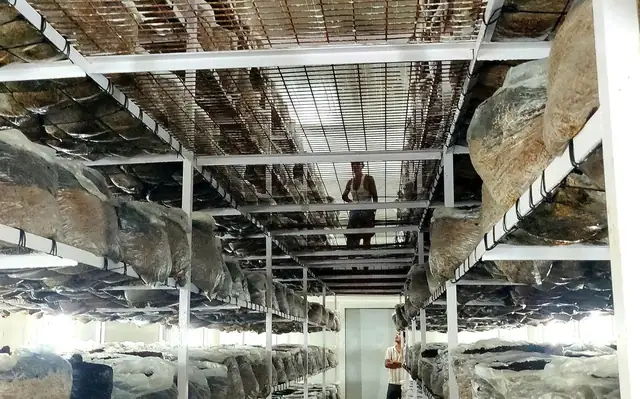
Commercial Button Mushroom Project
Room sizing, rack planning, production cycle, cooling requirement, investment logic, and commercial project models.Start Learning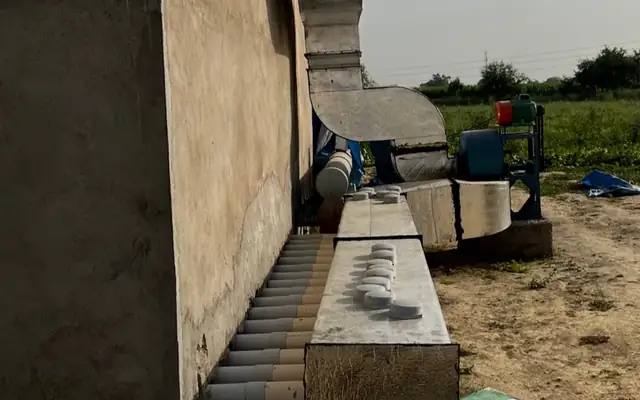 Compost
Compost Unit Training
Purchased vs self-made compost, bunker, tunnel, blower, flex pipe, mixing area, pasteurization, and compost project planning.Start Learning Engineering