
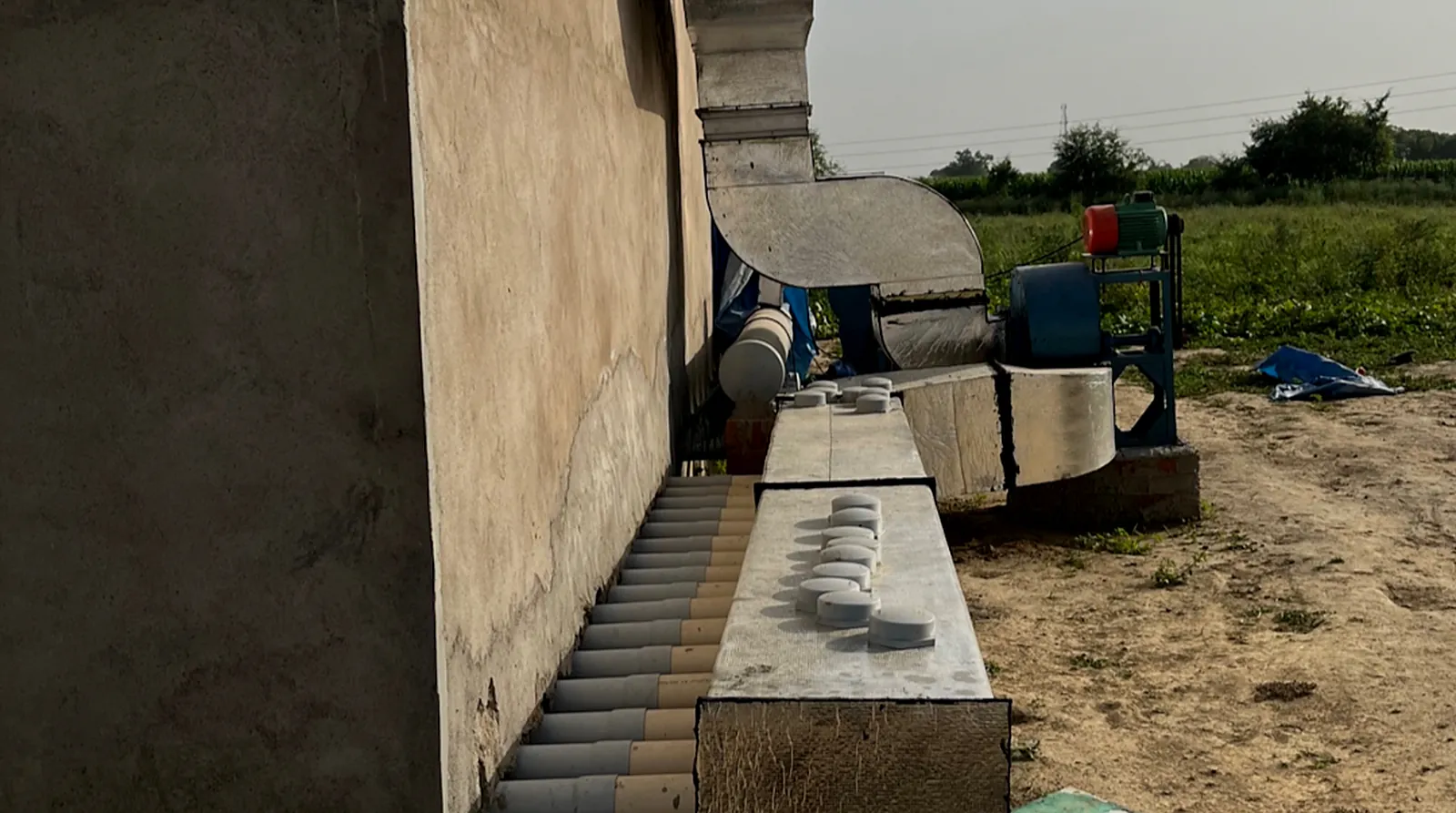
Compost Unit Training
Purchased vs self-made compost, bunker, tunnel, blower, flex pipe, mixing area, pasteurization, and compost project planning.
Compost decides your yield ceiling. A perfectly engineered room cannot rescue weak compost, which is why compost strategy must be fixed before the project is finalised.
You have two options. Buying ready Phase-III compost lowers capex and shortens the learning curve, but ties your production schedule and margin to an external supplier. Making your own compost gives control over quality, timing and cost per bag, but adds capital cost, land, machinery, skilled supervision and a separate operating discipline.
A compost unit is built around three areas. The mixing/pre-wet yard is where straw, chicken manure, gypsum and additives are wetted and turned. The bunker handles Phase 1 — aerated fermentation with controlled airflow through a blower and flex-pipe network. The tunnel handles Phase 2 — pasteurisation and conditioning, where temperature is held to kill pests and pathogens and to convert ammonia into microbial protein.
MushroomWale's standard compost units are planned at two sizes: a 20 ton per cycle unit (about 2,000 bags per cycle) and a 30 ton per cycle unit (about 3,000 bags per cycle), both on a 15-day cycle basis. Match unit size to your total room demand across the crop schedule — an oversized unit idles, an undersized one starves your rooms.
Blower selection, air distribution and static pressure are the most commonly underestimated items. Uneven airflow in a bunker creates cold and anaerobic zones, which produce inconsistent compost from the same batch. Flex pipe hole pattern, spacing and blower capacity must be engineered together, not copied.
Compost unit costs are quoted separately from grow-room costs. Civil work, sheds, boundary and electrical infrastructure remain client scope; GST @18% and transportation are extra.
Continue Learning
 Beginner
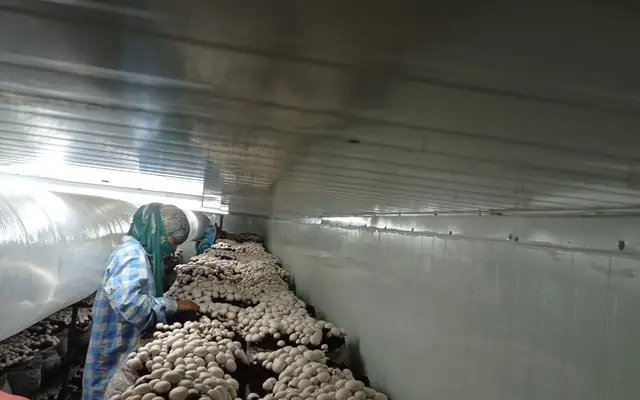
Beginner Mushroom Farming
Understand whether mushroom farming is right for you, required land, budget, labour, power, water, crop options, risk factors, and first-step planning.Start Learning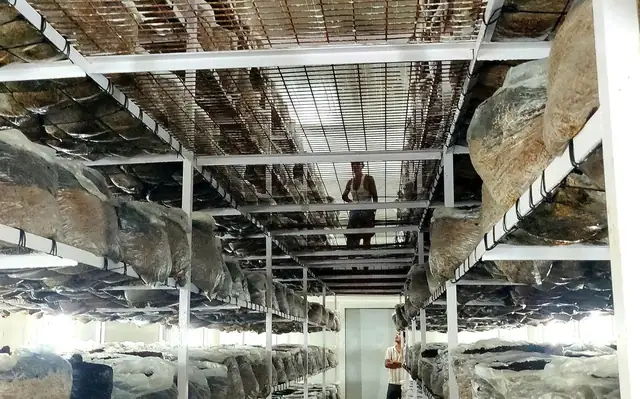 Commercial
Commercial Button Mushroom Project
Room sizing, rack planning, production cycle, cooling requirement, investment logic, and commercial project models.Start Learning Engineering