
RecommendedBulk price
Image for reference onlyProduction Room Parts
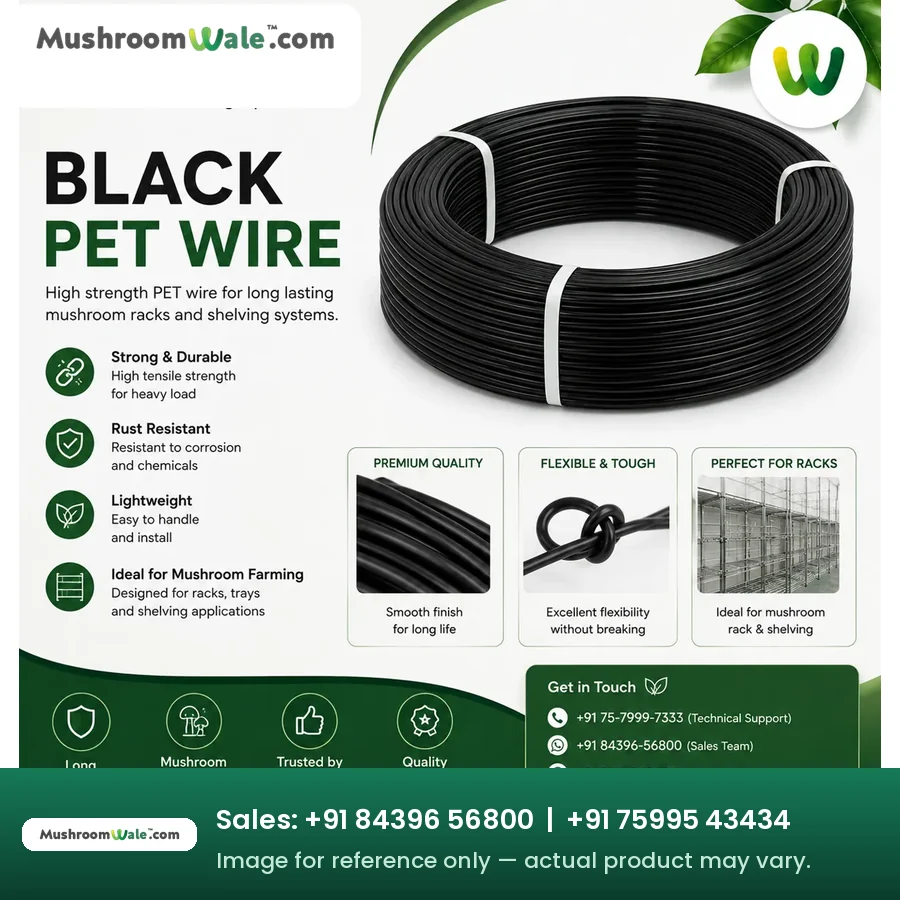
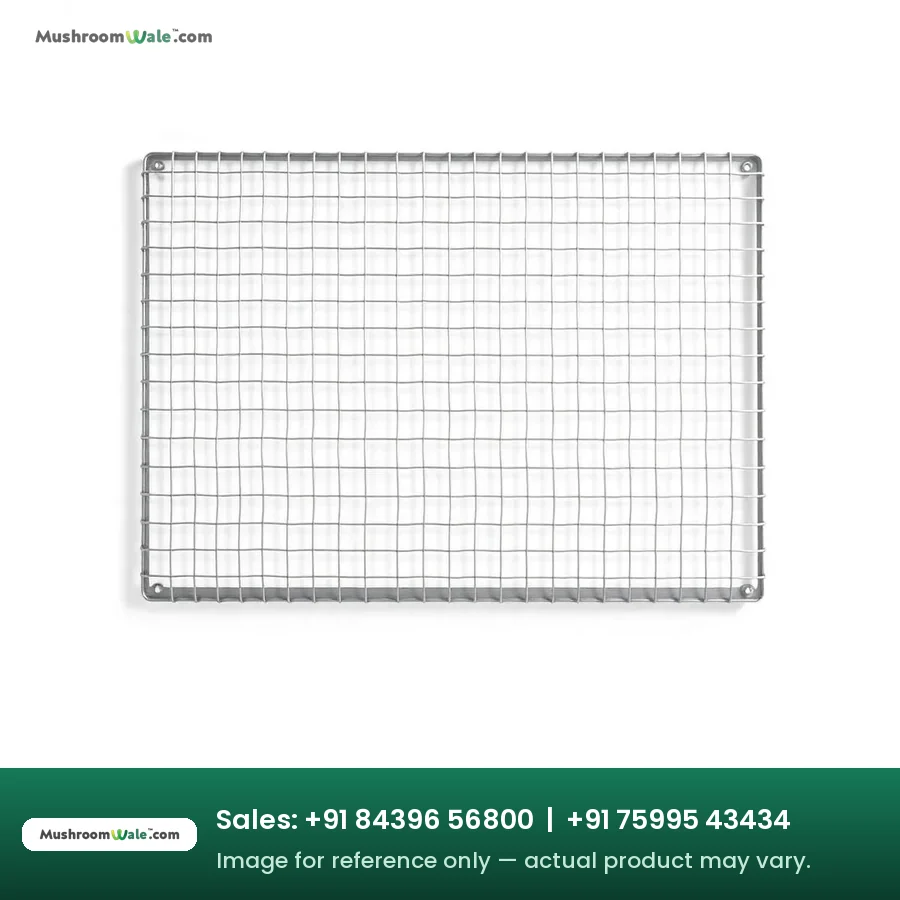
PET Wire for Mushroom Racks
3 mm PET wire for mushroom racks — 1 Kg = 100 m. MOQ 25-30 Kg bag.
Complete mushroom farming equipment for compost units and growing rooms — growing racks, PUF panels, humidifiers, fresh-air blowers, dampers and ducting, climate sensors and controllers, harvesting crates and daily consumables. Every item is the same specification MushroomWale installs on its own turnkey projects, supplied with GST invoice and PAN India despatch from Firozabad, Uttar Pradesh.
69 items listed with live pricing or quote-on-request.
Production Room Parts
3 mm PET wire for mushroom racks — 1 Kg = 100 m. MOQ 25-30 Kg bag.
Testing & Measuring
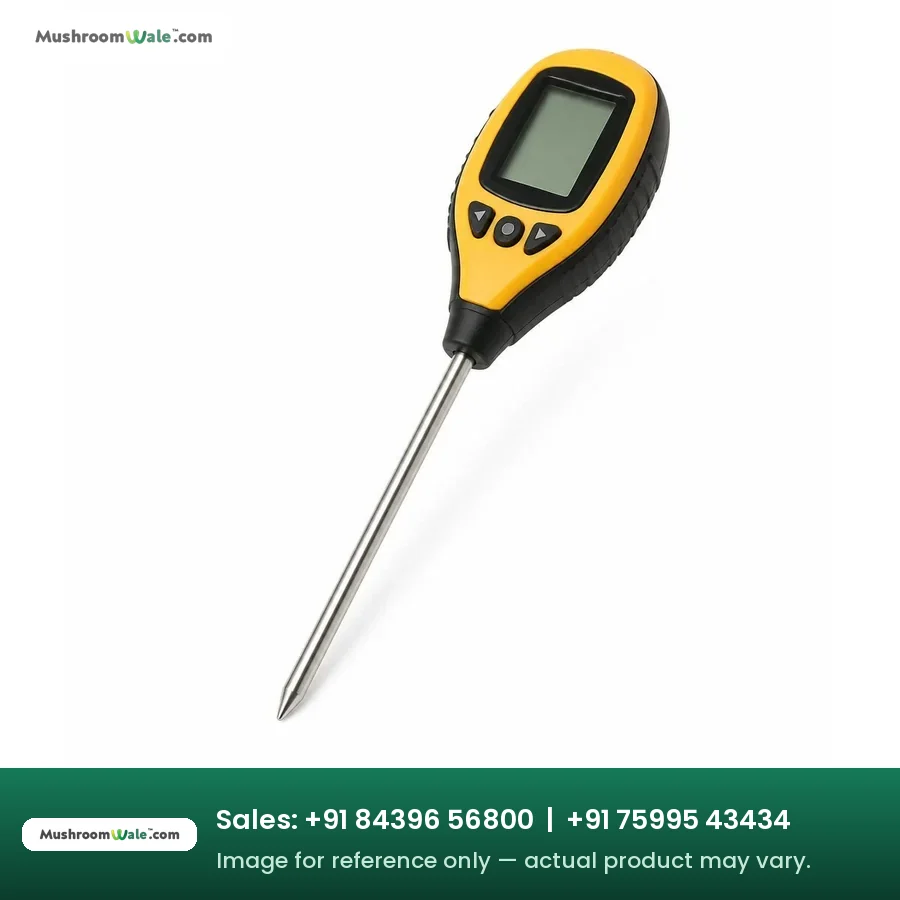
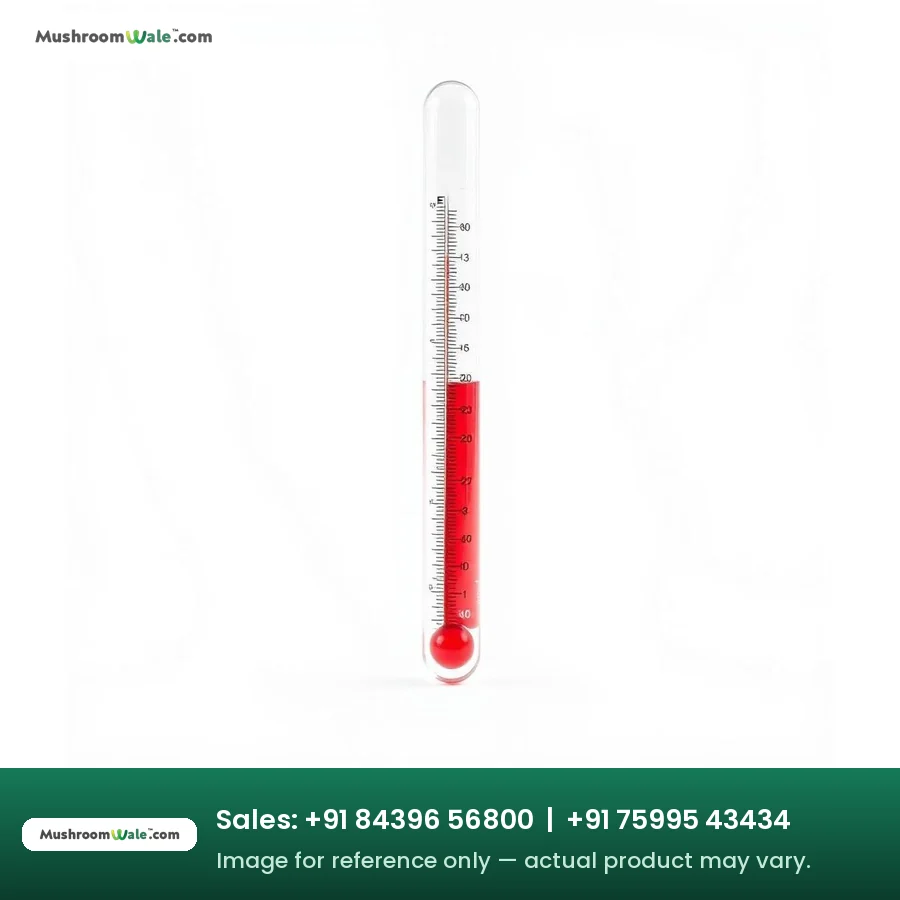
Digital moisture meter, 0-80%, 200 mm probe, calibration screw
Climate & Control
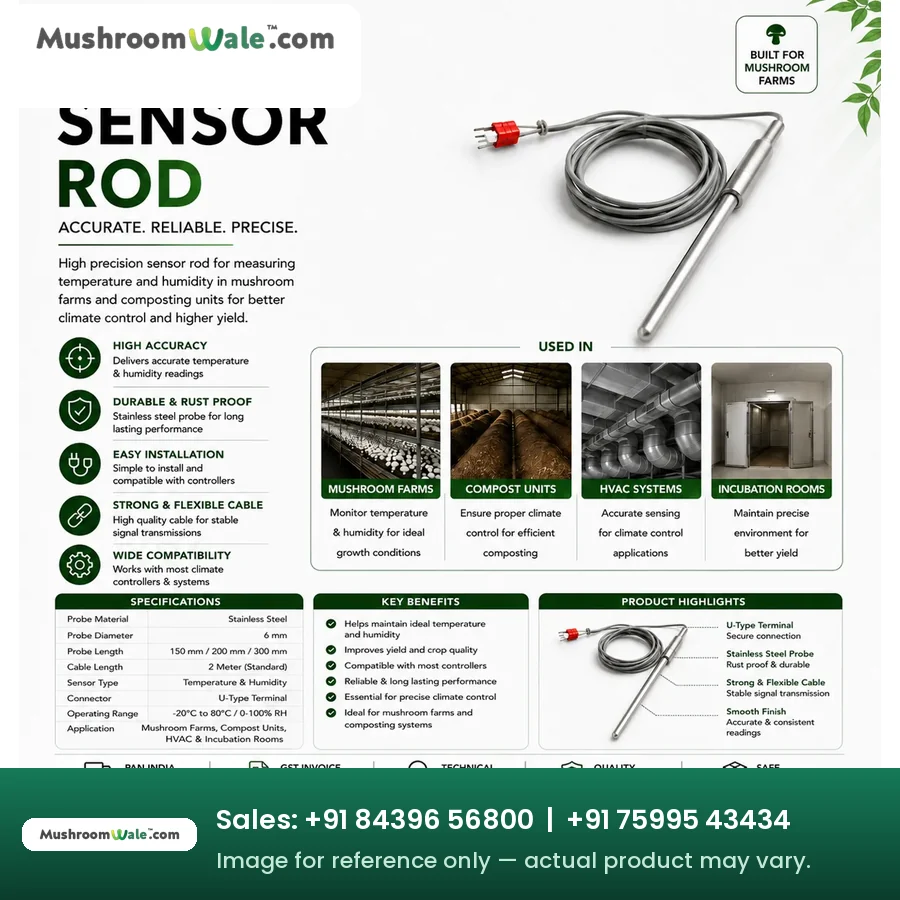
Sensor rod + controller meter + 18 m Teflon wire
Electrical & Controllers
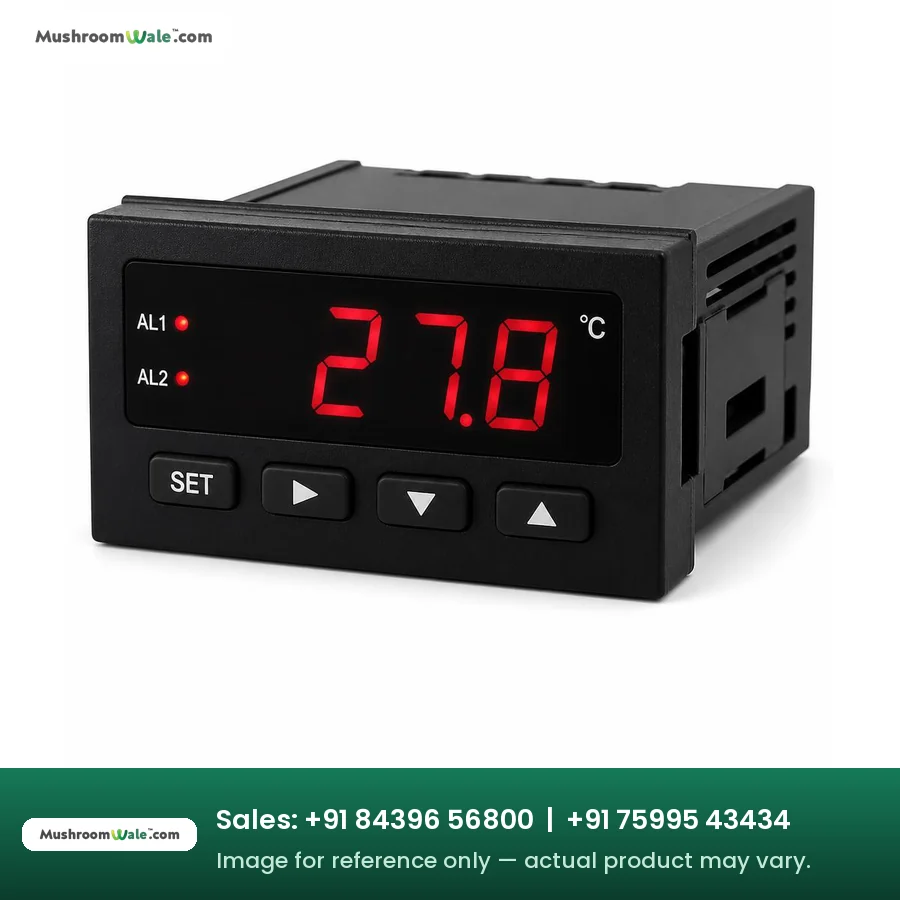
Reads up to 5 sensor rods, one at a time
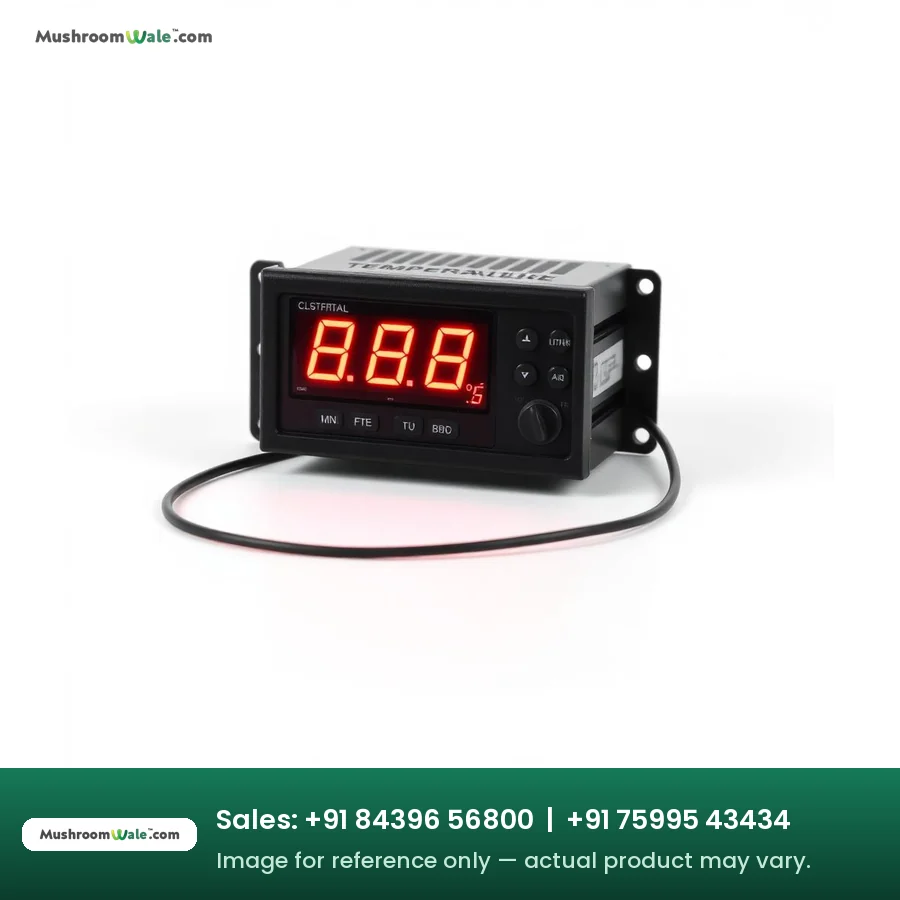
Electrical & Controllers
DTC-302 type, single sensor rod input with alarm
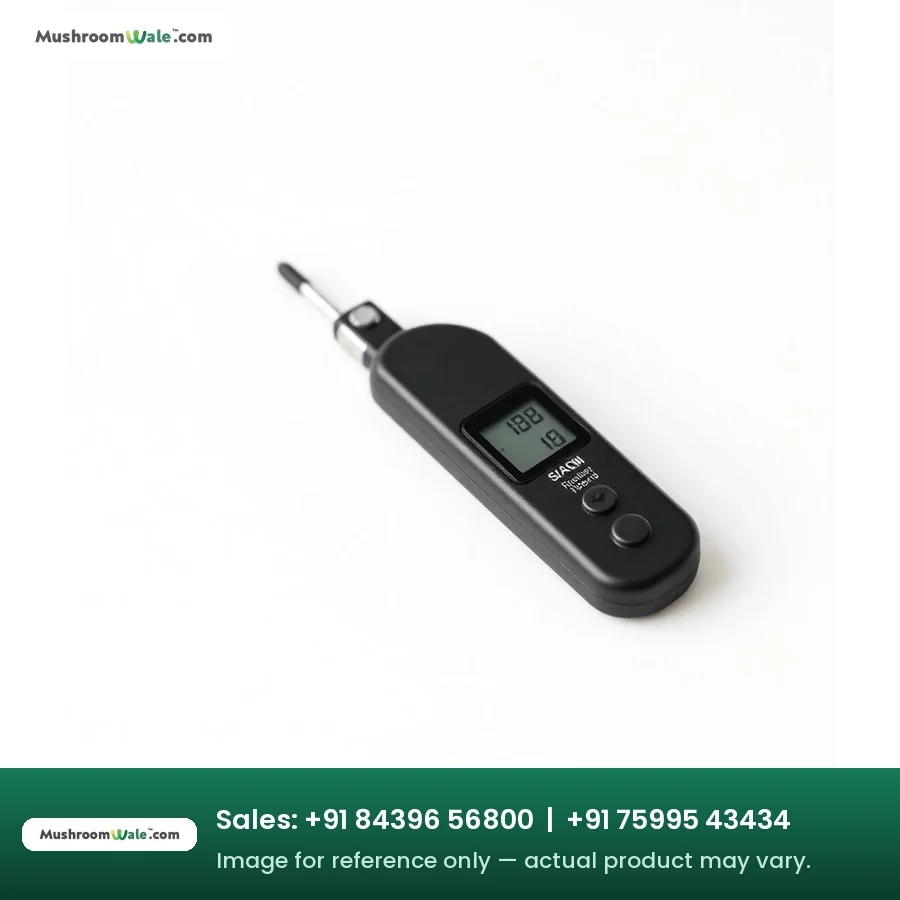
Testing & Measuring
Pocket probe meter, C/F switchable, data hold, max/min
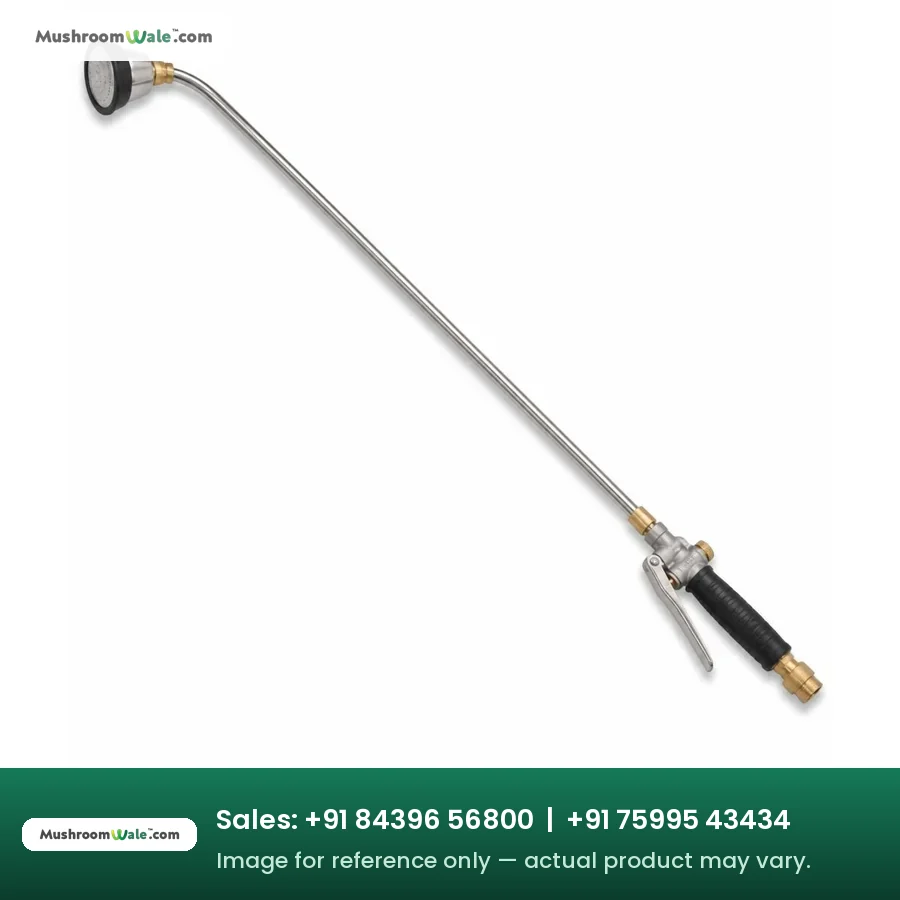
Humidification & Watering
SS lance, 900 mm, fan spray head, trigger control
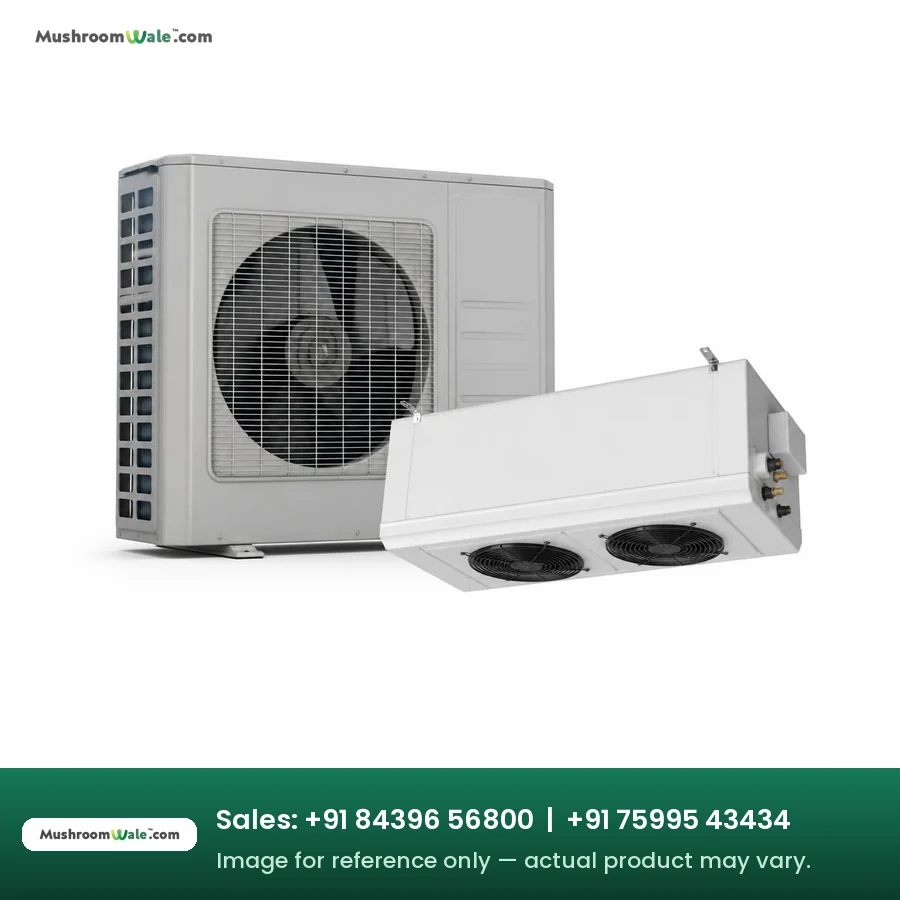
Cooling Machines (Daikin & Carrier)
Daikin 6 TR HMT set: 1x Outdoor Unit (6 HP, R410A, 3-phase) + 1x Indoor HMT evaporator (550mm fan)
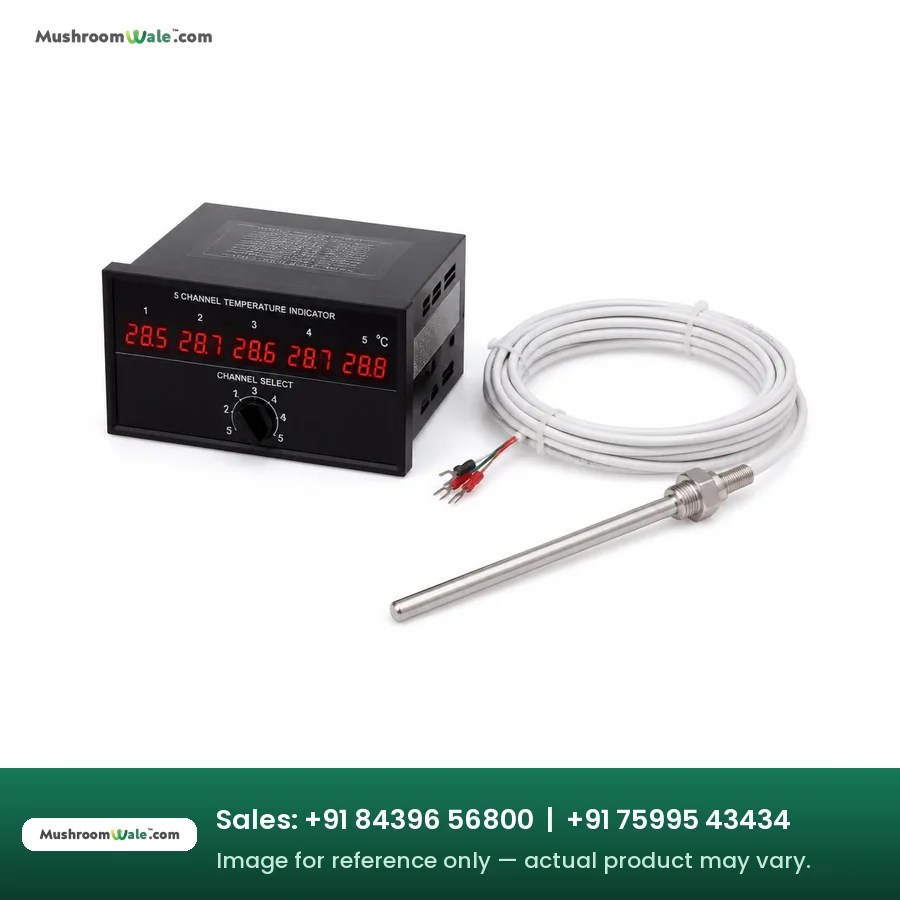
Climate & Control
Sensor rod + 5-point indicator meter + 18 m Teflon wire
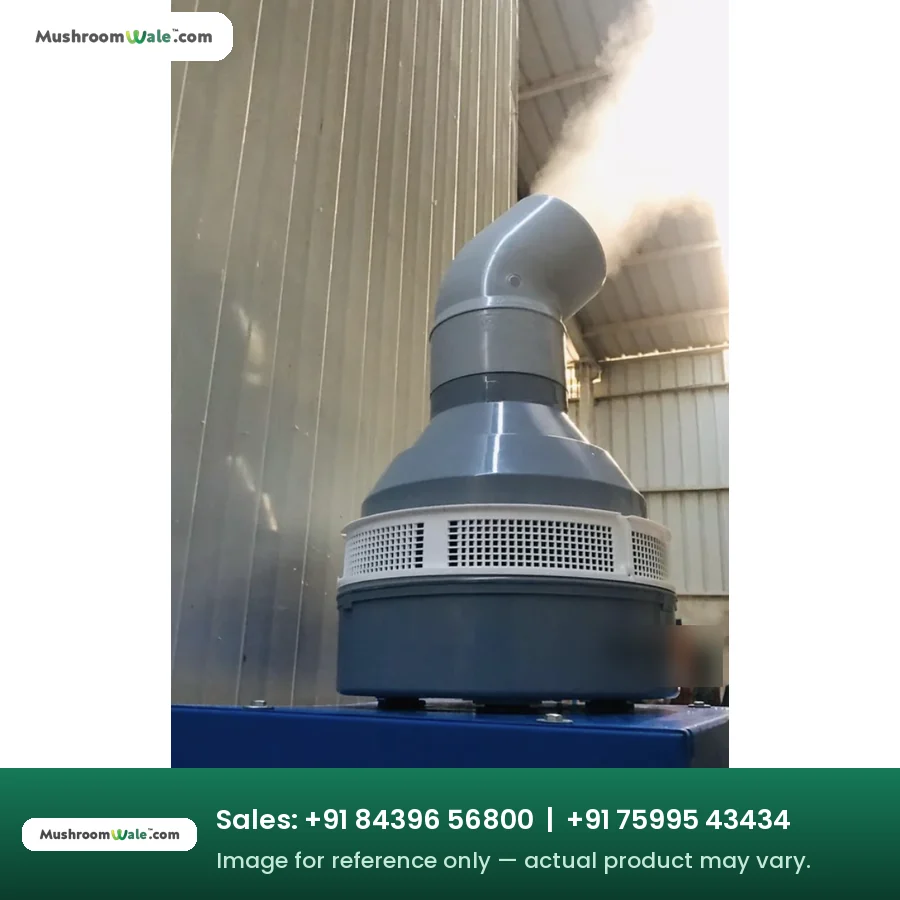
Humidification & Watering
Heavy fogging output with sensor and controller
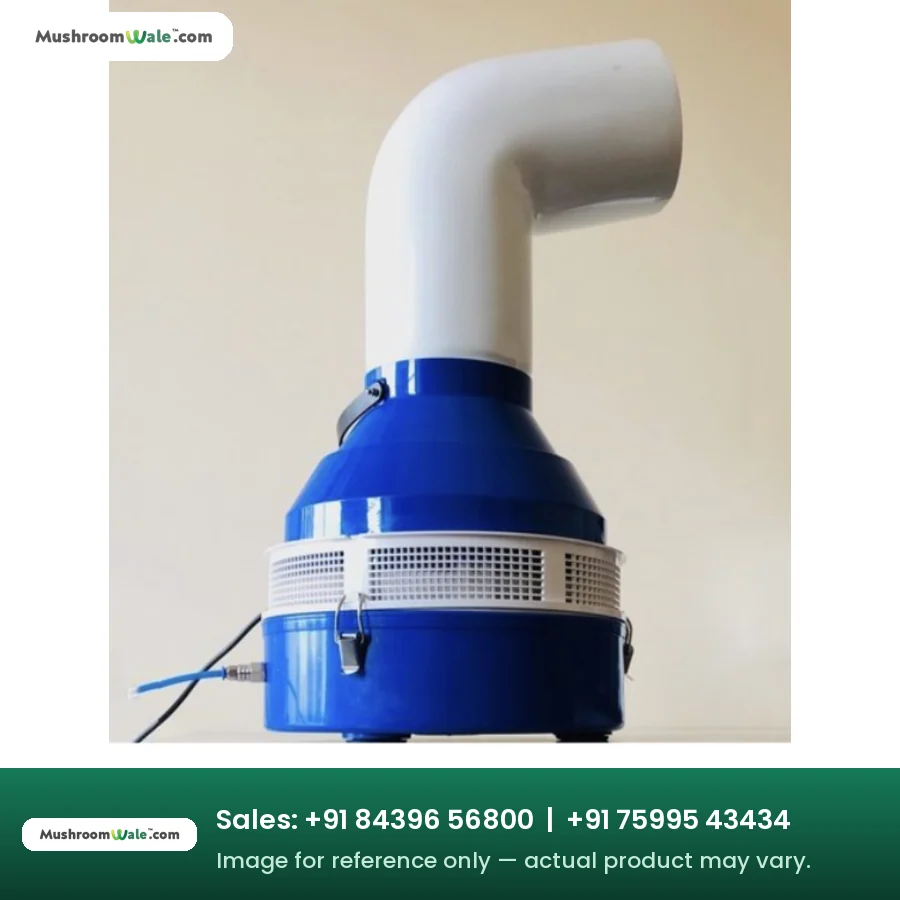
Humidification & Watering
200 pints/day, 4 L per hour, dual motor
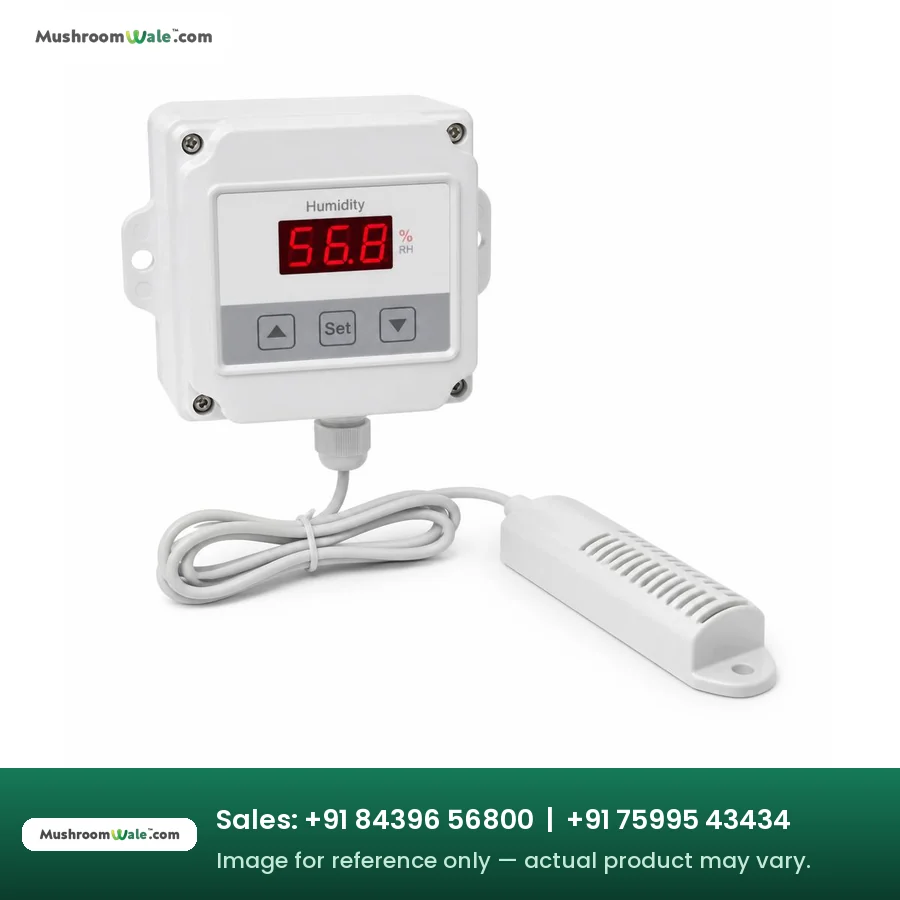
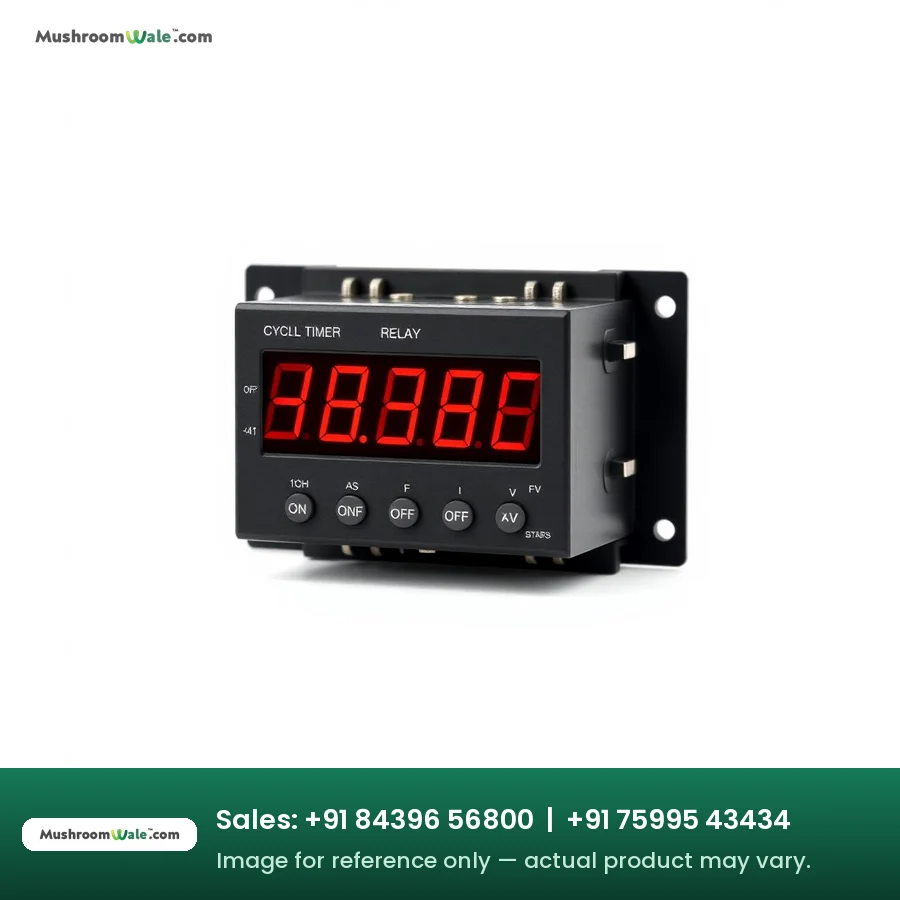
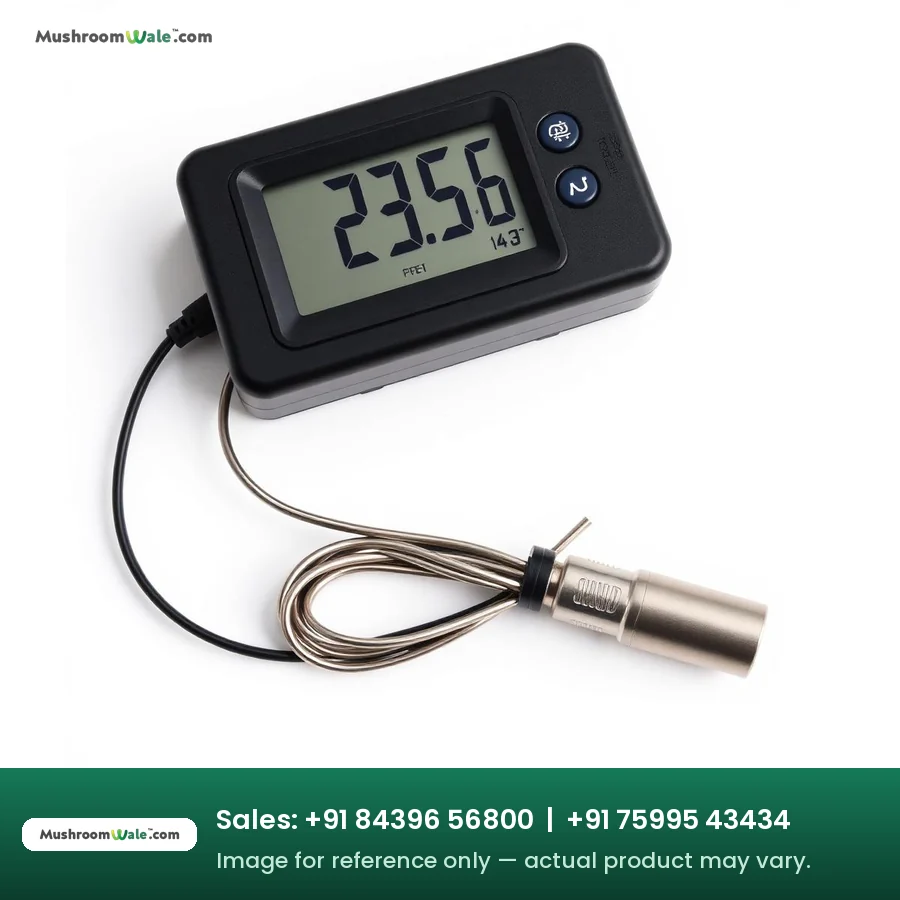
Testing & Measuring
Dual display temperature and humidity meter with probe
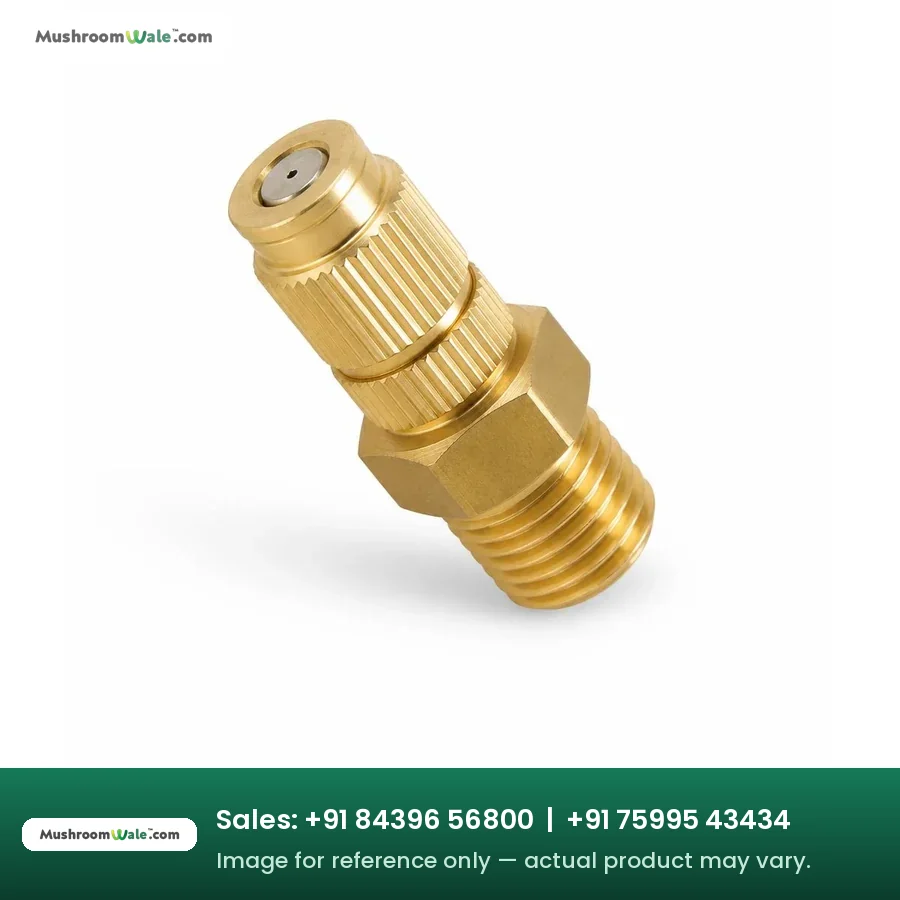
Humidification & Watering
Brass anti-drip fogging nozzle, 0.3 mm orifice, 70 bar rated
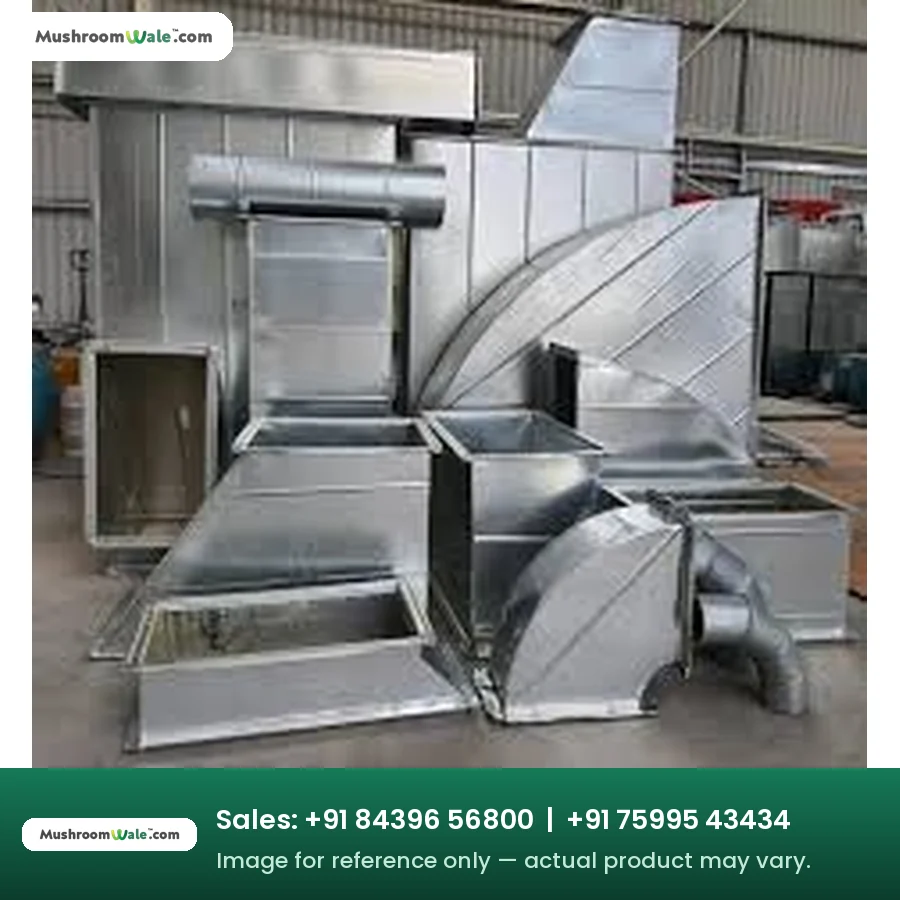
Airflow & Ventilation
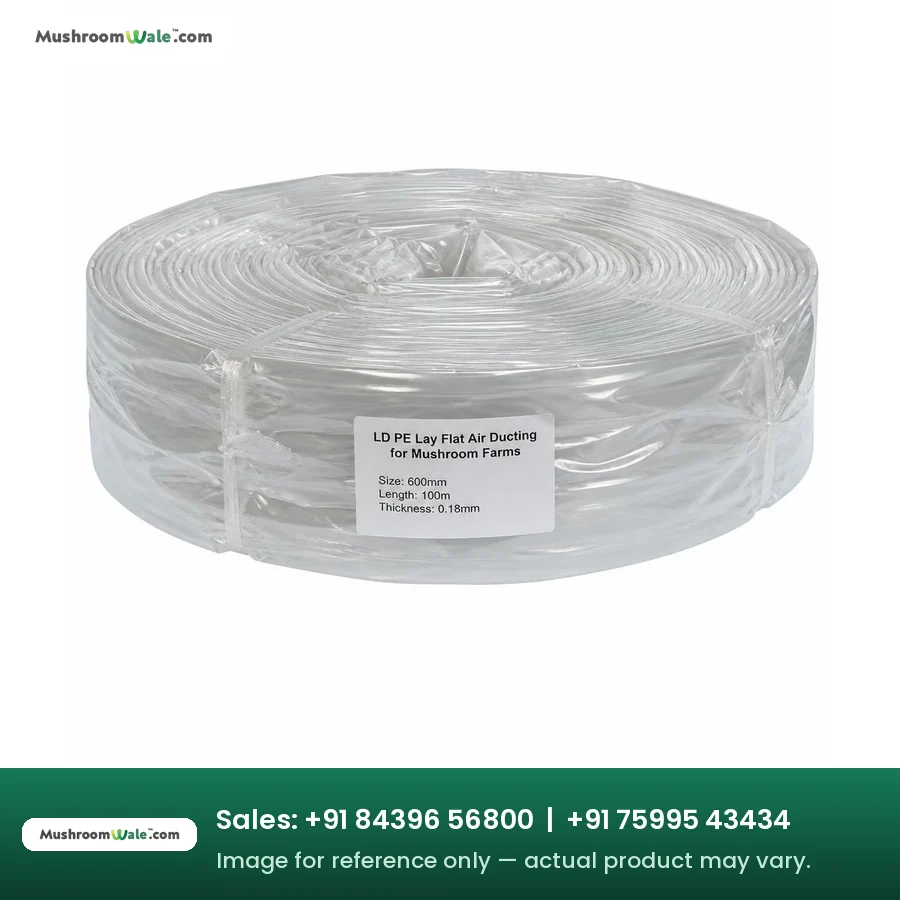
GI sheet duct, 24 gauge, custom section, flanged joints
Cooling Machines (Daikin & Carrier)
Daikin 8 TR HMT set: 2x Outdoor Unit (4 HP each, R32, 3-phase) + 1x Indoor HMT dual-circuit evaporator (550mm fan)
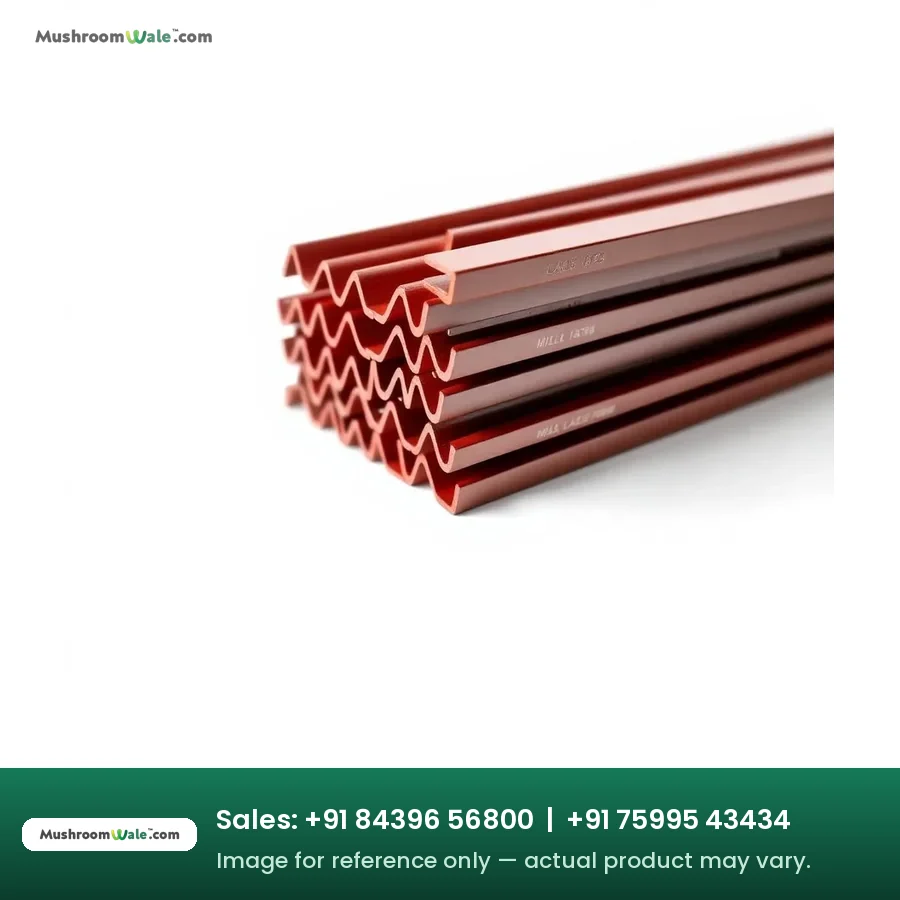
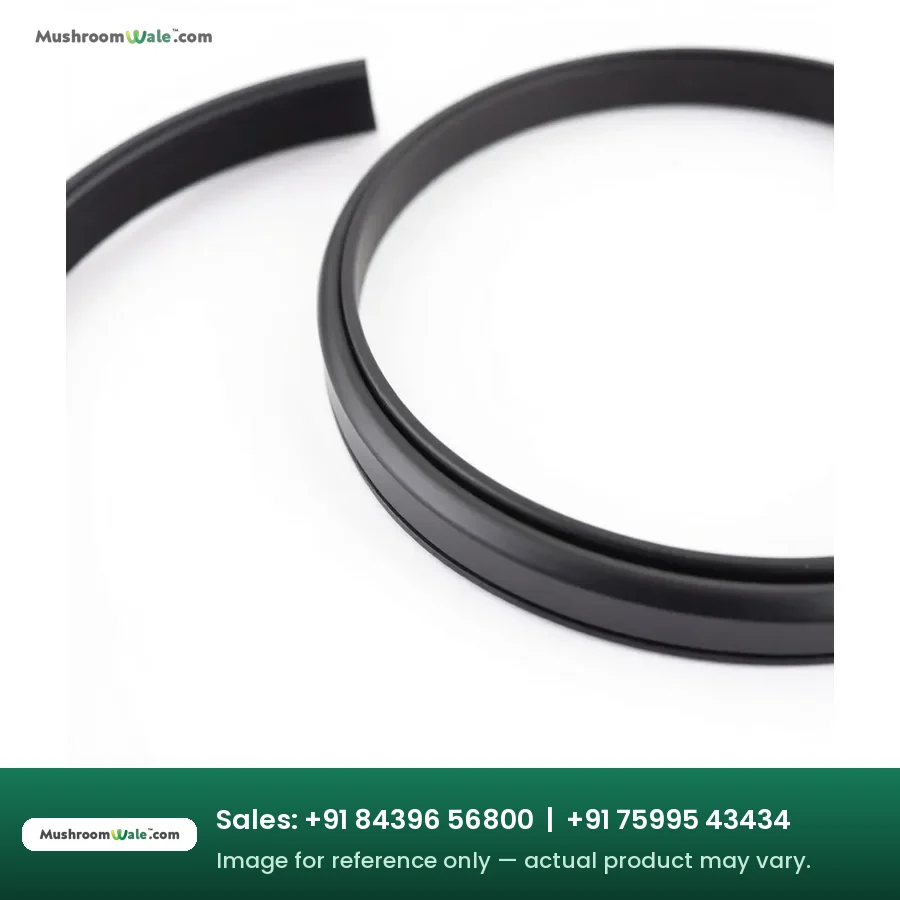
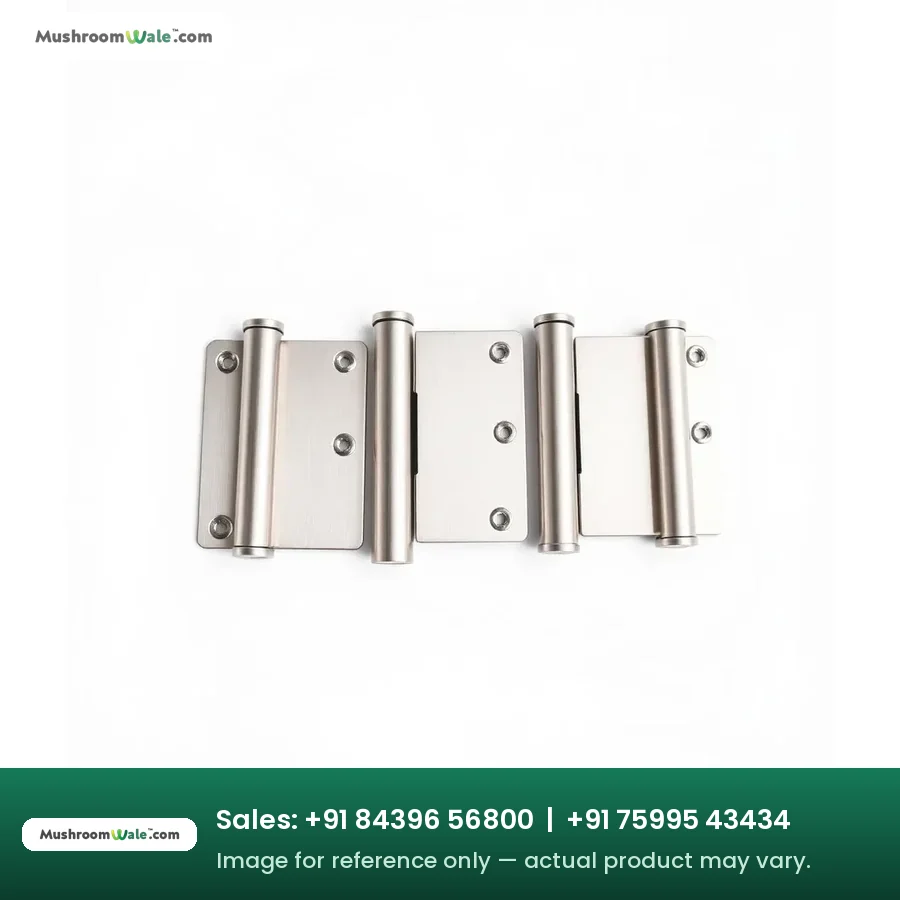
Production Room Parts
SS 304 hinge set, 3 pieces, heavy duty, panel door rated
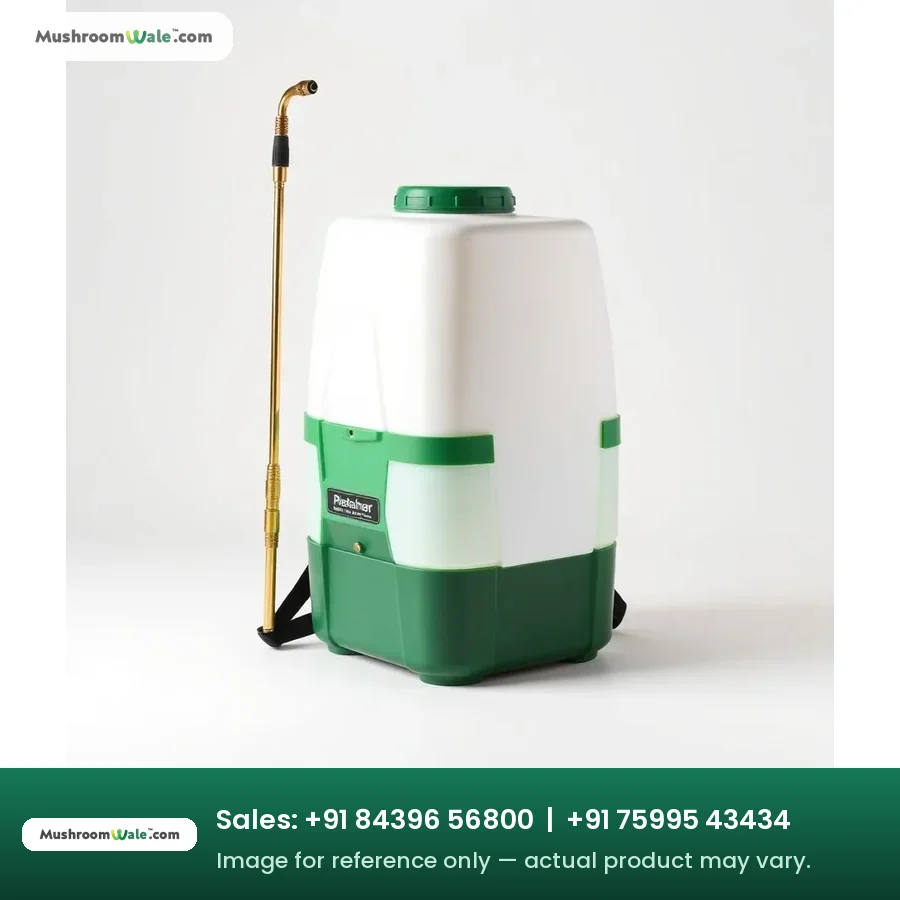
Cleaning & Sanitation
Manual knapsack sprayer, 16 L, brass lance, adjustable nozzle
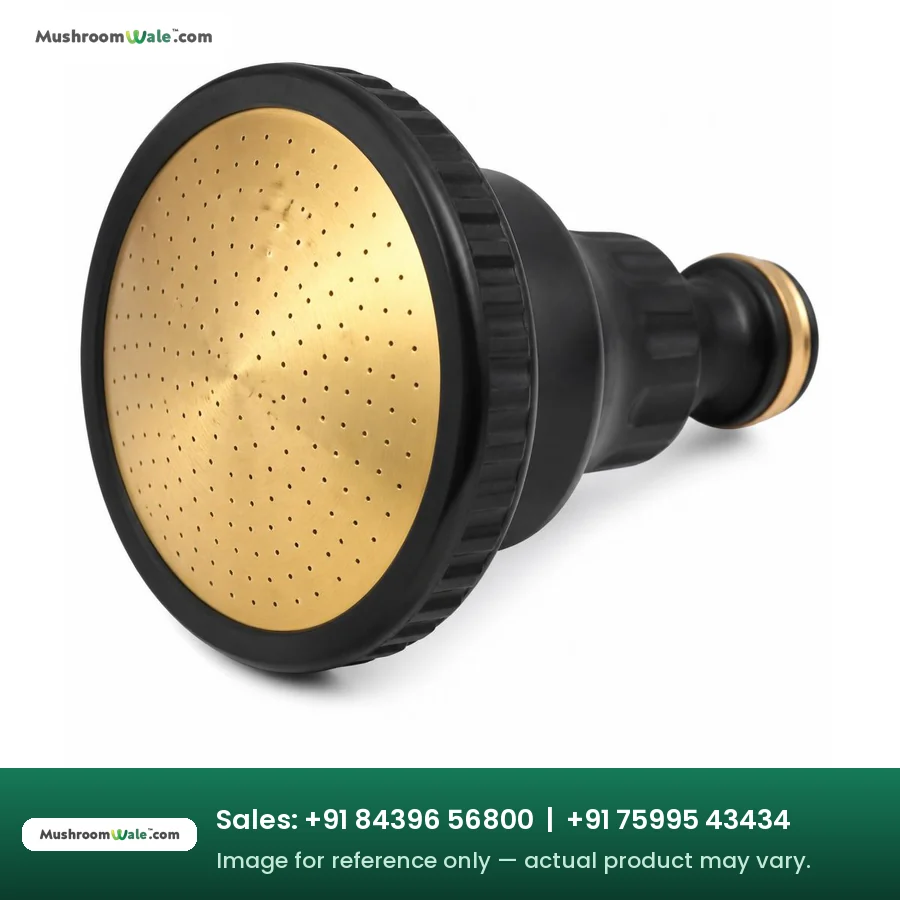
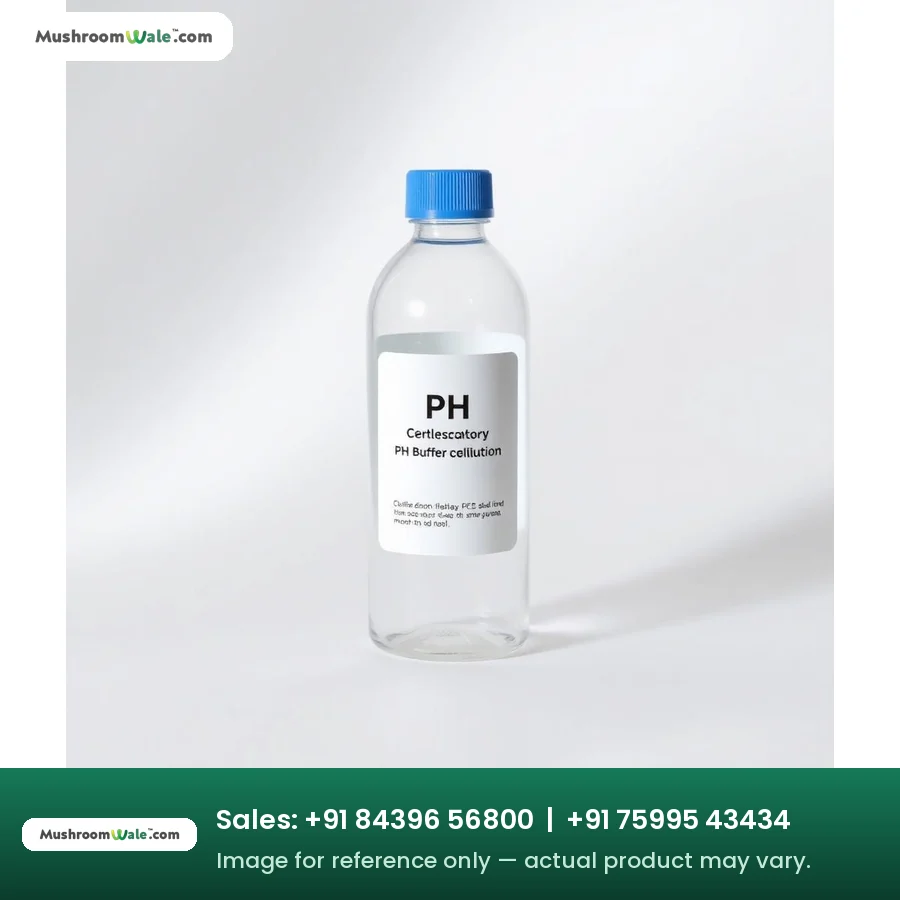
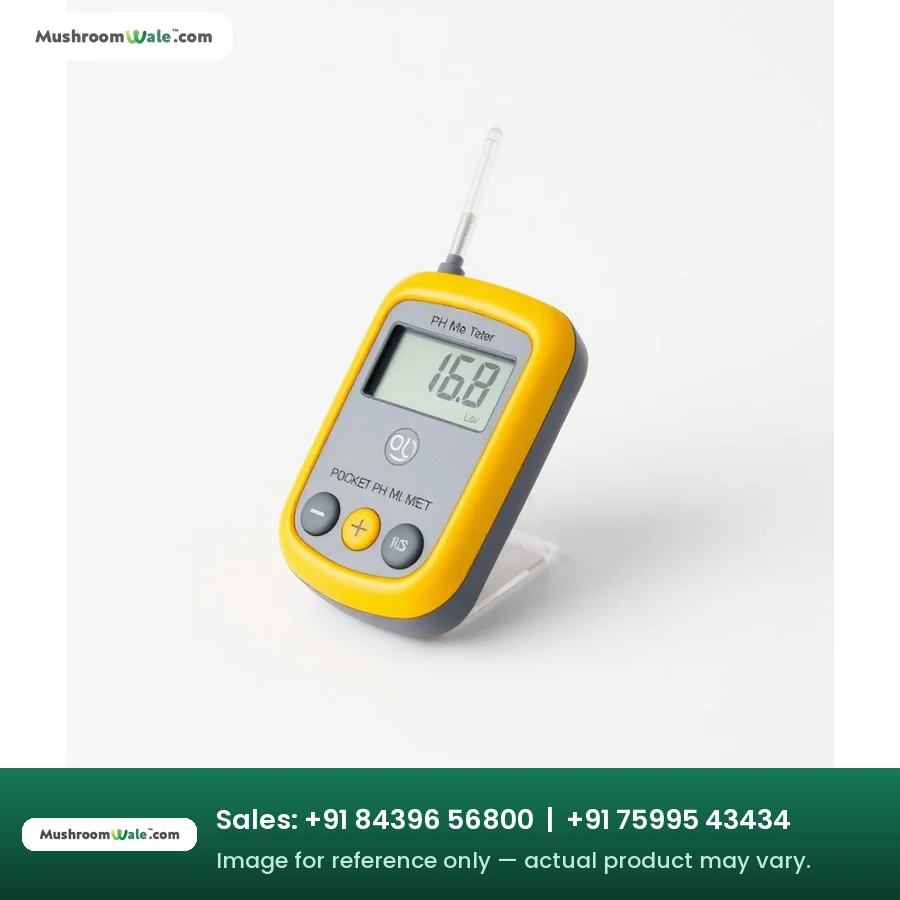
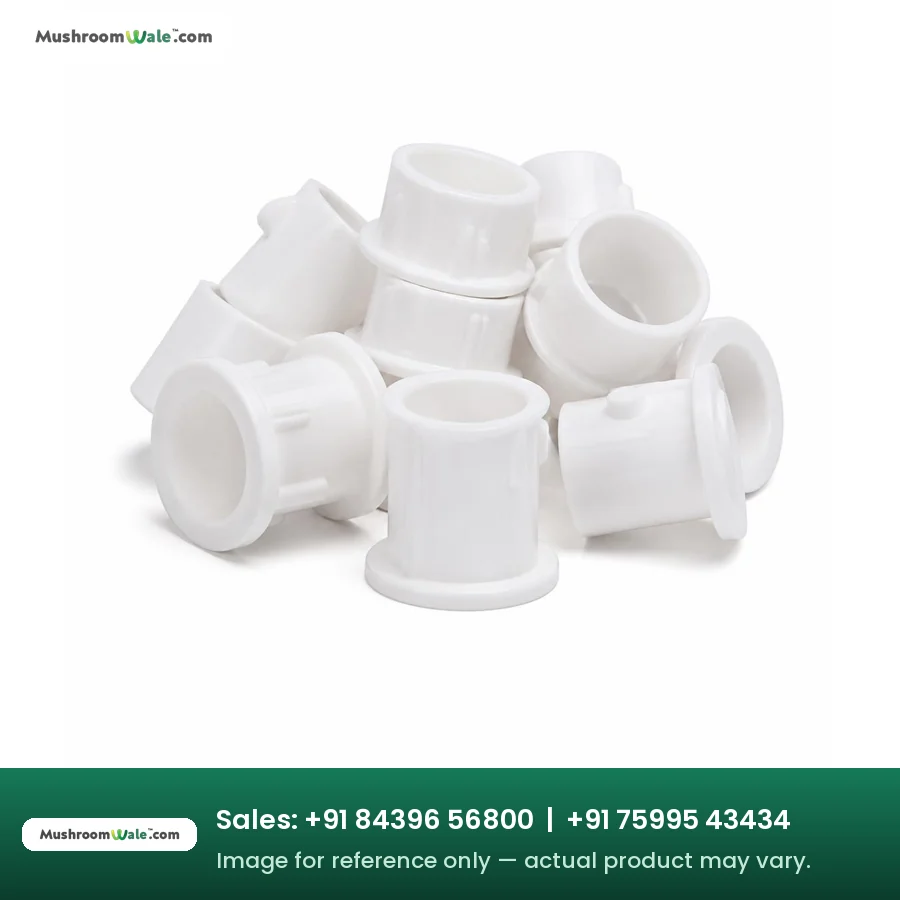
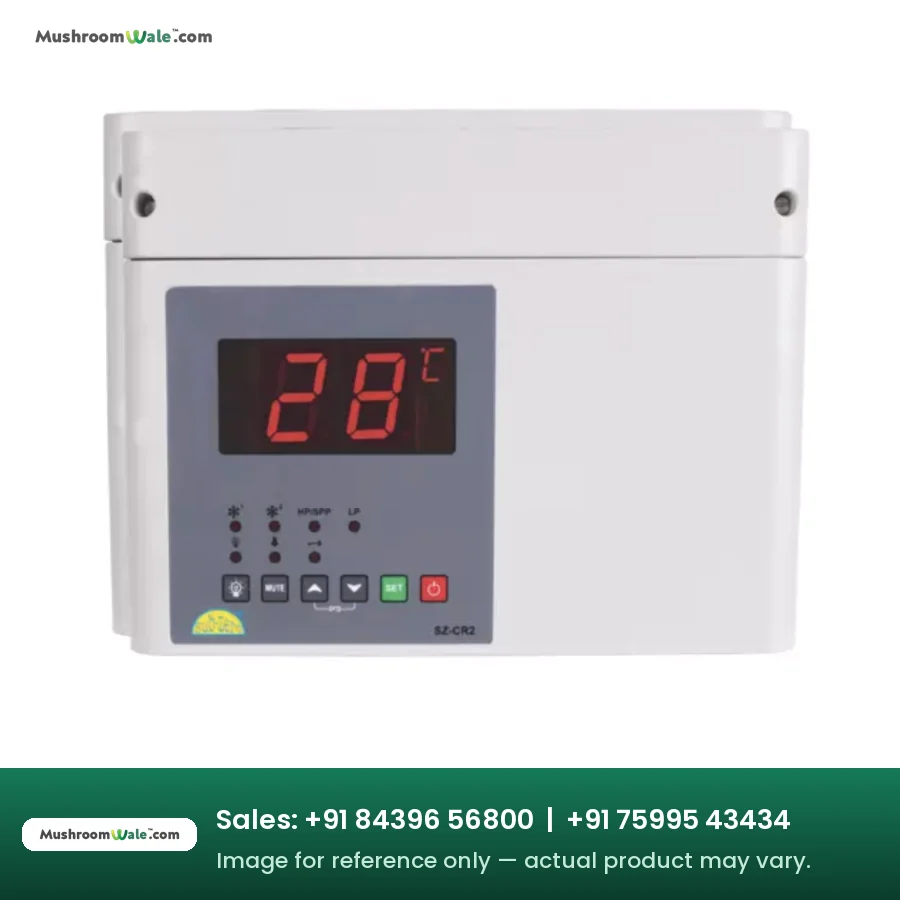
Electrical & Controllers
7-segment LED, NTC probes, -45C to +35C, 230 Vac
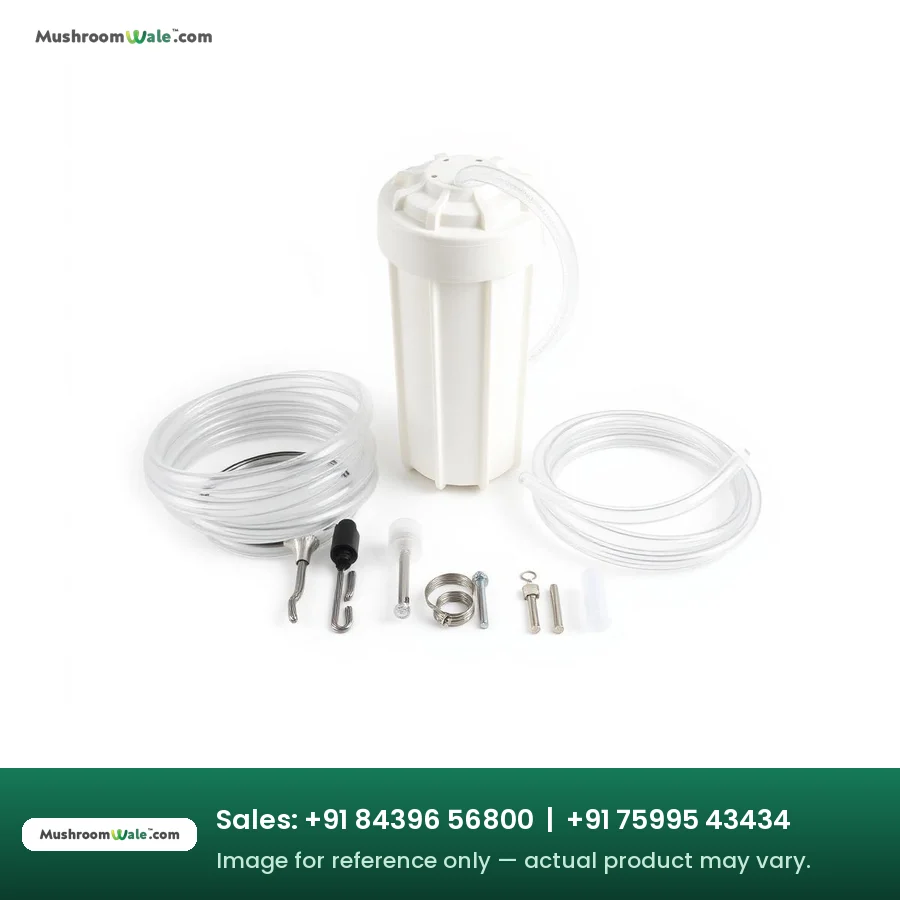
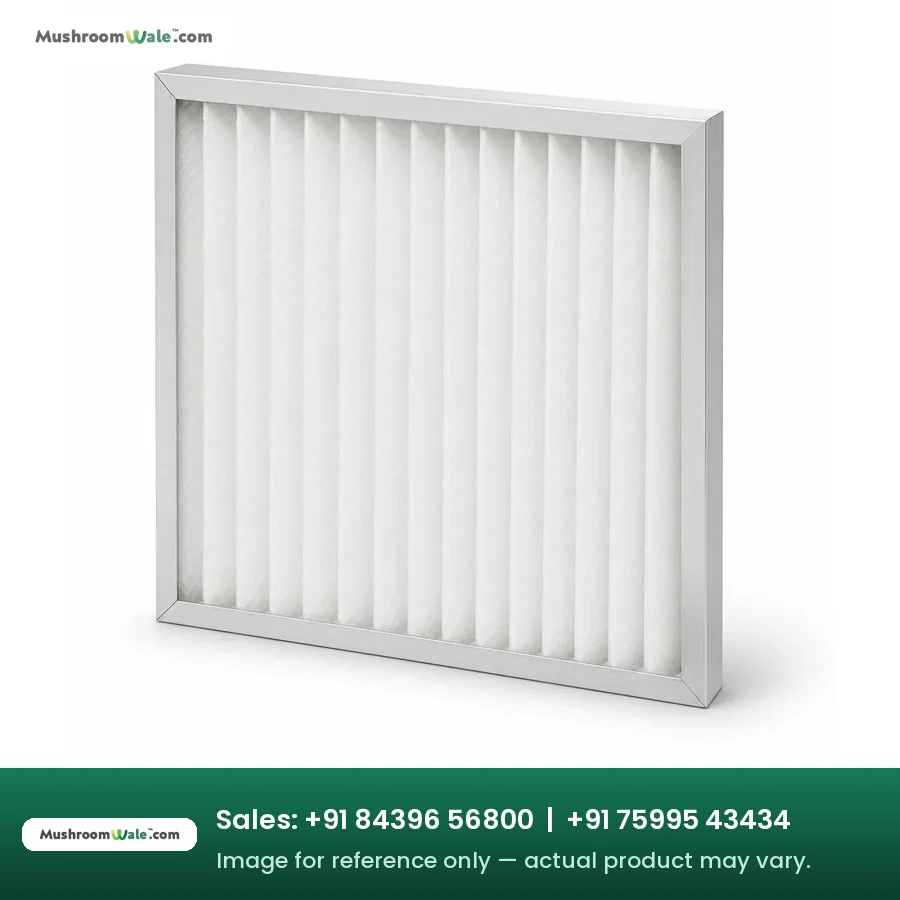
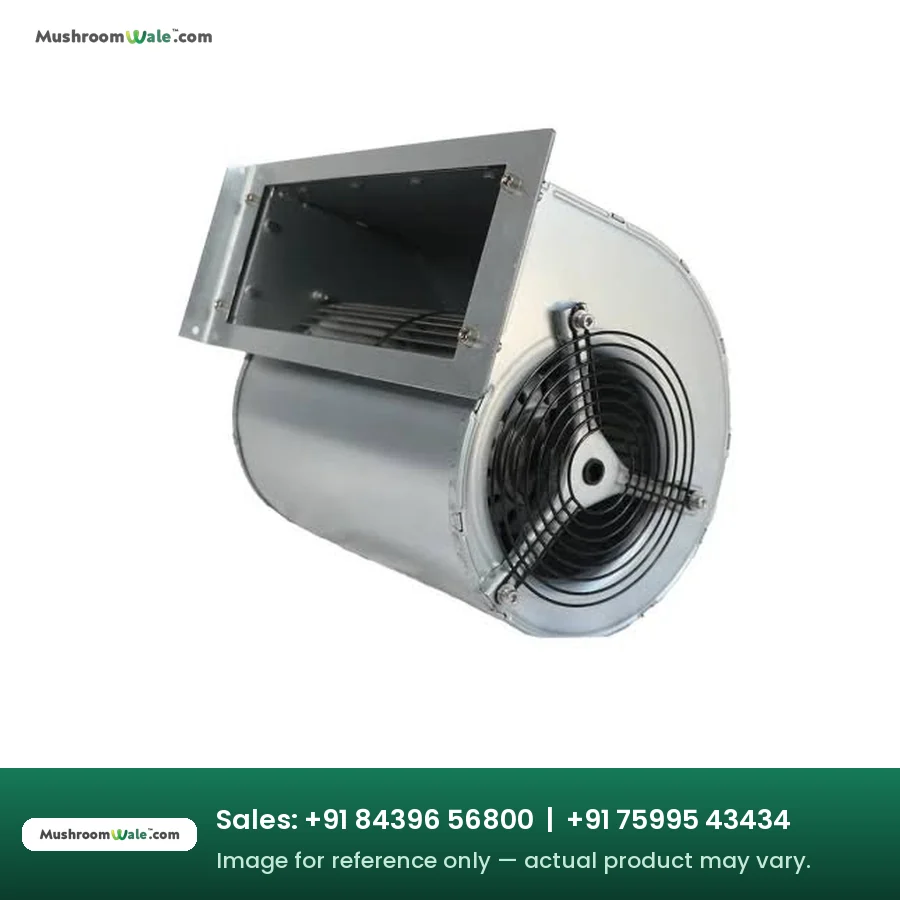
Airflow & Ventilation
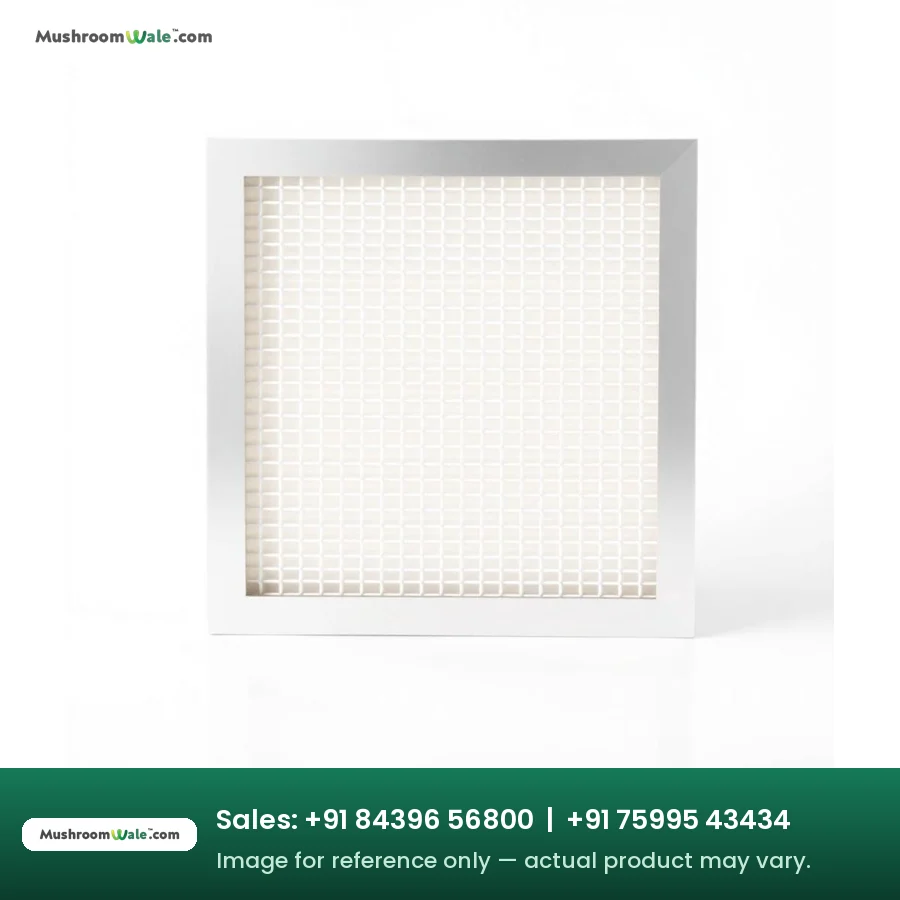
Washable synthetic media panel filter, 10 micron, aluminium frame
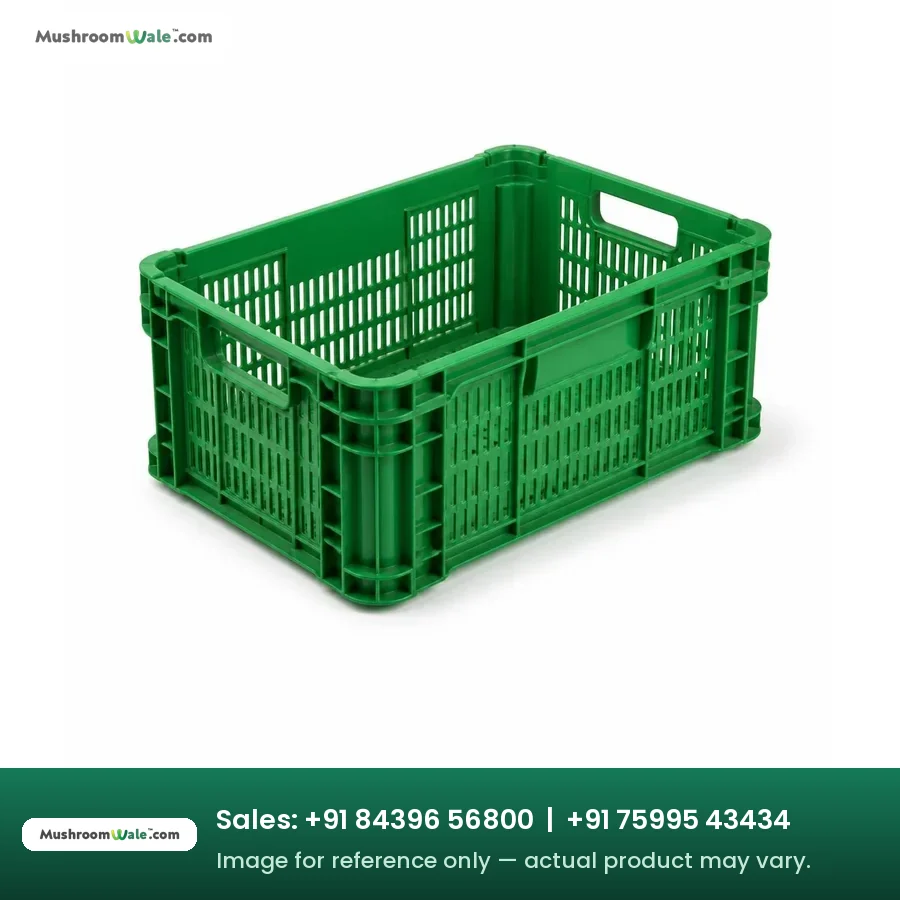
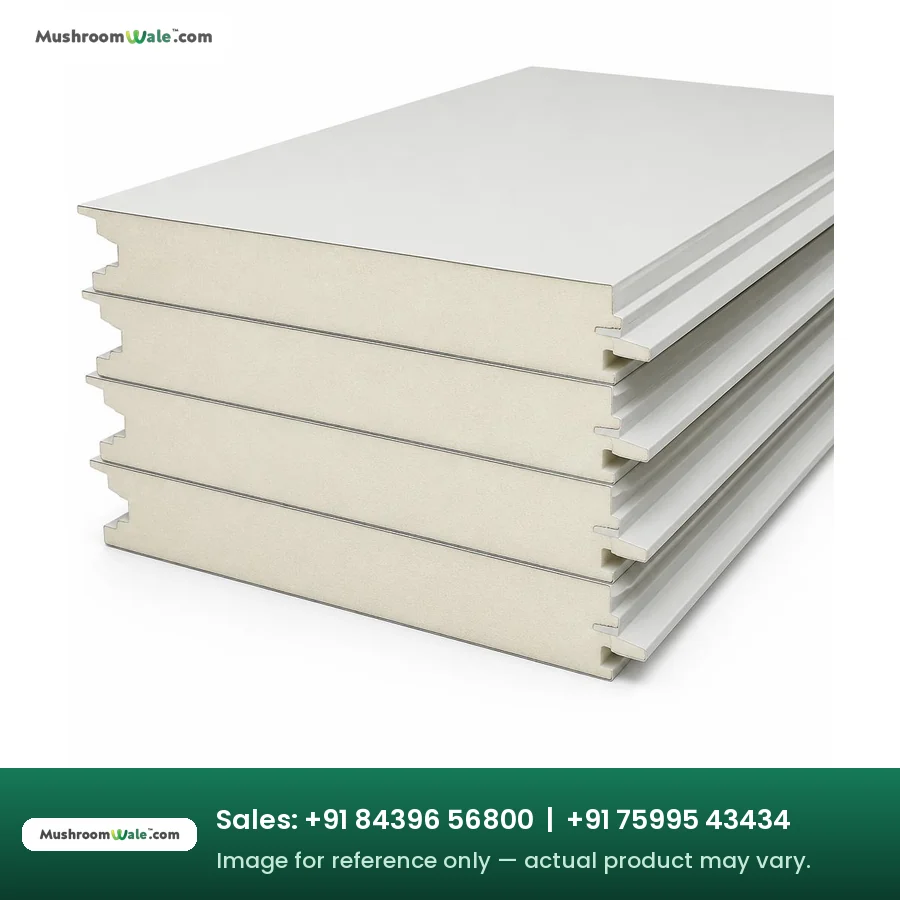
PUF Panels & Insulation
60mm PUF sandwich panel, PPGL pre-painted galvalume both sides, 40±2 kg/m3 density, camlock joint
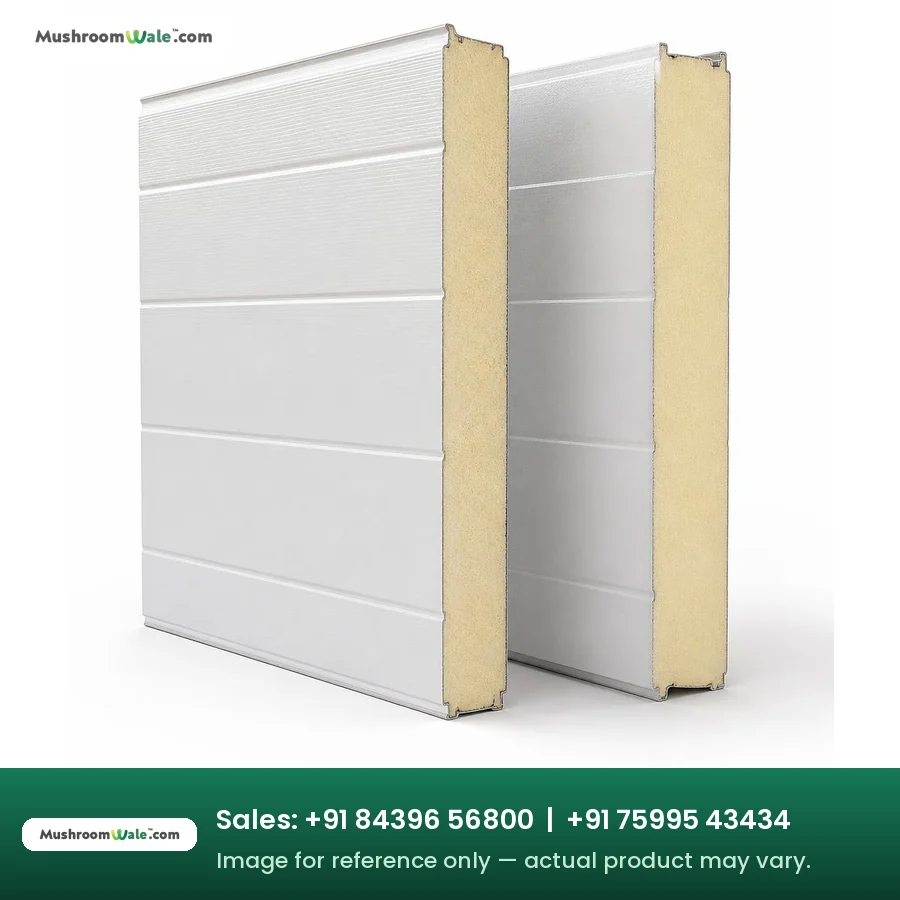
PUF Panels & Insulation
80mm PUF sandwich panel, PPGL pre-painted galvalume both sides, 40±2 kg/m3 density, camlock joint
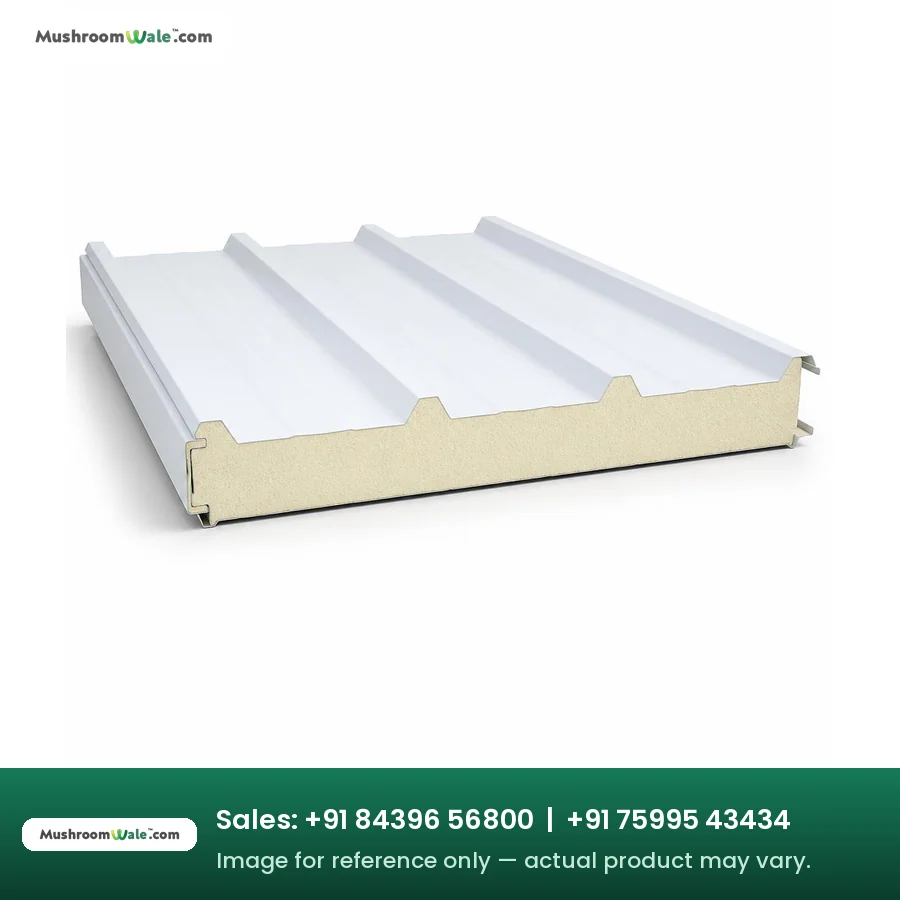
PUF Panels & Insulation
80mm / 110mm trapezoidal PUF roof panel, PPGL skin, ribbed weather-side profile
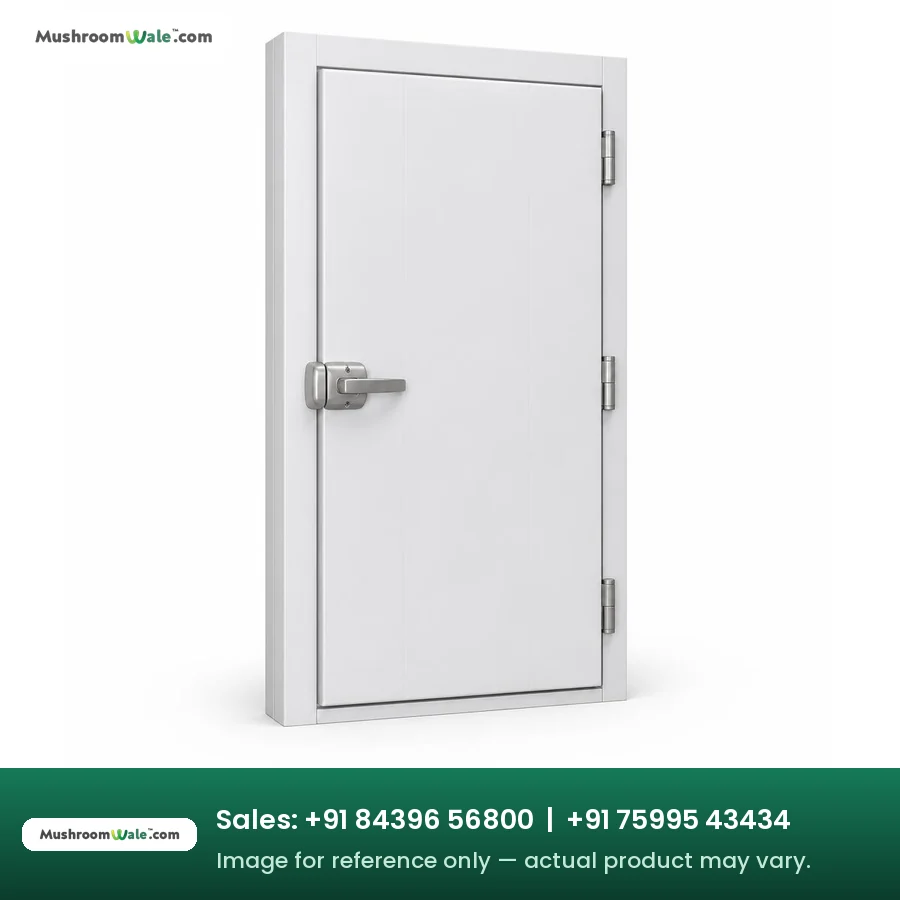
PUF Panels & Insulation
Insulated PUF flash door with SS handle and heavy-duty hinges, standard 3 ft x 7 ft
PUF Panels & Insulation
Supervised erection of wall & roof PUF panels including sealing and flashing labour
Cooling Machines (Daikin & Carrier)
Daikin 10 TR HMT set: 1x Outdoor Unit (4 HP, R32) + 1x Outdoor Unit (6 HP, R410A) + 1x Indoor HMT dual-circuit evaporator
Cooling Machines (Daikin & Carrier)
Daikin 12 TR HMT set: 2x Outdoor Unit (6 HP each, R410A, 3-phase) + 1x Indoor HMT dual-circuit evaporator
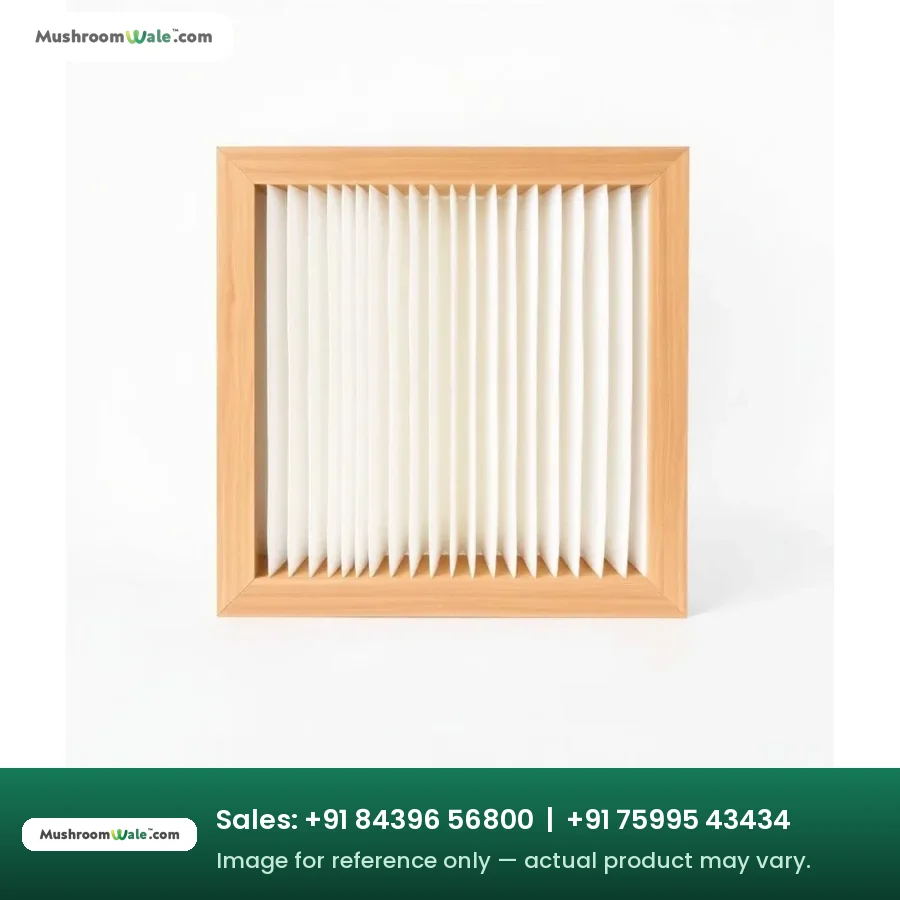
Airflow & Ventilation
H14 HEPA filter, 99.995% efficiency at 0.3 micron, MDF frame
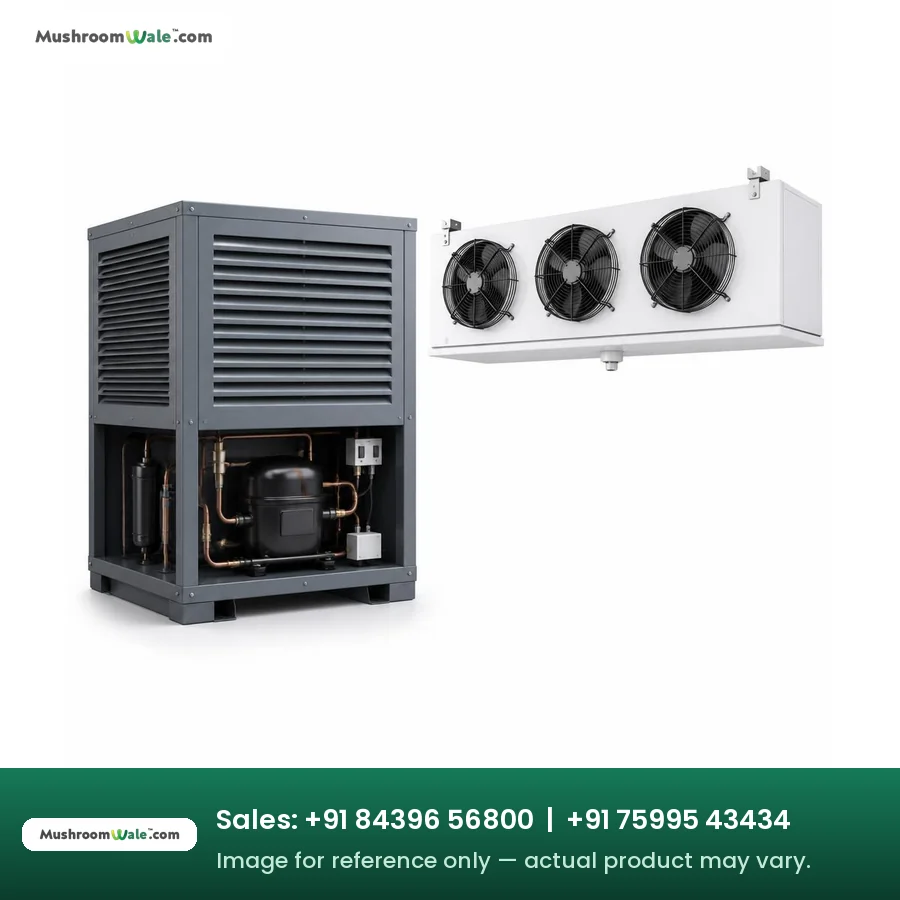
Cooling Machines (Daikin & Carrier)
Carrier (Haier-CCR) commercial refrigeration condensing unit + matched evaporator, R-404a, 53,900 BTU/hr @ +18°C
Compost Unit Parts
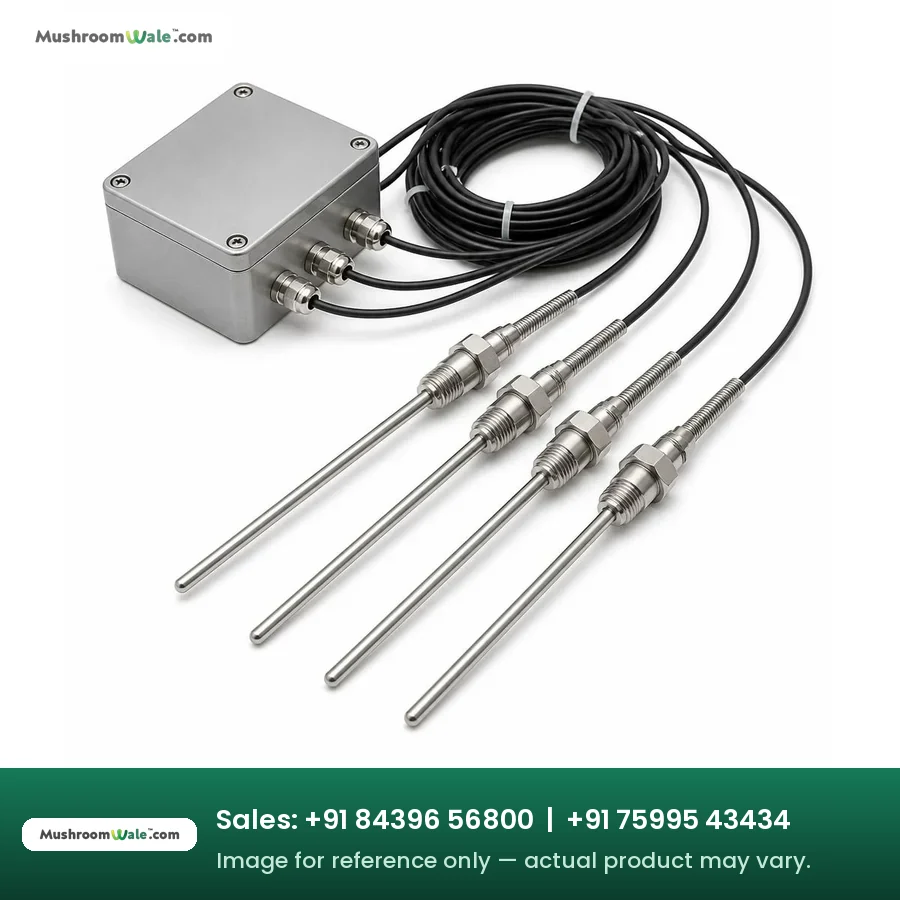
Set of 4 PT100 probes with junction box and cable, 1000 mm
Cooling Machines (Daikin & Carrier)
Carrier (Haier-CCR) commercial refrigeration condensing unit + matched evaporator, R-404a, 79,900 BTU/hr @ +18°C
Cooling Machines (Daikin & Carrier)
Carrier (Haier-CCR) commercial refrigeration condensing unit + matched evaporator, R-404a, 1,07,800 BTU/hr @ +18°C
Chemicals & Consumables
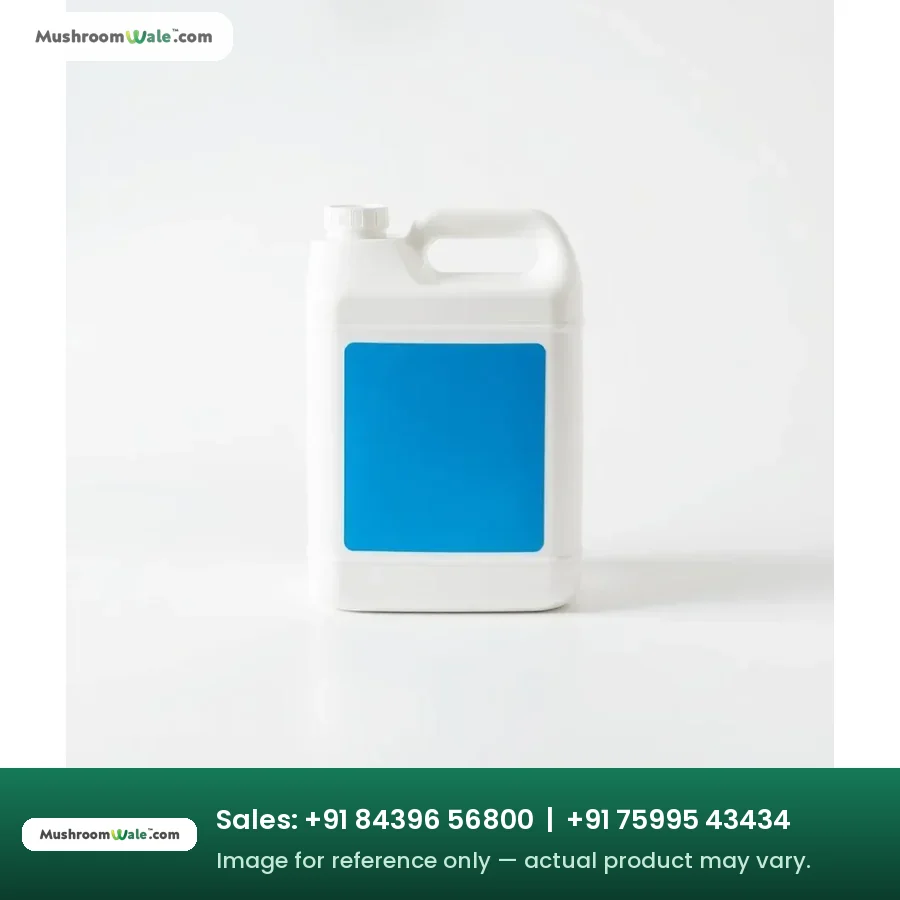
Broad spectrum farm disinfectant concentrate, batch and expiry tracked

Chemicals & Consumables
Regulated crop-protection input, licensed sale only, batch and expiry tracked
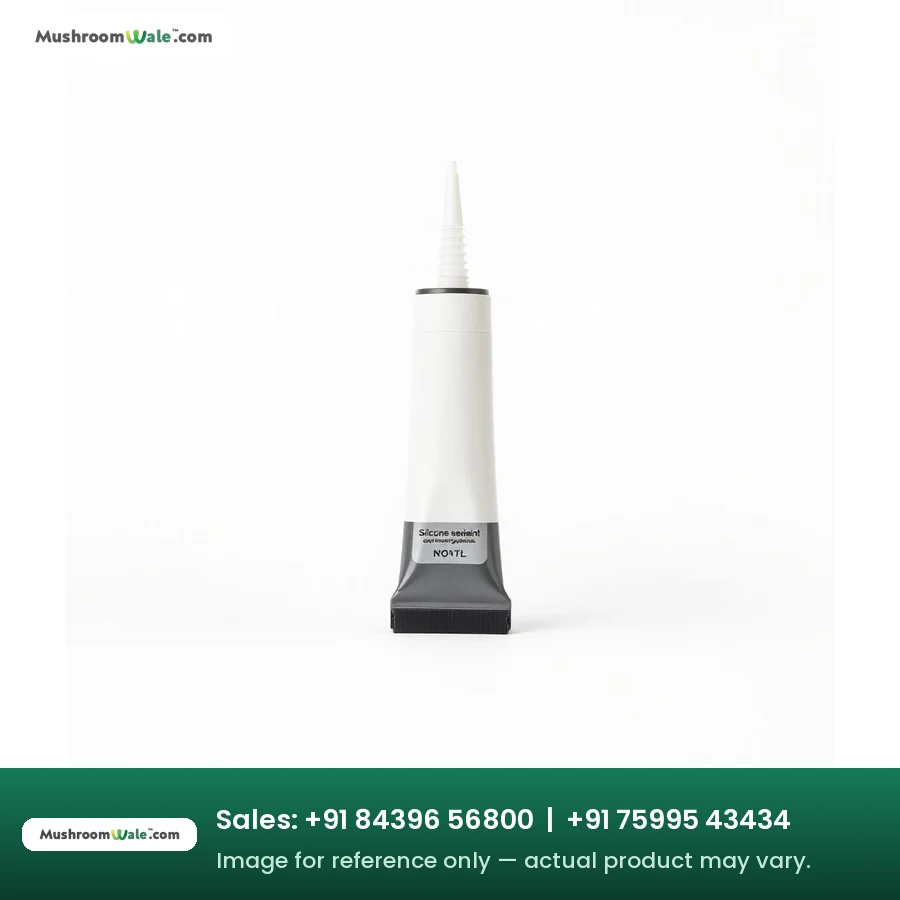
Neutral cure silicone for panel joints
Compost Unit Parts
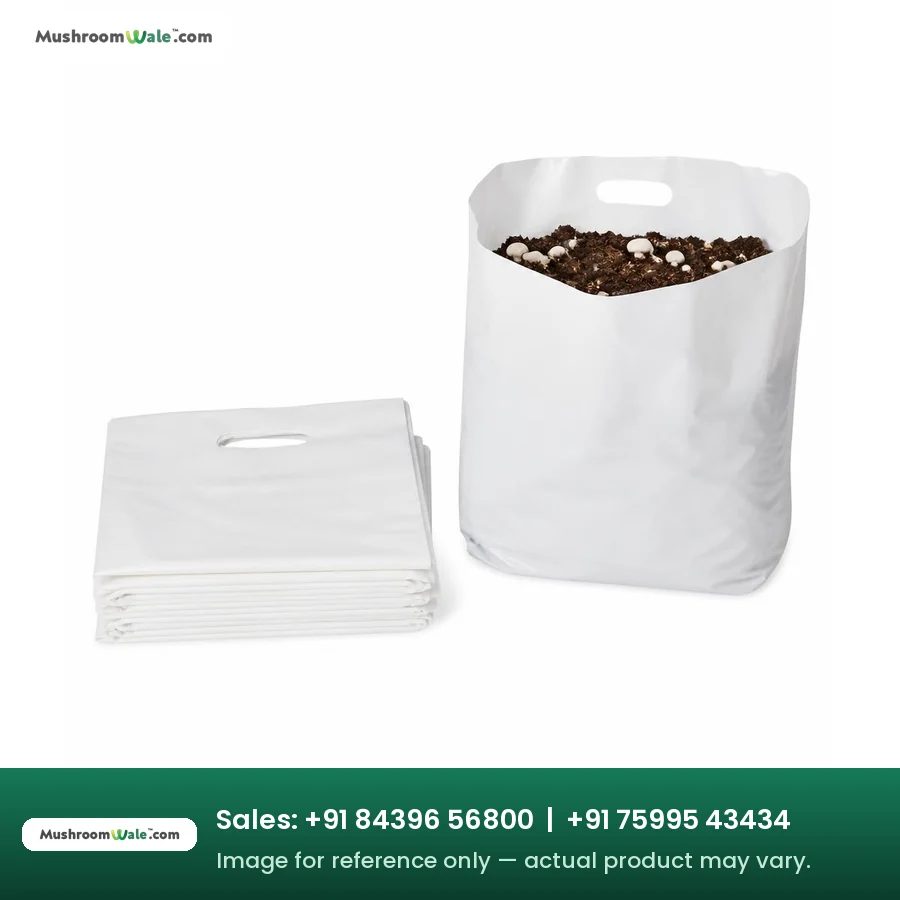
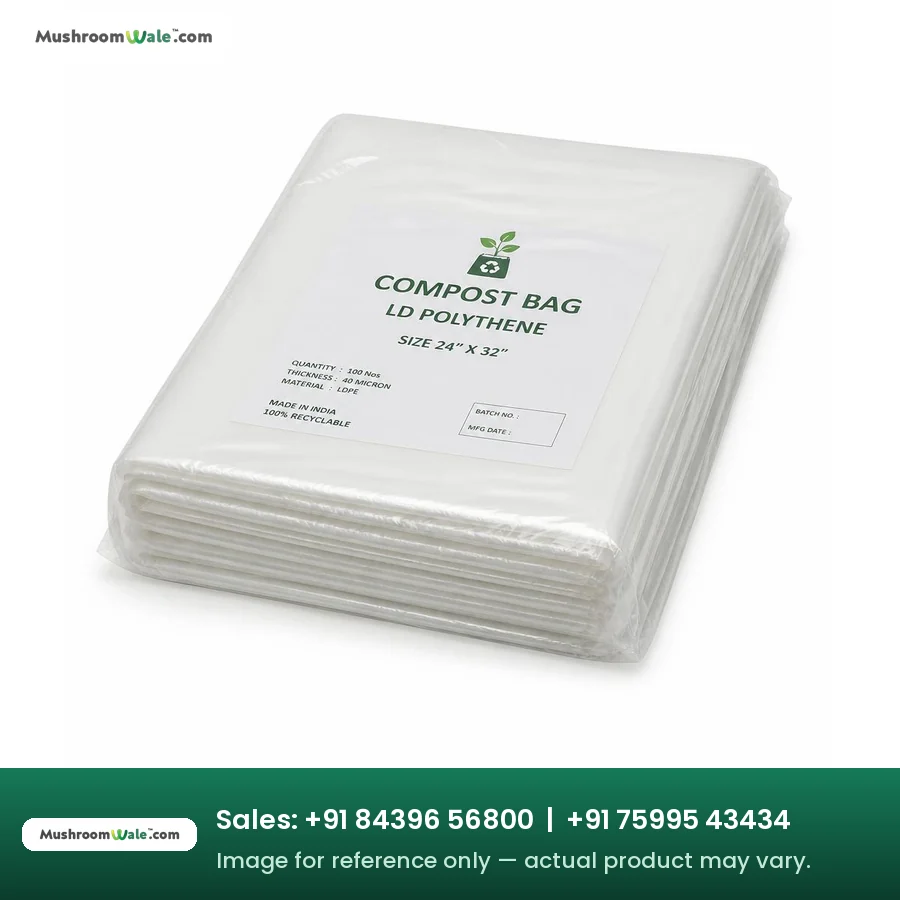
HM compost bag 24" x 30", 51 micron — 1 packet = 50 pcs. MOQ 30 packets.
Compost Unit Parts
LD compost bag 22" x 26", virgin quality — 1 Kg ≈ 53 pcs. MOQ 30 Kg bag.
Airflow & Ventilation
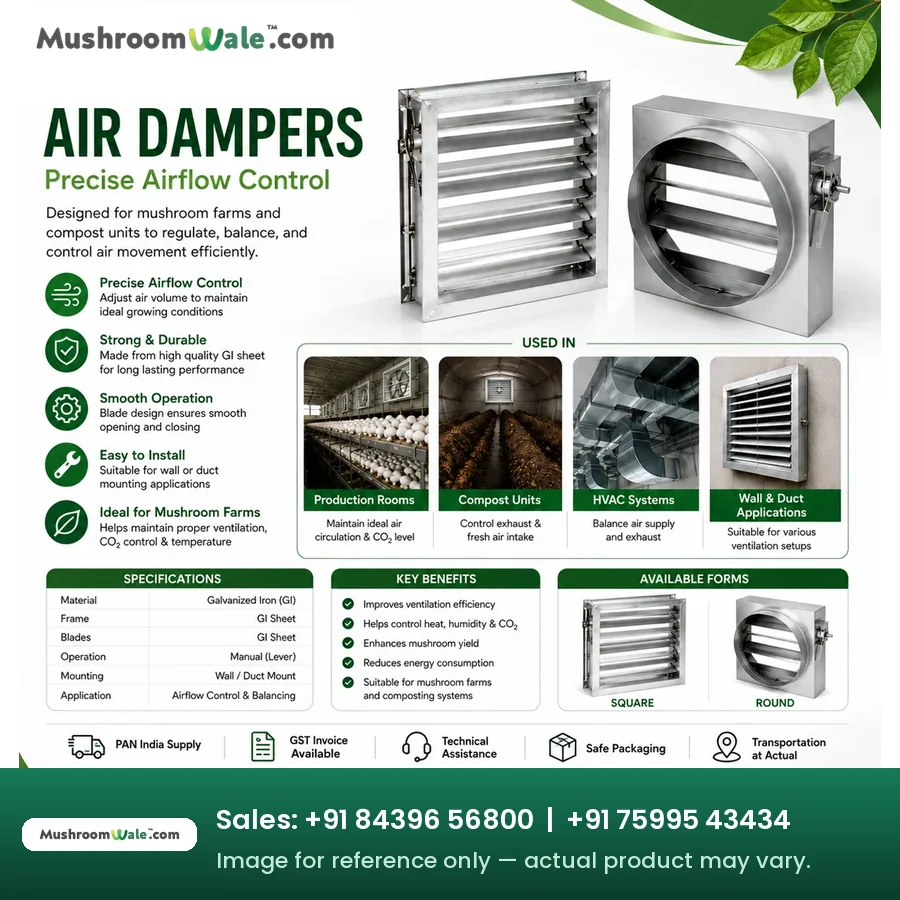
20 x 20 inch outer, GI sheet, aluminium filter frame
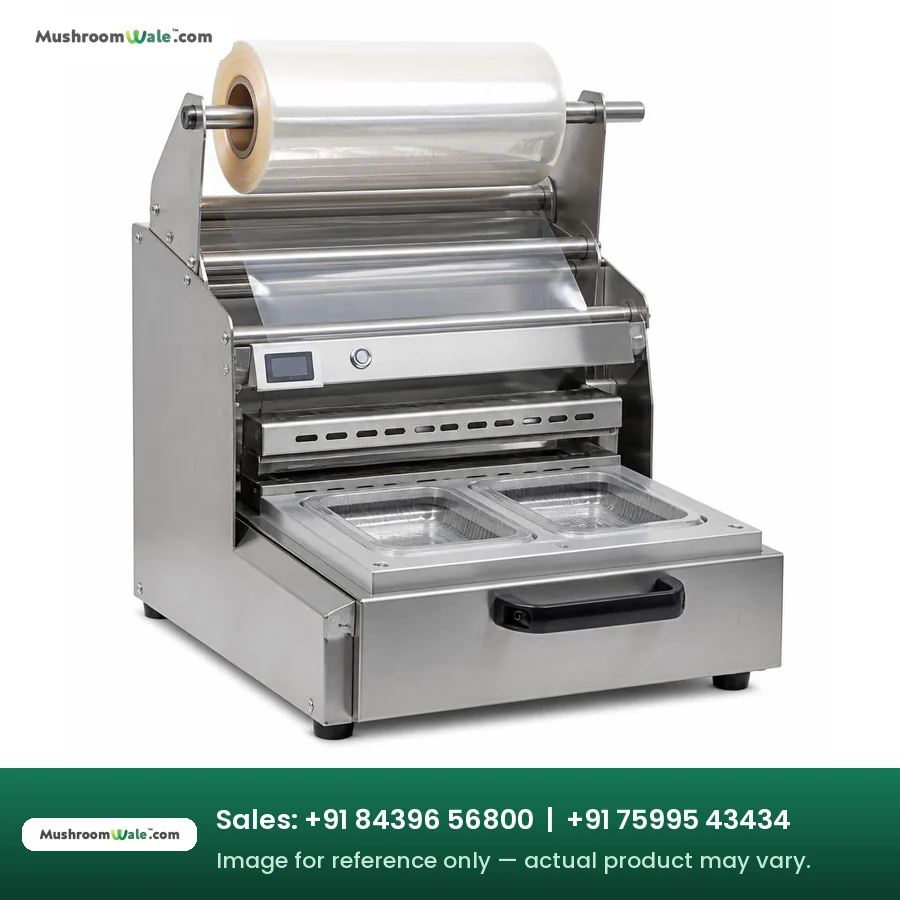
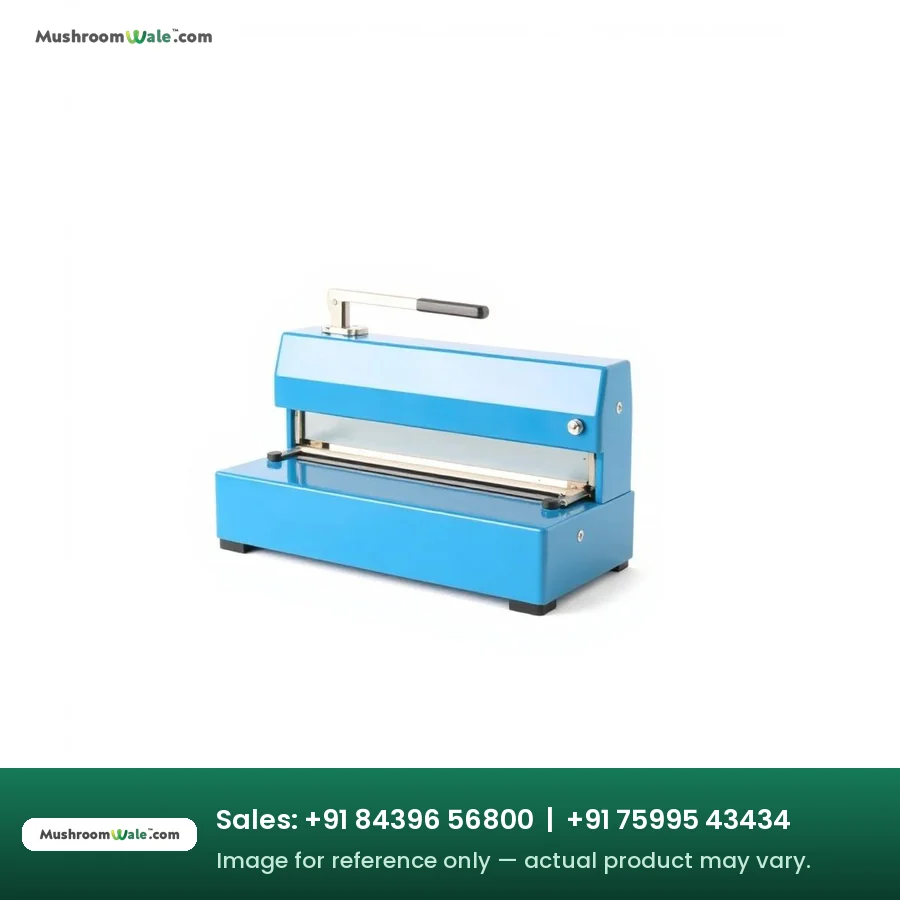
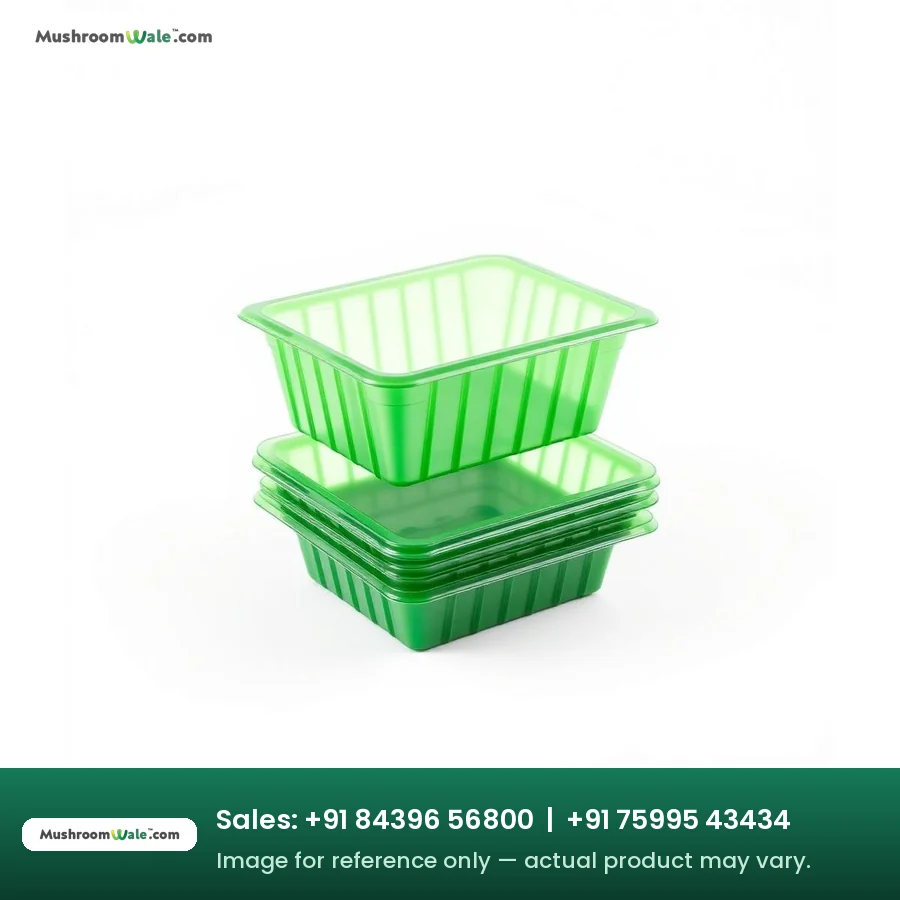
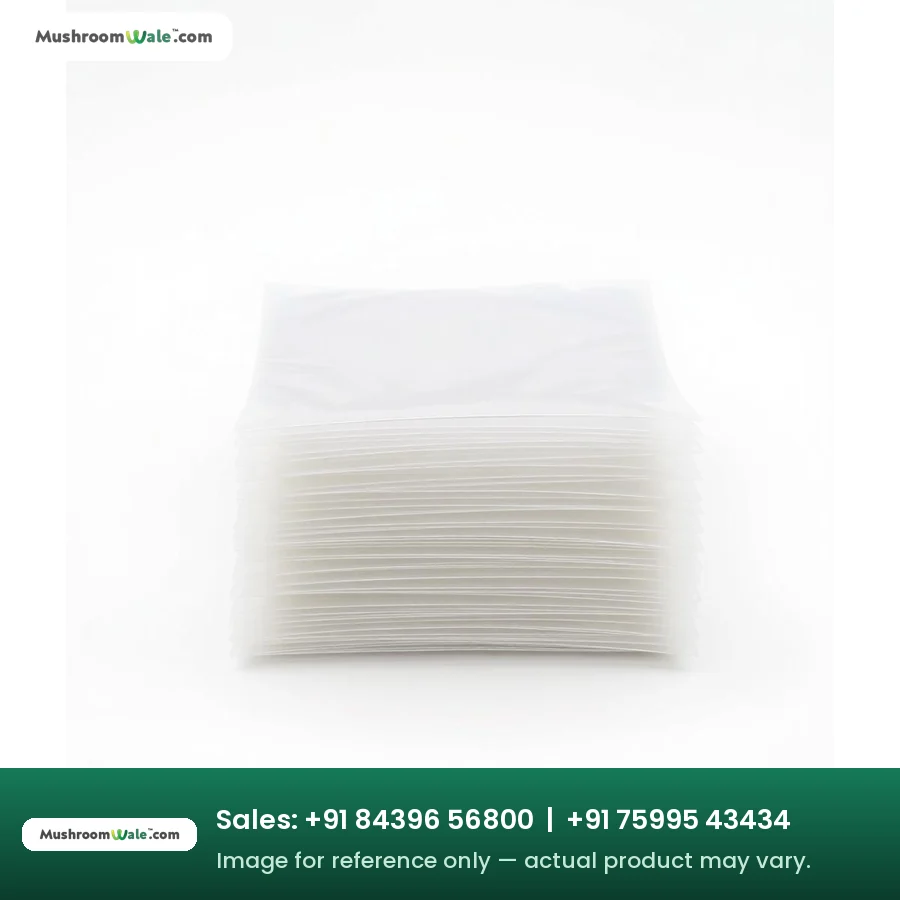
Packaging
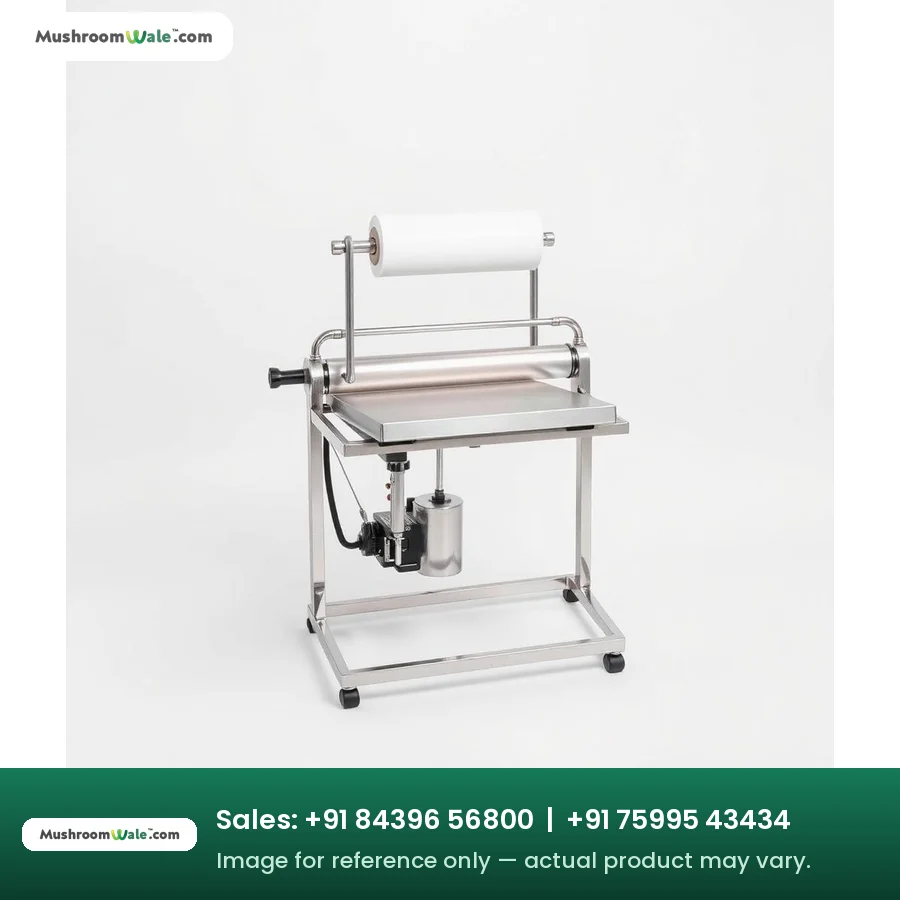
PP packing bag 6" x 7" for 200 g button mushroom — 1 Kg ≈ 500 pcs. MOQ 30 Kg bag.
Compost Unit Parts
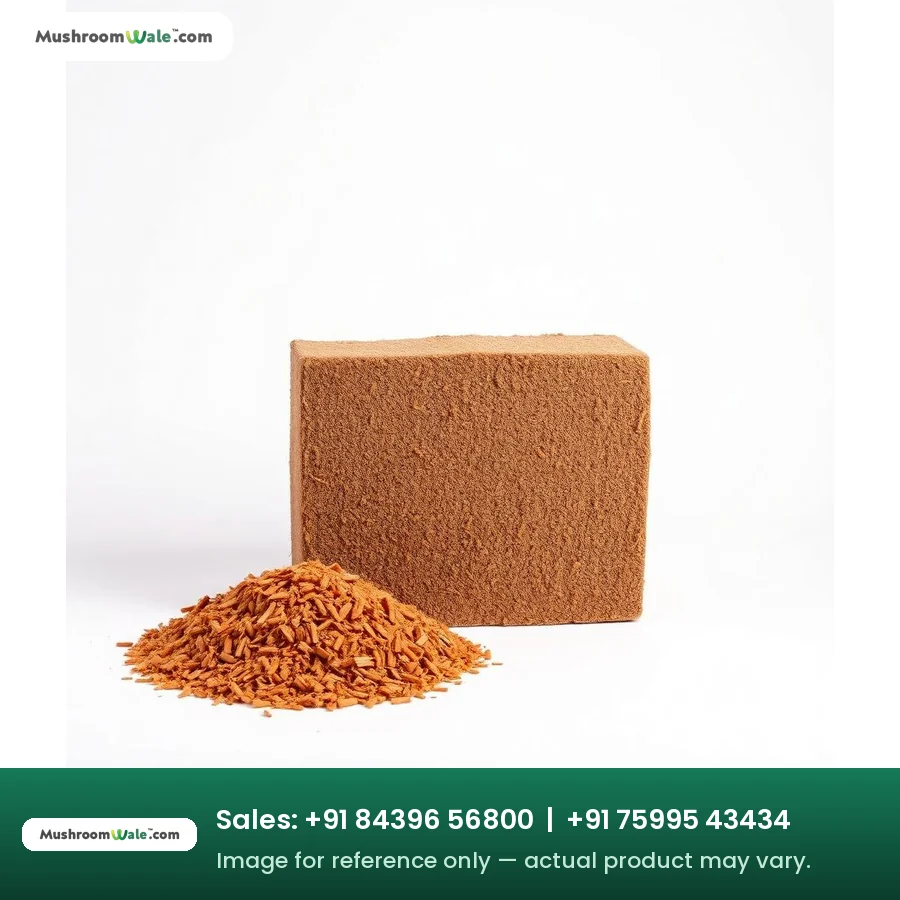
Cocopeat brick, double filtered, low fiber — sold per Kg (5 Kg brick).
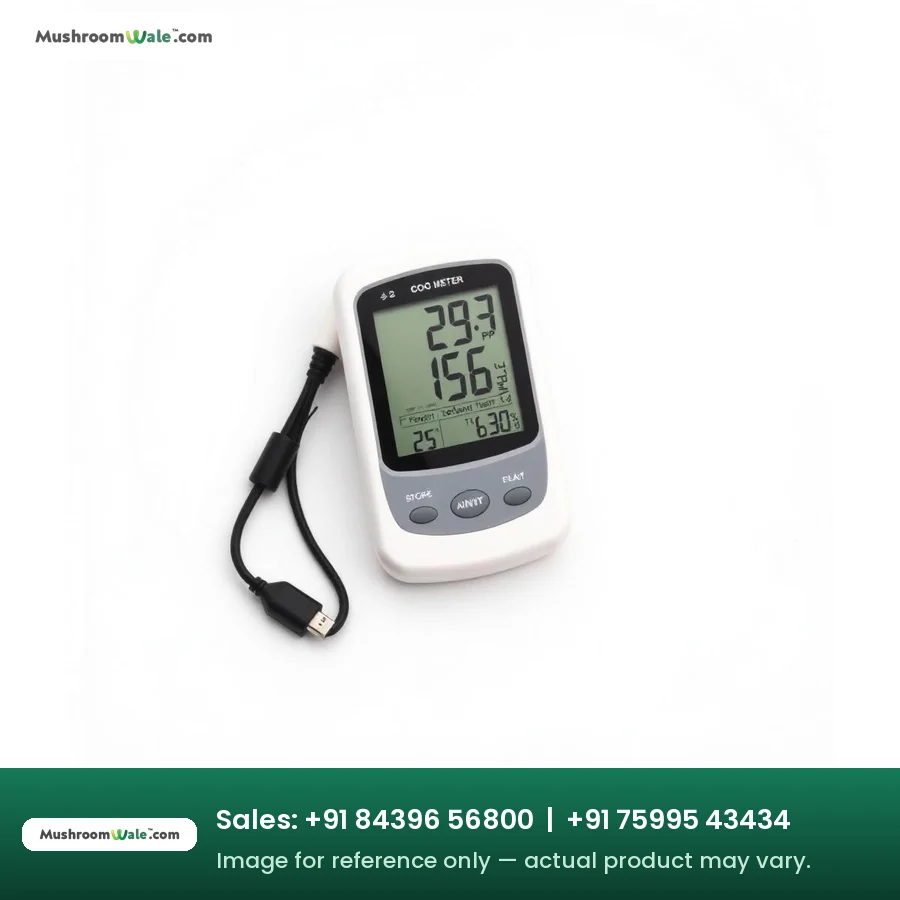
Climate & Control
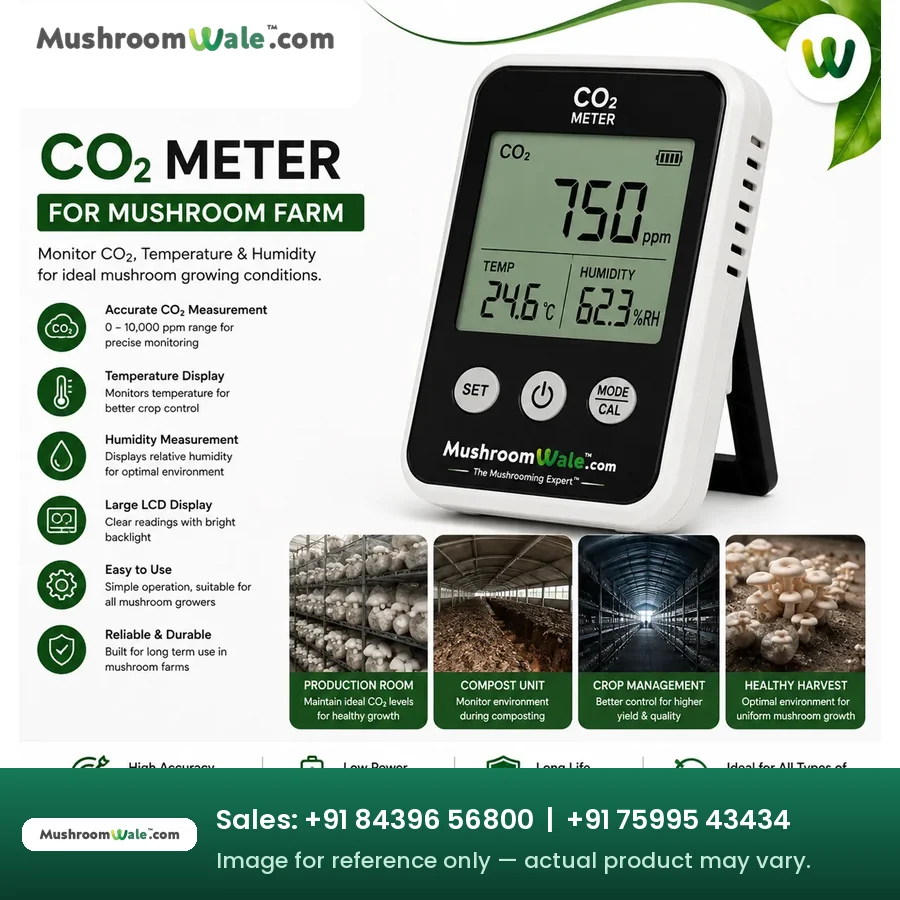
0-9999 ppm with CO2, temperature and humidity
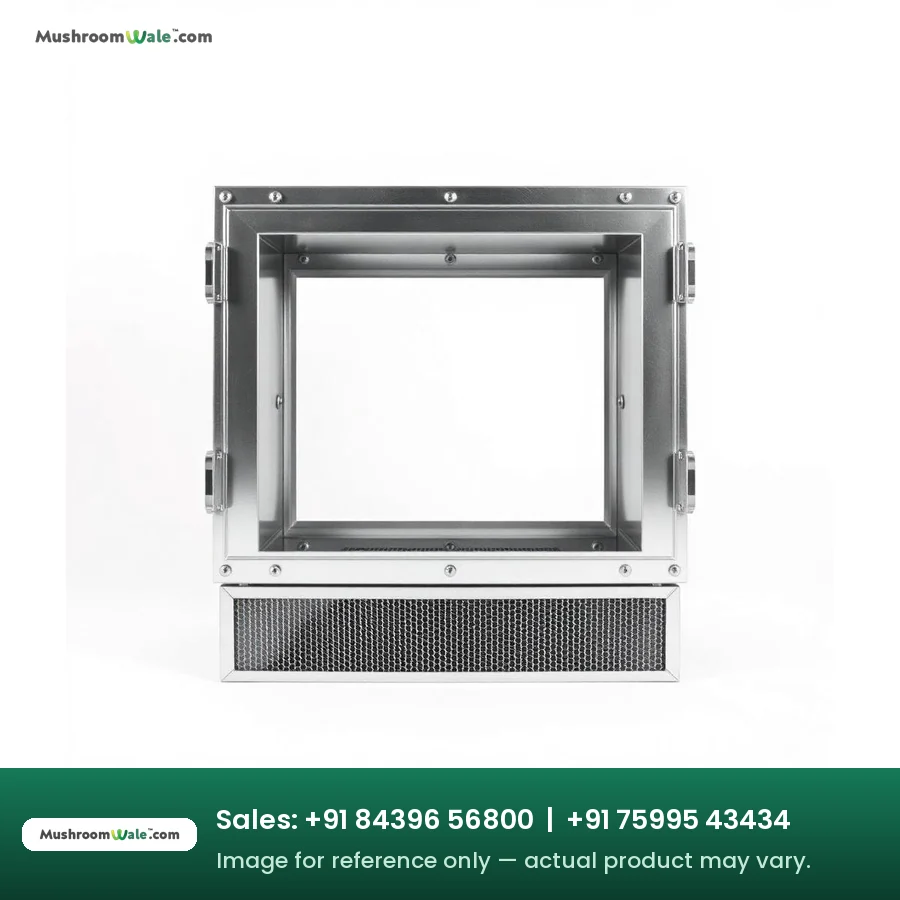
Airflow & Ventilation
20 x 20 inch outer, no handle, gravity operated
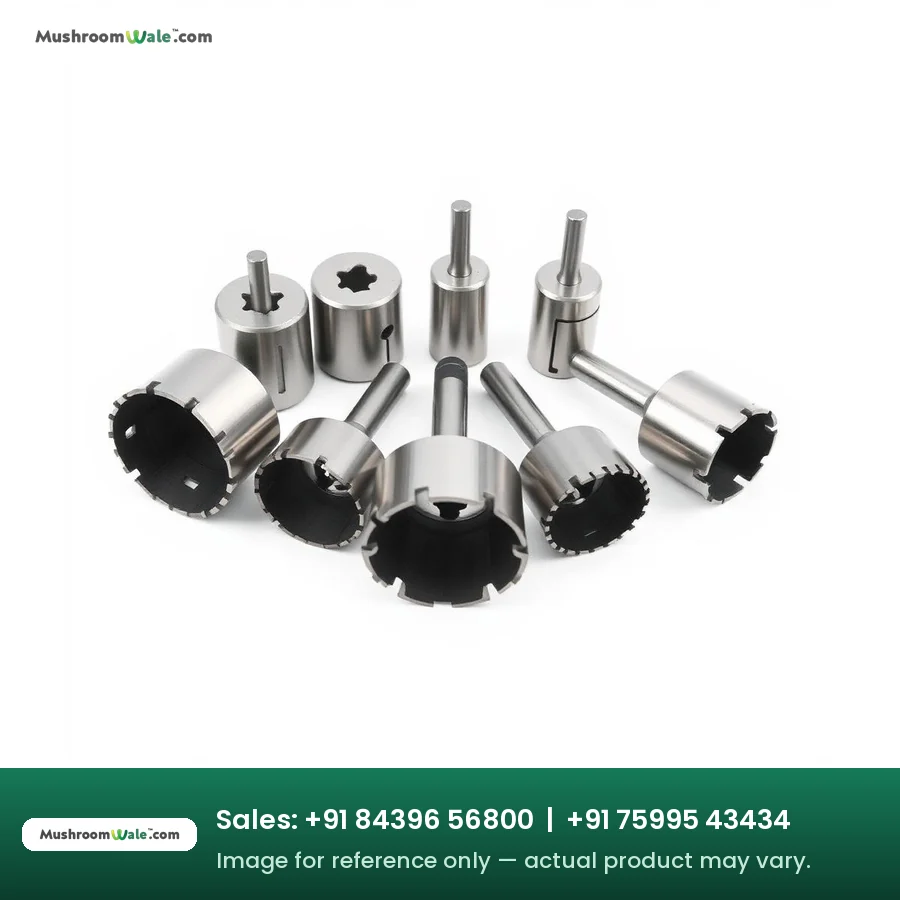
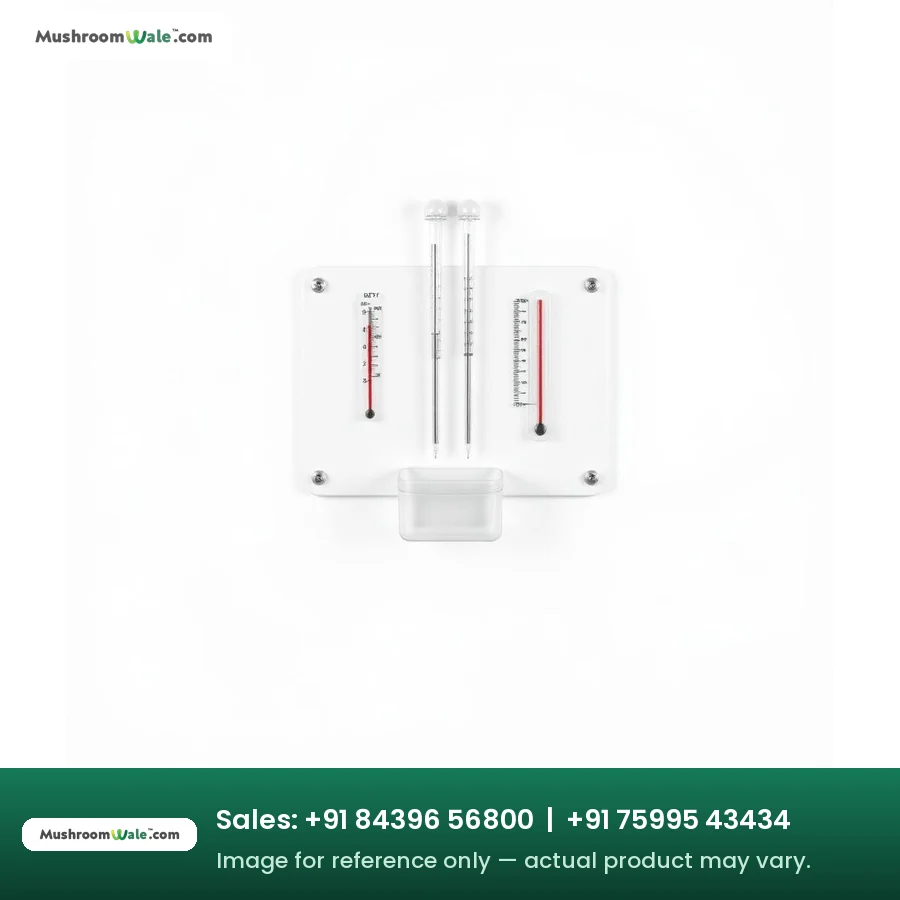
A working mushroom unit needs four equipment groups. Buying them as a matched set avoids the most common failure on Indian farms — a room that cannot hold 16–18°C and 85–90% RH through summer.
Prices depend on room size and material grade, not on brand alone. Listed prices on this page are indicative ex-Firozabad; GST and transportation are extra and confirmed on the final quotation. For a full room-wise equipment list with quantities, use the project quotation generator instead of buying items one by one.
Match every item to the room size first — 18×40, 18×60 or 18×70 ft rooms need different rack counts, blower capacity and duct diameter. Our project engineers will confirm the list against your compost tonnage before you order, so you do not pay for oversized machinery or under-sized ducting.
Work through these six checks in order. Getting them right before you order avoids the two most expensive mistakes on Indian farms — undersized climate equipment and racks that do not fit the room grid.
18×40, 18×60 and 18×70 ft rooms need different rack counts, duct diameters and blower capacity. Every other decision follows from this number.
Tonnage sets bag count, rack tiers and casing quantity. Order racks and crates against tonnage, not against floor area alone.
PUF panel thickness (typically 60–100 mm, PPGL coated both sides) decides heat load. Thinner panels shift cost onto the machine and the electricity bill.
A temperature/RH sensor rod plus a CO₂ meter and one digital controller per room gives you 90% of the benefit at a fraction of full automation cost.
MS racks, MS jhali, GI ducting and food-grade crates each have a specified section and thickness. Ask for the section size on the quotation before comparing rates.
Spawn, casing, bags, film, sprayers and sanitation chemicals repeat every cycle — budget them as running cost, not one-time capex.
A quick side-by-side of the main equipment groups so you can shortlist before requesting a detailed quotation.
Prices are indicative ex-Firozabad. GST @ 18% and transportation are extra, and any additional client requirement is treated as extra work.